
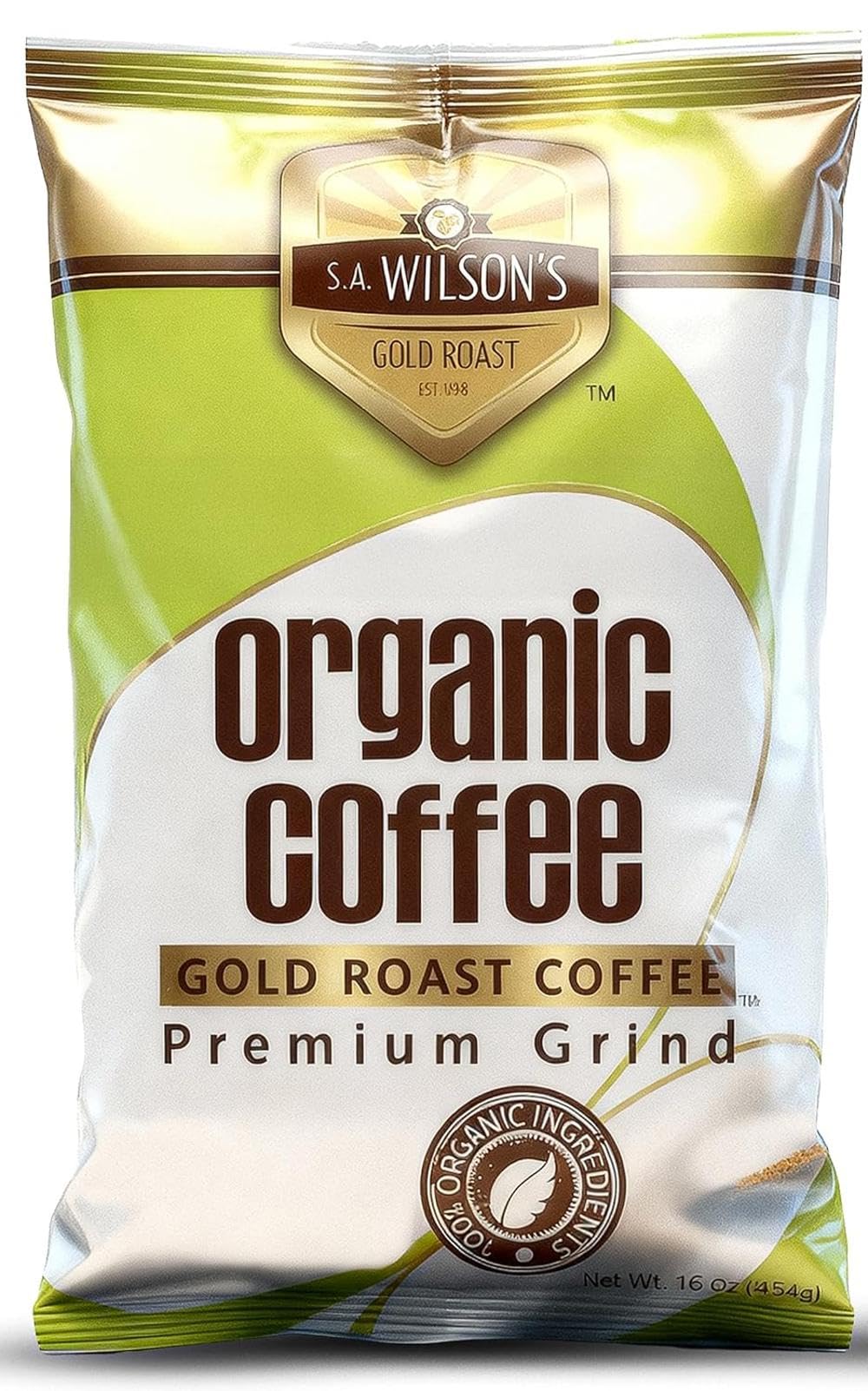
Coffee enemas occupy a strange corner of the wellness market: widely discussed in alternative health circles, largely ignored by mainstream medicine, and sold by a small number of specialty suppliers. SA Wilson’s offering is a USDA-certified organic ground coffee marketed specifically for this use, distinguished from ordinary kitchen coffee mainly by its stated caffeine and palmitic acid content. This review looks at what the product actually is, how it fits into practice, and where the limitations lie.
The first thing to understand is that this is not a coffee you brew and drink. Enema coffee is prepared as a strong decoction — typically a tablespoon or so of grounds simmered in filtered water, then strained and cooled to body temperature before being administered via an enema bag or bucket. The entire ritual, from boiling to cleanup, takes the better part of an hour. SA Wilson’s grind is intended for that preparation method, and the organic certification matters more here than it might in a bag of breakfast coffee, since the liquid is retained in the colon rather than swallowed and metabolized.
Functionally, the product’s selling points are straightforward. It is certified USDA organic, which addresses concerns about pesticide residue in a preparation where the brew contacts intestinal tissue directly. The company emphasizes high caffeine content and elevated palmitic acid — the latter being a saturated fatty acid that some practitioners claim supports bile flow and glutathione production in the liver. Whether those mechanisms hold up is a matter of ongoing debate; the peer-reviewed evidence for coffee enemas generally is thin, and most support comes from the Gerson therapy tradition and practitioner anecdote rather than controlled trials. Buyers should treat the liver-detox framing as a claim rather than an established effect.
In practical use, the coffee behaves as expected: it produces a dark, potent brew with a pronounced roasted aroma. Users of enema coffee often report that strength and consistency matter more than flavor, since taste is irrelevant to the application. The grind appears suited to stovetop simmering without clogging a standard enema filter, though as with any ground coffee, fine particles can slip through coarser strainers and require a second pass. The bag size is generous relative to per-use amounts, so a single purchase lasts a considerable time — a meaningful consideration given that specialty enema coffee tends to cost noticeably more per pound than supermarket organic coffee.
That price premium is the most obvious trade-off. A conventional organic dark roast from a grocery store can be prepared the same way, and some long-term users report no discernible difference between dedicated enema coffee and ordinary organic grounds. What SA Wilson’s product offers in exchange is consistency, a defined caffeine profile, and the assurance that the beans were selected with this application in mind. Whether that justifies the markup is a personal judgment; for occasional users, the economics may not favor a specialty purchase, while regular practitioners may value the predictability.
Compared with other options in the category, the landscape is small. A few brands market enema-specific coffee with similar organic and high-caffeine positioning, and some suppliers sell pre-made liquid concentrates that eliminate the brewing step entirely. The concentrates cost more per session but remove the timing and straining variables that frustrate beginners. SA Wilson’s ground coffee sits in the middle: more effort than a concentrate, more expensive than generic organic coffee, but simpler than sourcing and roasting green beans oneself.
Realistic expectations are important. Coffee enemas are not a treatment for any diagnosed medical condition, and the claimed benefits — improved digestion, energy, detoxification — are subjective and inconsistently reported even among enthusiasts. Some users describe feeling lighter or more alert afterward; others notice little beyond the bowel movement itself. Anyone with hemorrhoids, fissures, inflammatory bowel disease, recent abdominal surgery, or heart conditions should not attempt enemas without medical clearance, and the practice is unsuitable for children. Pregnant individuals should avoid it entirely. It is also a poor fit for anyone uncomfortable with the procedure itself or unwilling to follow careful hygiene and temperature protocols, since improper technique carries risks of perforation, electrolyte imbalance, or infection.
For experienced practitioners who already use enema coffee and want an organic, reliably strong option, SA Wilson’s product is a reasonable choice with few surprises. For the merely curious, a cheaper organic coffee and a conversation with a knowledgeable practitioner would be a more sensible starting point before committing to a specialty purchase.