
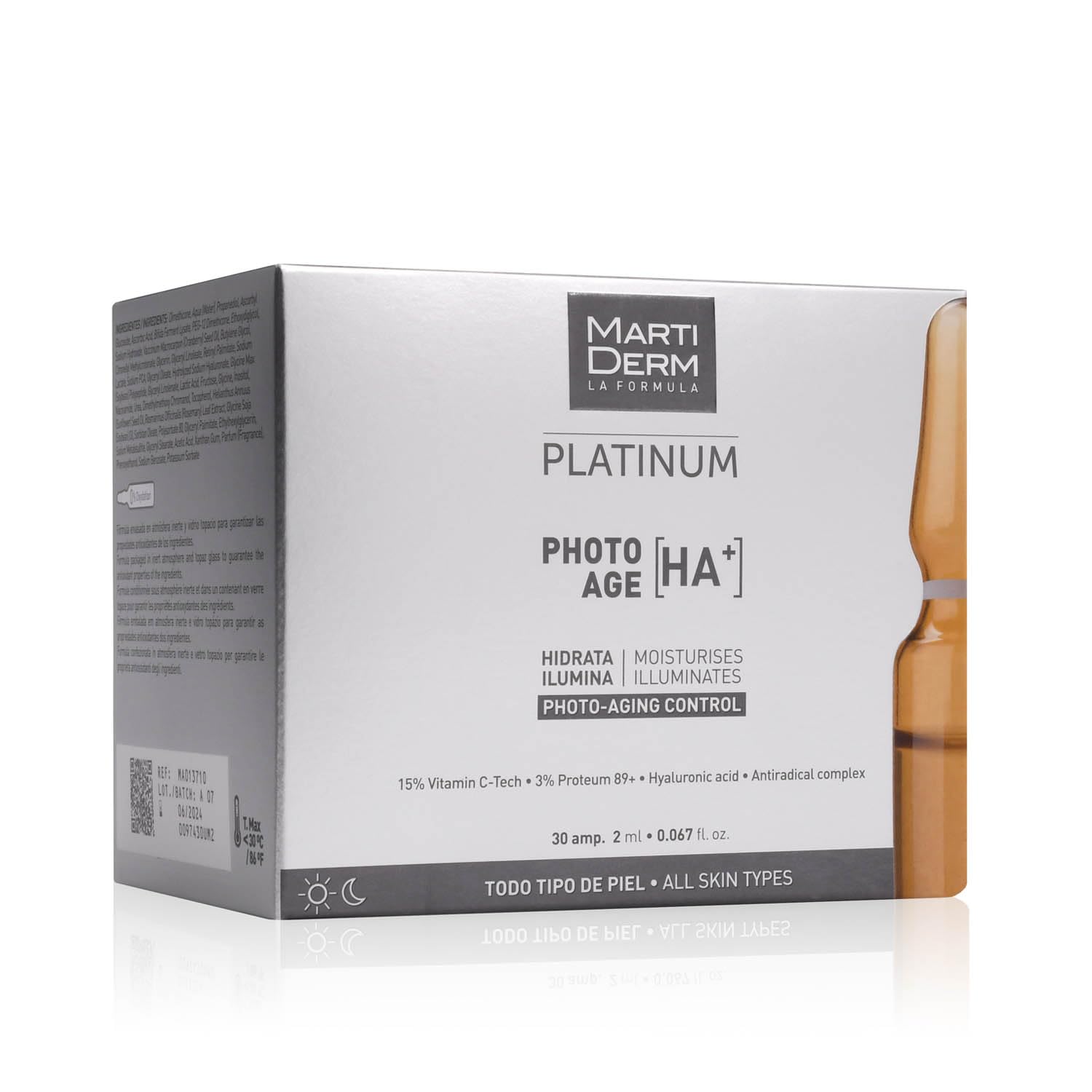
Martiderm’s Photo Age ampoules sit in a category that has quietly grown over the past decade: concentrated, single-dose serums packaged in glass vials that are snapped open and used within a day or two. Each box contains 30 ampoules of 2 ml, which works out to roughly a month of daily use if you follow the typical regimen of one ampoule per day. The format is the product’s most distinctive feature, and it shapes almost everything about how the serum fits into a routine.
The Photo Age line is positioned around antioxidant support, and the formula leans on proteoglycans and vitamin C derivatives alongside other antioxidants. In practical terms, this is a serum meant for the morning, applied to clean skin before moisturizer and sunscreen. The 2 ml volume is generous for a face-only application, so many users split an ampoule between face and neck or decant half into a smaller container for evening use. That flexibility matters because once the glass is broken, the contents are exposed to air and should be used promptly.
Using an ampoule is a small ritual. The glass neck has a marked break point, and the top snaps off with a plastic cap or a tissue to protect the fingers. The liquid inside is light and watery, absorbs quickly, and layers reasonably well under most moisturizers. It has a faint scent that some will notice and others won’t. Because there is no preservative-heavy packaging to contend with, the format appeals to people who like the idea of a fresh, undiluted dose each day, though it is worth being clear that freshness here is relative, not a guarantee of dramatic results.
What the ampoule format does well is consistency and travel. Thirty small vials take up little space, survive a suitcase without leaking, and remove the guesswork of how much serum to dispense. For someone who travels often or dislikes pump bottles and droppers, this is a genuine practical advantage. It also suits people who want to test a formula without committing to a full 30 ml bottle, since the box can be used over a month and then reassessed.
The trade-offs are real, though. Glass ampoules generate more waste than a single bottle, and the break-open process is not friendly to everyone. Anyone with limited hand strength, or who is simply clumsy in the morning, may find the snapping step annoying or mildly risky. There is also the question of cost per milliliter: ampoule formats typically run higher than equivalent bottled serums, and Photo Age is no exception. You are paying for packaging and the single-dose convenience as much as for the formula itself.
Performance expectations should stay modest. Antioxidant serums of this type are supportive products, not resurfacing treatments. Used consistently over several weeks, they can help skin look a little brighter and feel less stressed by environmental exposure, but they will not replace sunscreen, and they will not deliver the visible turnover of a retinoid or an acid. Anyone expecting a fast transformation will be disappointed. The more realistic framing is that Photo Age is a maintenance step, best judged over a month or two rather than a week.
Compared with a standard bottled vitamin C serum, the ampoule approach offers freshness and portability but less convenience and a higher price per use. Compared with a hydrating ampoule, Photo Age is more about antioxidant support than moisture, so it is not the right pick for someone whose main concern is dryness or barrier repair. It also sits awkwardly for people who prefer a minimal routine, since adding a daily ampoule step is more effort than a single pump.
Who is it for? People who travel frequently, like the single-dose format, and want a lightweight morning antioxidant layer will get the most from it. It also suits those who enjoy a structured routine and do not mind the glass handling. Who is it not for? Anyone with dexterity issues, a strong preference for low-waste packaging, a tight budget, or an expectation of dramatic anti-aging results should probably look at bottled alternatives instead. The formula is competent, but the format is the real decision point, and it is worth being honest about whether that format fits your life before buying a 30-ampoule box.