
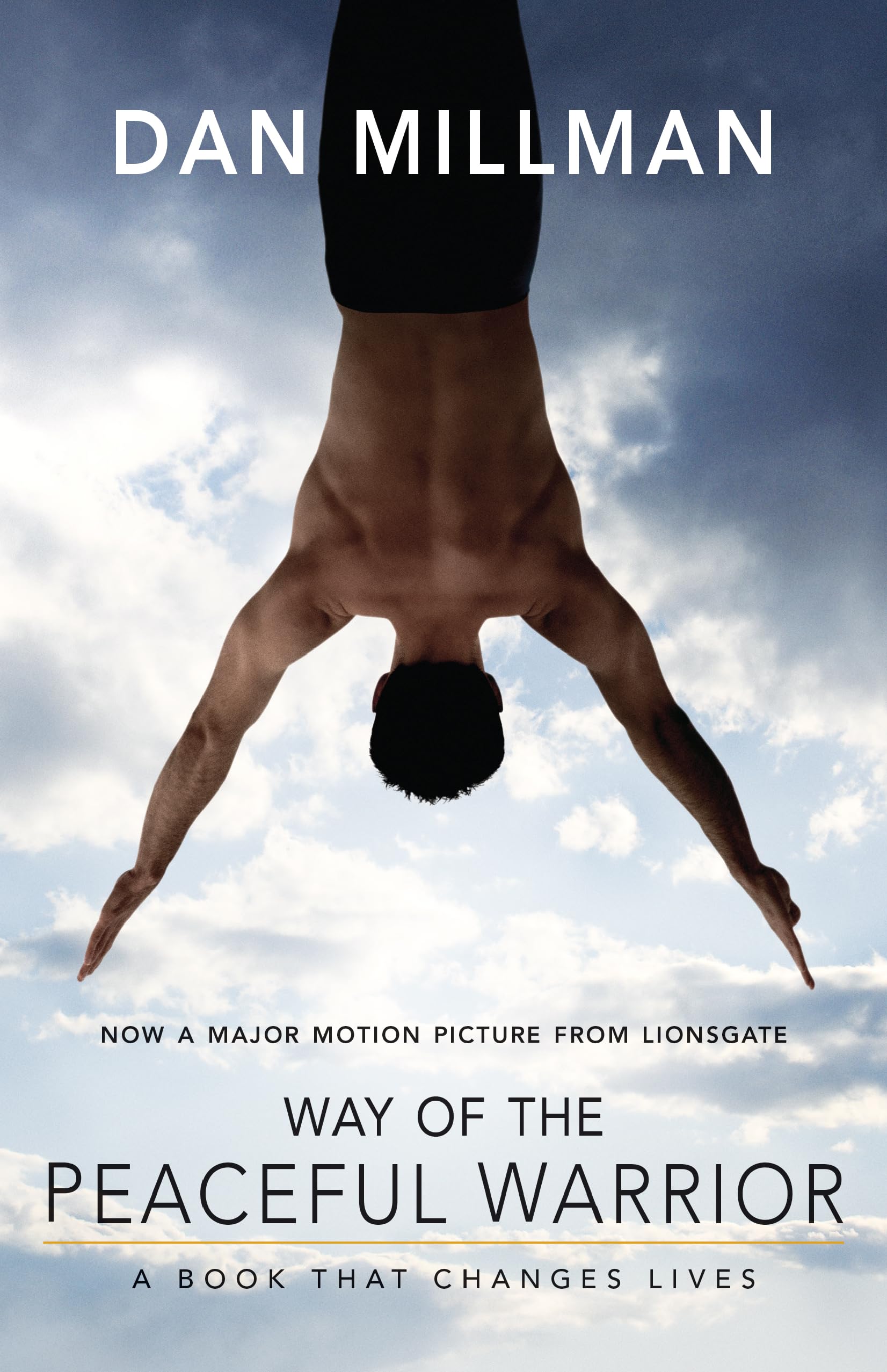
Dan Millman’s Way of the Peaceful Warrior occupies a peculiar place in the personal-growth canon. Published in 1980 and built from Millman’s own experiences as a college gymnast, it blends memoir, fiction, and spiritual instruction into a single narrative. The book has attracted a large readership over the decades, and its subtitle—”A Book That Changes Lives”—sets an expectation that any honest review has to address directly.
The story follows a young athlete named Dan who, while juggling training, academics, and an unsettled personal life, meets an older gas-station attendant he calls Socrates. Their relationship forms the spine of the book: Socrates challenges Dan’s assumptions, assigns him unconventional exercises, and pushes him toward a more present, less achievement-driven way of living. A second mentor figure, Joy, adds a different dimension to the lessons. The narrative arc moves from frustration and resistance toward gradual insight, with the gym and the road serving as recurring settings for the teaching.
Structurally, the book is not a conventional self-help manual. There are no worksheets, no numbered steps, and no chapter summaries to underline the takeaways. The teaching is embedded in dialogue and incident, which means readers who prefer explicit frameworks will need to extract principles on their own. That narrative approach is both the book’s appeal and its main limitation: it reads quickly and warmly, but it can also feel vague when a reader wants to apply a specific idea to a specific problem.
In real-world use, the book tends to function as a reflective read rather than a reference text. People commonly pick it up during transitions—a career change, a period of burnout, or a stretch of feeling stuck—and read it in a few sittings. Some return to it periodically. Because the chapters are short and the prose is plain, it works well as a bedside book or a commute read. It is less suited to being used as a structured program; there is no built-in way to track progress or revisit a lesson systematically.
Key features worth noting:
- Autobiographical fiction format that carries the ideas through story rather than exposition
- Short chapters that make for easy, interrupted reading
- Recurring mentor characters who model the book’s philosophy through conversation
- Physical settings—the gym, the road, the gas station—that ground abstract ideas in everyday activity
- An emphasis on present-moment attention and on questioning achievement as a source of fulfillment
One trade-off is the tone of the mentor relationship. Socrates often speaks in riddles and delivers lessons through mild humiliation or deliberate confusion. Some readers find this charming and effective; others find it grating and unnecessarily cryptic. The book also leans on a few claims and episodes that read as mystical rather than practical, and readers looking for evidence-based guidance may find those passages hard to take seriously. The writing itself is serviceable rather than polished—functional dialogue, occasional clunky phrasing—which is consistent with its origins but worth knowing before you start.
It is useful to compare the book with more conventional self-improvement titles. A standard personal-development book usually offers a defined method, case studies, and exercises. This one offers a mood and a set of attitudes, and it expects the reader to do the translation. In that sense it sits closer to philosophical fiction or a memoir than to a workbook. Readers who respond to story-driven teaching—think of books that convey ideas through a mentor narrative—will likely get more from it than readers who want a checklist. Conversely, someone who prefers clear, actionable frameworks may finish it feeling inspired but unsure what to actually do next.
Who is it for? It suits readers who enjoy narrative nonfiction, are open to a reflective and slightly mystical tone, and want a book that prompts questions rather than answers them. It can work well for younger readers navigating ambition and identity, and for anyone in a transitional period who wants a companionable read rather than a program. It is not a good fit for readers seeking clinical or evidence-based approaches to anxiety, motivation, or habit change, nor for those who dislike parable-style dialogue or want a book they can use as a step-by-step guide. The subtitle promises transformation; the more accurate expectation is a thought-provoking story that may prompt reflection, with the actual work left to the reader.