
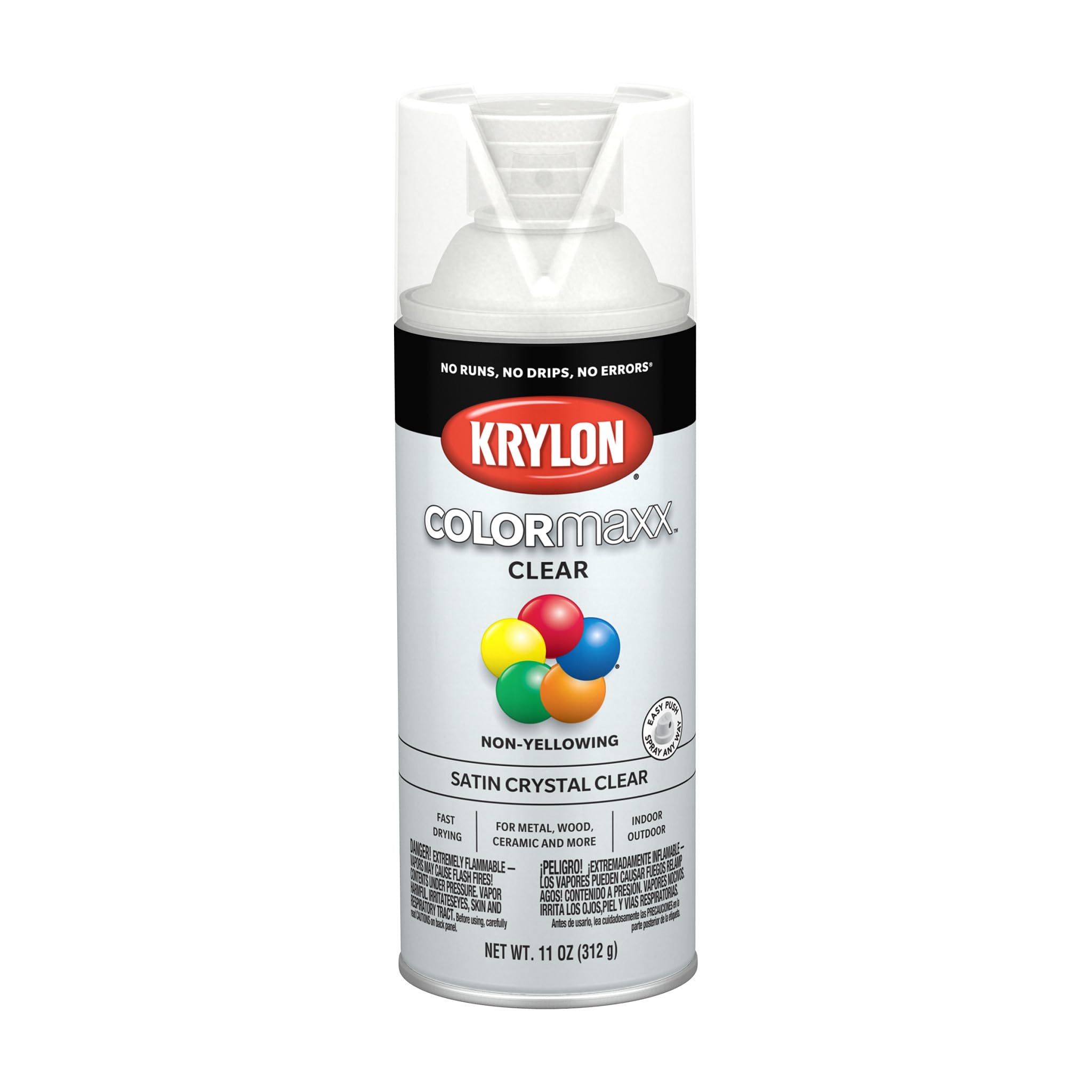
Clear finishes occupy an odd spot in most workshops. They are rarely the reason someone starts a project, but they often determine whether the finished piece holds up after a season outdoors or a few months of handling. Krylon’s COLORmaxx Acrylic Clear Finish in Satin Crystal Clear is aimed squarely at that role: a general-purpose protective and sealing coat for wood, metal, plastic, and similar surfaces, sold in an 11-ounce aerosol can and labeled for both indoor and outdoor use.
The product is an acrylic clear coat rather than a lacquer or oil-based varnish, which matters for how it behaves. Acrylic clears tend to dry relatively quickly, clean up with less solvent hassle, and stay clearer over time than some oil-based alternatives that can yellow. Krylon rates this one as non-yellowing and describes the finish as satin, which sits between flat and gloss. In practice, satin is a sensible default for furniture, trim, and craft pieces because it softens reflections and hides minor surface imperfections better than a high-gloss coat would.
Where this clear coat fits in real use is fairly broad but not unlimited. It is commonly reached for when sealing painted wood projects, protecting a stained or painted finish on small furniture, coating metal fixtures that see occasional weather, and giving craft or decorative pieces a uniform sheen. The aerosol format makes it convenient for objects that are awkward to brush, such as turned legs, carved details, or pieces with lots of edges. It is also a reasonable choice for touching up or sealing a finish where a brush would leave marks.
Functionally, the can delivers a sprayable acrylic film that dries to a satin sheen and is intended to resist minor moisture and general wear. Krylon lists it for indoor and outdoor use, which means it can handle sun and occasional rain exposure better than an interior-only clear, though it is not a substitute for a dedicated exterior spar urethane or marine finish on surfaces that stay wet or take heavy UV load. Coverage is typical for an 11-ounce aerosol: enough for small to medium projects, several coats on a chair or a few picture frames, but not a whole deck or a large piece of furniture in one can.
Application is where most of the realistic expectations should be set. Aerosol clear coats reward thin, even coats applied at the recommended distance, with recoat windows respected. Spraying too heavily in one pass is the usual cause of runs, drips, and a cloudy or uneven look, and satin finishes are less forgiving of uneven buildup than flat ones because the sheen highlights inconsistency. Humidity and cold temperatures affect drying and clarity, so the usual advice applies: work in a ventilated space within the labeled temperature range and avoid spraying in high humidity if a clear, even film matters.
The main trade-offs are worth naming plainly. First, an 11-ounce aerosol goes quickly once you are applying multiple thin coats, so cost per square foot is higher than a brush-on clear for larger jobs. Second, aerosol application produces overspray and fumes, so it is a poor fit for tight indoor spaces without ventilation, and it requires masking and drop cloths. Third, while the finish is labeled for outdoor use, satin acrylic clears are not the toughest option for prolonged direct sun, standing water, or heavy abrasion; a brush-on exterior urethane or a two-part clear will generally outlast it on demanding surfaces. Finally, the satin sheen, while flattering on many surfaces, can look slightly milky over very dark colors if applied too heavily, a common quirk of acrylic clears.
Compared with a brush-on polyurethane, this Krylon clear is easier to apply to complex shapes and dries faster, but it offers less film build per pass and less durability on high-traffic surfaces. Compared with a lacquer-based clear, it is generally less prone to yellowing and easier to work with for casual users, though it may not deliver the same hardness. Compared with a matte or gloss version of the same line, the satin choice is the middle ground that suits most furniture and craft work, at the cost of showing application flaws a bit more than flat.
This clear coat suits hobbyists, crafters, and DIY users sealing small to medium projects, painted wood pieces, metal accents, and decorative objects where a satin sheen and moderate protection are enough. It is a sensible pick for someone who wants a sprayable, non-yellowing acrylic clear without investing in spray equipment. It is not the right choice for large surface areas on a budget, for surfaces exposed to constant moisture or heavy UV, for high-traffic floors or tabletops that take daily abrasion, or for anyone who cannot spray outdoors or in a well-ventilated area. Used within those bounds, it is a serviceable, unremarkable clear finish that does what it says, provided the user applies it in thin coats and keeps expectations in line with an aerosol acrylic.