
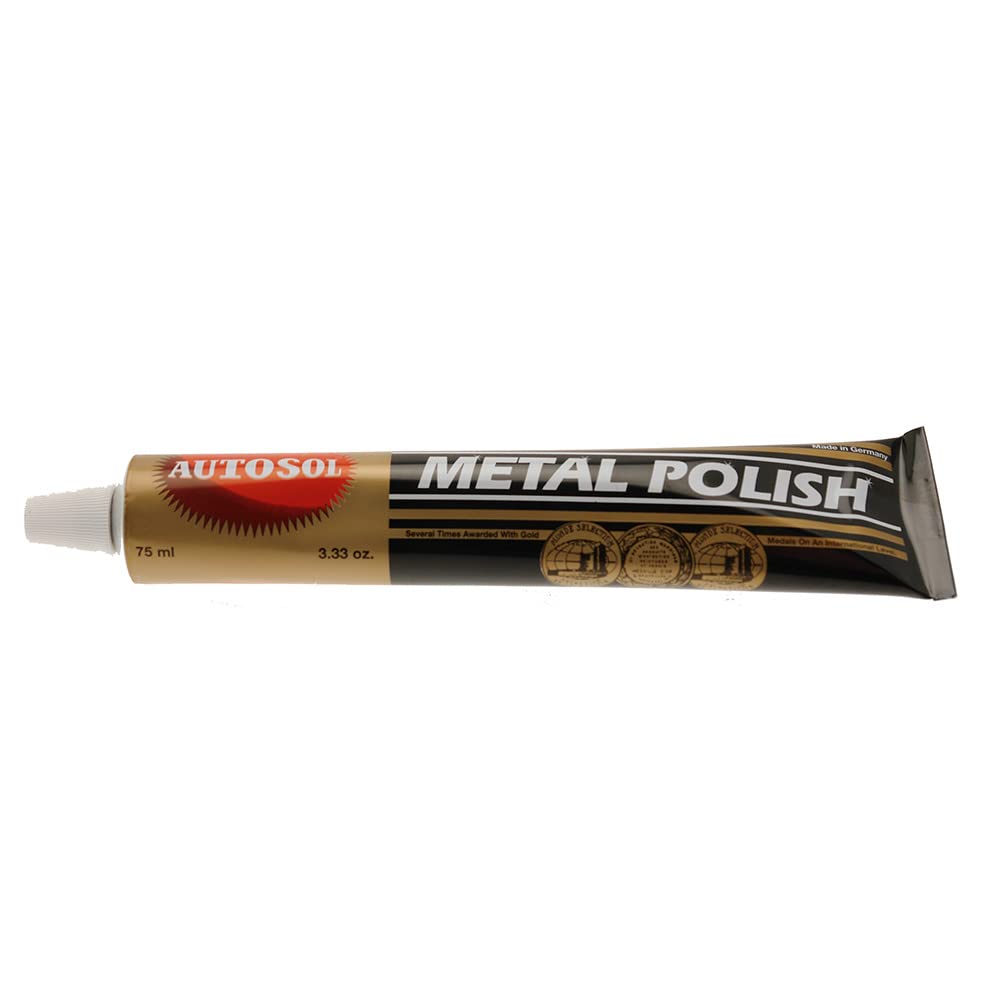
Autosol has been making metal polish for decades, and the Utosol 0400 in the 75ml tube is one of its more modest offerings. It is a paste-style abrasive polish intended for bare metals, and it turns up in garages, workshops, and hobbyist toolboxes more often than in glossy retail displays. The question worth asking is whether a small tube of old-school polishing paste still earns its place next to the increasingly common liquid polishes and multi-stage kits.
In practice, the Utosol 0400 is used on small, manageable surfaces. Think aluminium trim, brass fittings, chrome components, copper pipework, and the occasional tarnished motorcycle part. The paste is applied with a soft cloth or a polishing pad, worked into the metal with moderate pressure, then buffed off before it dries completely. The 75ml tube is small enough to keep in a drawer and generous enough for many small jobs, though anyone polishing a large surface will go through it quickly. It is a manual product, and the results depend heavily on how much effort goes into the rubbing.
Functionally, the paste is an abrasive suspended in a carrier that breaks down as you work it. That means it cuts tarnish and light oxidation first, then gradually polishes as the abrasive particles diminish. On lightly tarnished brass or dull aluminium, the change is visible within a minute or two of working the paste. On heavier oxidation or deep scratches, expect to repeat the process and accept that some marks will remain. This is a finishing and restoration product, not a repair compound, and it will not remove significant pitting or gouges.
- Format: 75ml squeeze tube, paste consistency
- Intended substrates: bare metals including aluminium, brass, copper, chrome, and steel
- Application: manual, with cloth or pad; buff before full drying
- Finish: bright, reflective shine on sound metal; light cleaning action on tarnish
One limitation that becomes obvious quickly is the residue. The paste leaves a blackish film as it lifts tarnish and oxidation, and it can settle into seams, knurling, and tight corners. Getting it fully out of textured surfaces takes patience and a soft brush. On porous or coated metals, the paste can be difficult to remove cleanly, and it is not intended for painted, lacquered, or plated surfaces where the coating is the finish. Using it on chrome that has begun to flake will simply highlight the damage. The small tube also means the product is easy to waste if you apply it too liberally; a little goes a long way, and over-application mostly creates more cleanup.
Compared with liquid metal polishes, the Utosol 0400 is slower and more physical. Liquids spread more evenly and are easier to work into large panels, while this paste demands localized effort. Against a multi-stage polishing system with separate cutting and finishing compounds, the Autosol product is a single-step compromise: it cleans and shines, but it does not offer the same control over how much material is removed. For a quick refresh of a brass door handle or a set of aluminium brackets, that compromise is reasonable. For restoring a large, heavily weathered surface, a dedicated compound and machine polisher will be more efficient.
The product suits people who do occasional small-scale metal work: hobbyists, restorers of vintage hardware, motorcyclists touching up brightwork, and anyone maintaining brass or copper fittings around the home. It is less suitable for professionals polishing large surfaces regularly, for anyone expecting a scratch-removal compound, and for those working on delicate or coated finishes where abrasives are risky. It also is not a rust converter; on corroded steel it will clean the surface but not stop corrosion from returning.
Realistic expectations matter here. The Utosol 0400 will make sound, lightly tarnished metal look noticeably better with a few minutes of work. It will not transform neglected or damaged metal, and it will not match the results of a machine-polished finish. Treated as a dependable manual paste for small jobs, it does what it claims without drama. Treated as a miracle restorer, it will disappoint. That honesty about its limits is arguably its most useful quality.