
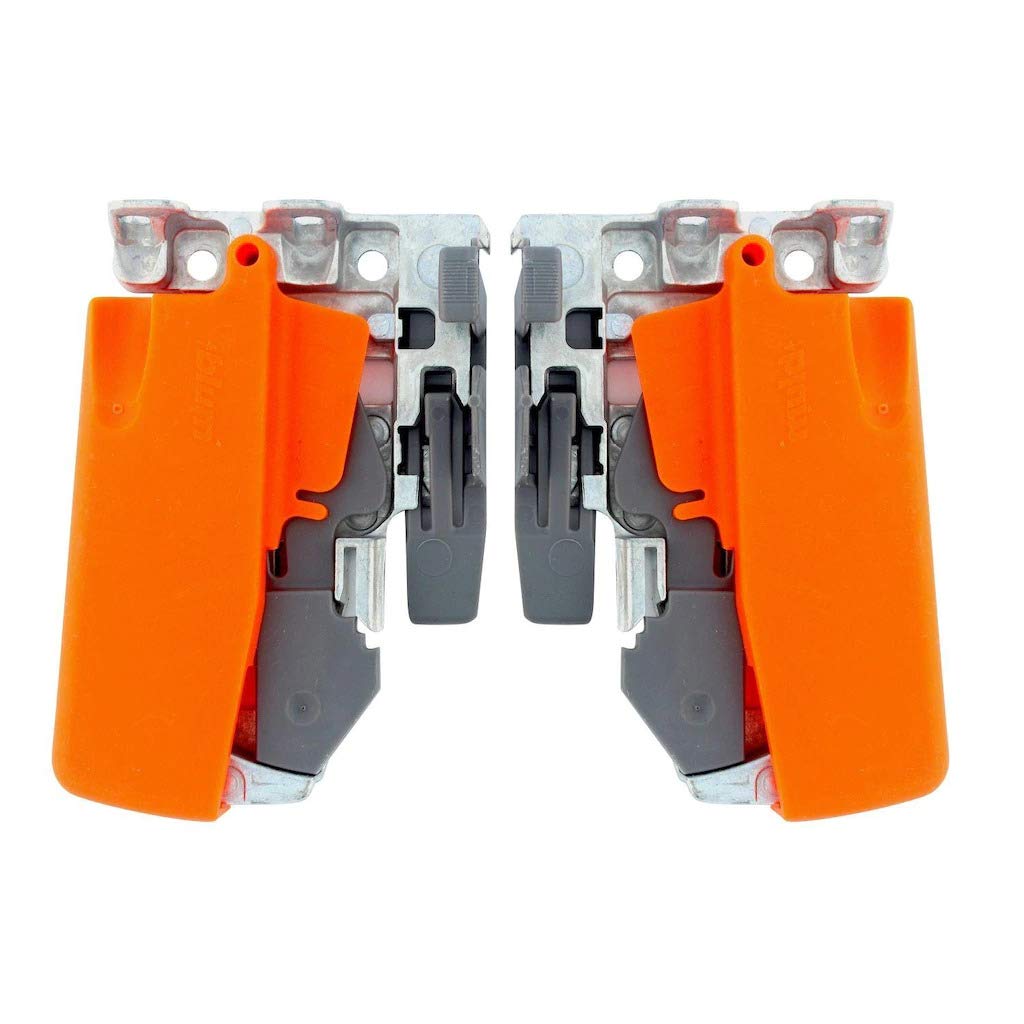
The Blum Tandem T51.1700.04 is not the kind of product most people set out to buy. It is a replacement locking device — the small plastic and metal component that secures a drawer to a Tandem undermount slide — sold as a set of one left and one right unit for B552, B562, and B568 series slides. In practice, it is bought by someone whose drawer has come loose, whose locking clip has cracked, or who is installing a set of Blum slides and found the hardware missing from the box. Judged on that basis, it does what it is supposed to do, provided the buyer has matched the part number to the slide correctly.
The locking device sits at the front of the drawer bottom, where it clips onto the slide rail and holds the drawer box in alignment. When it is intact, the drawer seats firmly and releases with the small lever when you need to lift it out. When it fails — usually a snapped tab or a clip that no longer catches — the drawer rocks, pulls forward unevenly, or detaches entirely. Replacing the device is a five-minute job in most cases: pull the drawer, remove the old clip, snap the new one onto the slide, and reseat the drawer. No tools beyond a screwdriver are typically needed, and the part is small enough to keep a spare on hand.
Functionally, the T51.1700.04 is straightforward. Each unit is a molded assembly with a spring-loaded release tab and a mounting point that engages the slide’s front notch. The set includes one left and one right, which matters because the two are mirror images and are not interchangeable. The plastic body is durable enough for normal kitchen and cabinet use, but it is still a wear component, and repeated removal of the drawer will eventually loosen the clip. Buyers should expect a service life measured in years of ordinary use rather than decades, which is reasonable for a consumable hardware piece.
The main limitation is compatibility. This device is specific to the B552, B562, and B568 series, and Blum has used different locking mechanisms across its Tandem and Tandem plus lines. A buyer who assumes all Blum undermount slides share the same clip will end up with a part that does not seat. The part number on the existing device, or the slide’s model stamp, is the only reliable way to confirm fit. There is also no installation guide in the package beyond the molded shape itself, so first-time installers may need to look up a diagram. That is a minor annoyance rather than a real obstacle, but it is worth knowing before the drawer is on the bench.
Compared with a generic aftermarket locking clip, the Blum original is the safer choice for these specific slides. Third-party clips are cheaper and sometimes fit, but the tolerances on the release tab and the mounting notch are where aftermarket parts tend to fall short, leading to a drawer that clicks but does not fully lock. On the other hand, if the slide itself is worn or bent, replacing the locking device will not fix the underlying problem — the drawer will still run rough. This part addresses the clip, not the rail.
Who is this for? Primarily cabinet makers, kitchen fitters, and DIYers maintaining Blum-equipped cabinetry who need to restore a single drawer without replacing an entire slide pair. It is also sensible as a spare for anyone who regularly removes drawers for cleaning or access. Who is it not for? Anyone with a different slide series, anyone hoping to upgrade the feel of a cheap drawer, and anyone who has not confirmed the part number first. It is a repair component, not an upgrade, and it should be evaluated that way.
At the price of a small hardware part, the T51.1700.04 is a practical fix for a common failure point. The set of left and right covers both sides of one drawer, which is the usual failure scenario. The honest caveats are compatibility and the lack of printed instructions; neither is a dealbreaker, but both mean the buyer should verify before ordering. For the right slide series, it is a quiet, unglamorous part that does exactly what the original did.