
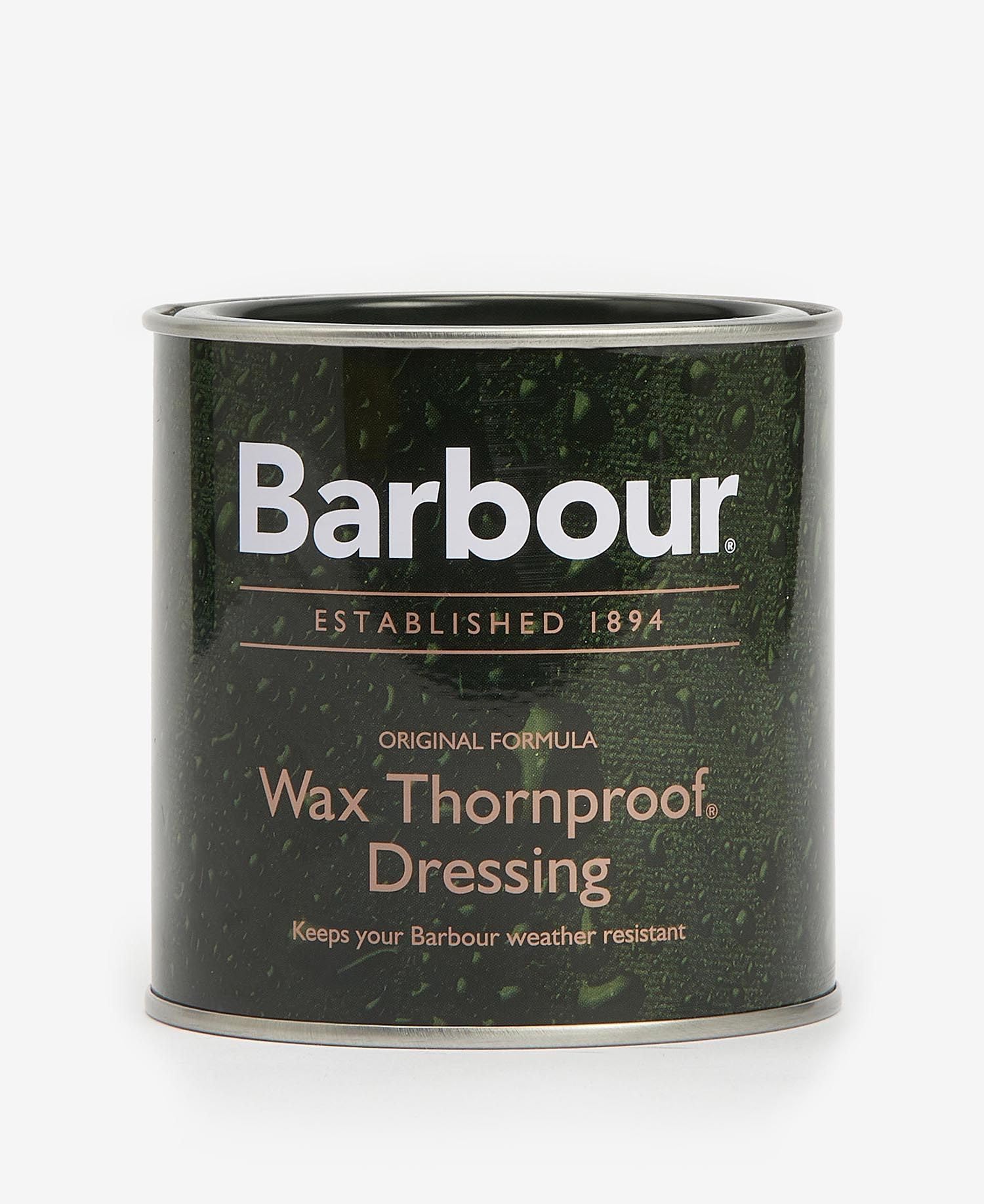
Barbour Thornproof Dressing is one of those products that exists in a fairly narrow lane: it is a reproofing wax for the brand’s own waxed cotton jackets, and it is sold in a single neutral tin that is meant to be worked into the fabric by hand. It is not a cleaner, not a conditioner for leather, and not a general-purpose fabric treatment. Understanding that scope is the first step to deciding whether it belongs in a cupboard.
The product is a blend of waxes that is applied to the outer surface of waxed cotton to restore water resistance once the original finish has worn thin. A typical tin is small enough to hold in one palm, and the dressing has a firm, paste-like consistency that softens with warmth. It has a noticeable waxy smell, which fades after the jacket airs out but is unmistakable during application.
In practice, reproofing is a slow, messy job. The usual method is to warm the tin (in a bowl of warm water or near a radiator), then work small amounts into the fabric with a cloth or bare fingers, paying extra attention to shoulders, cuffs, elbows, and seams where rain tends to soak in. The jacket then needs to be hung somewhere warm so the wax can absorb, and any excess buffed off with a clean cloth. It is a job best done on a mild day with ventilation, not in a rush before going out.
What the dressing does well is restore the beading effect on fabric that has gone dull and absorbent. A jacket that has started to wet out at the shoulders will typically shed light rain again after a proper application. The finish is matte rather than glossy once buffed, which keeps the jacket looking like a working garment rather than a costume. Because it is the manufacturer’s own product, the colour and texture match the original finish better than most generic alternatives.
There are real trade-offs. Application is labour-intensive, and a full jacket can take the better part of an hour or more, depending on how dry the fabric is. Over-application leaves a tacky surface that attracts dust and can transfer onto car seats or upholstery for a few days. The wax also darkens the fabric slightly when first applied, which is usually temporary but can be noticeable on lighter colours. And the tin is small relative to the work involved; a full reproof of a long jacket may use a substantial portion of it, so it is worth buying with the job in mind rather than assuming one tin covers everything indefinitely.
Compared with spray-on water-repellent treatments, the Barbour dressing is slower and fussier, but it feeds the fabric rather than just coating it, and the result lasts longer on waxed cotton. Spray treatments are better suited to synthetic shells and quick touch-ups; this product is aimed squarely at woven waxed cotton. Compared with sending a jacket to Barbour for reproofing, doing it at home is cheaper and avoids shipping, but the finish depends heavily on technique, and an uneven application is hard to correct.
It is suitable for people who own a Barbour waxed jacket, are willing to spend an afternoon on maintenance, and accept some mess. It is not suitable for anyone expecting a quick spray-and-go fix, for non-waxed fabrics, or for leather, which needs a different product entirely. It is also not a stain remover or cleaner; dirt should be brushed off before application, and the dressing will not fix a torn or badly worn lining.
Performance expectations should be realistic. The dressing restores water resistance but does not make a jacket fully waterproof in sustained heavy rain, and it will need reapplying periodically depending on wear. For a waxed cotton jacket that is used regularly, a tin every season or two is a reasonable assumption. Buyers should also check the tin size against the jacket length; a short jacket needs less than a long one, and it is easy to underestimate the quantity required.