
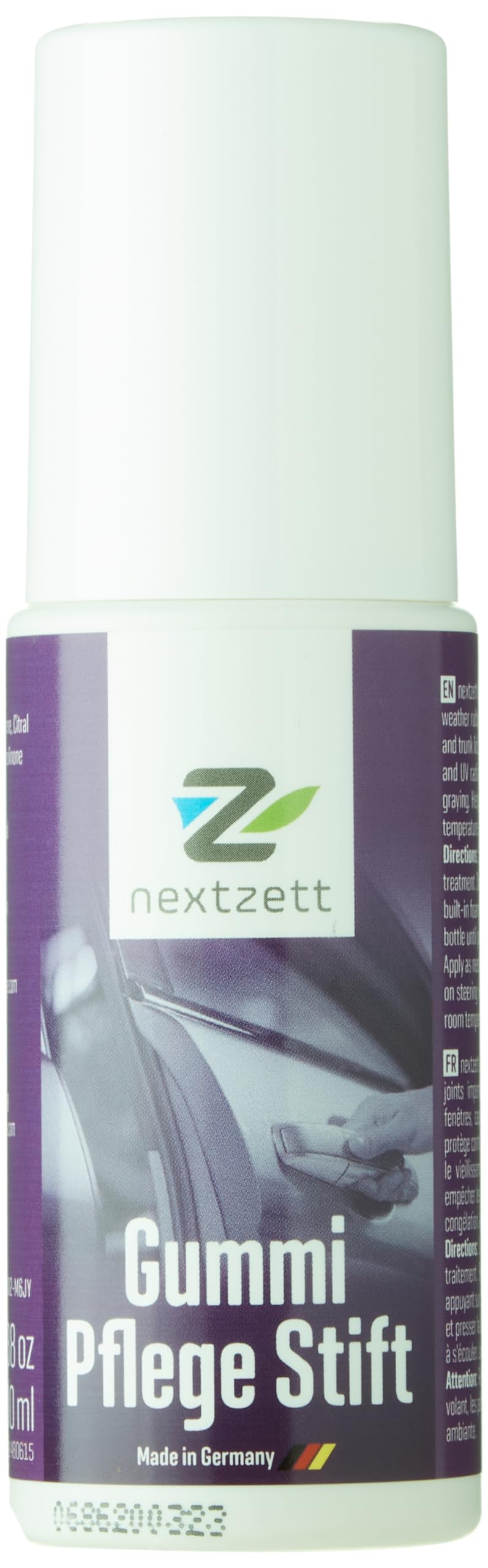
Rubber seals around car doors, windows, and trunks are easy to ignore until they start to fail. A dry, cracked weatherstrip lets water in, whistles at highway speed, and can freeze shut in winter. nextzett Gummi Pflege is one of the few products sold specifically for that job rather than as a general-purpose protectant. It comes in a 3.4 fl oz applicator bottle with a foam tip, and it is meant to be wiped directly onto the rubber rather than sprayed.
The product is a rubber conditioner, not a cleaner or a dressing. Its stated purposes are keeping seals supple, slowing cracking and fading from UV exposure, and preventing doors and windows from freezing shut in cold weather. Those are modest claims, and in practice the product behaves like a maintenance item: it helps rubber that is still structurally sound stay that way, but it does not repair rubber that has already torn or hardened into brittle plastic.
How it is actually used
The application method is the main reason people seek this product out. The built-in foam applicator lets you run the liquid along the narrow channel of a door seal without soaking the surrounding paint or trim. A typical routine is to wipe the seals down with a damp cloth first, let them dry, then press the applicator tip against the rubber and draw it along the length of each seal. The liquid goes on milky and dries to a clear, slightly tacky film within a few minutes. Most people report using it once or twice a year as part of seasonal prep, with an extra pass before winter.
Coverage is reasonable for the bottle size. A full sedan with four doors, a trunk, and a sunroof takes a fraction of the 3.4 ounces, so a single bottle lasts multiple vehicles or several years of maintenance on one car. That makes the relatively high per-ounce price easier to justify than it first appears.
What it does and does not do
On seals that are dry but intact, the effect is noticeable within a day. Rubber that felt stiff and slightly chalky becomes more pliable, and doors that were beginning to need a firmer push close more easily. The anti-freeze benefit is real but conditional: it works by keeping the rubber supple and by leaving a film that reduces adhesion between the seal and the door frame, so it helps most when the underlying rubber is in decent shape. On a seal that is already cracked through, water still gets into the cracks and freezes.
- Applicator design: The foam tip reaches into seal channels and narrow gaps where a spray or cloth would be clumsy.
- Finish: Dries clear and does not leave the greasy sheen that silicone sprays often do, so it is less likely to attract dust or smear onto clothing.
- Versatility: Works on door seals, trunk seals, sunroof gaskets, and window run channels, and some owners use it on convertible top seals as well.
- Cold-weather function: The stated freeze-prevention benefit is the product’s main differentiator from generic rubber protectants.
Limitations worth knowing
This is a conditioner, not a restorer. It will not soften rubber that has hardened to the point of cracking, and it will not fill or hide existing damage. If a seal is torn or has lost its shape, replacement is the only real fix, and Gummi Pflege applied over a failing seal can create a false sense of security. The tacky residue it leaves is also a minor annoyance; it can pick up grit if applied too heavily, and over-application on visible surfaces may attract dust until it fully dries.
The price per ounce is high compared with a tube of generic silicone grease, which can also keep seals pliable. The trade-off is convenience and cleanliness: silicone grease is messier, harder to apply evenly in narrow channels, and can leave a shiny film. For someone maintaining one car, the applicator format is the main reason to choose this over a cheaper alternative. For a shop or a fleet, the economics shift toward bulk products.
Who it suits
It makes the most sense for owners of older cars, particularly European models whose seals tend to dry out with age, and for anyone in a cold climate who has dealt with a frozen door or a window that will not drop. It is also a reasonable seasonal habit for cars parked outdoors, where UV and temperature swings do the most damage. It is less useful for new cars whose seals are still soft, and it is not a substitute for replacing worn weatherstripping. Anyone expecting a visible restoration of badly aged rubber will be disappointed; the product is preventive maintenance, and it should be judged on that basis.
Overall, Gummi Pflege is a specialized tool that does one job well within its limits. It is not a miracle cure for neglected seals, but for keeping healthy ones healthy through winter, it is a practical addition to a car care routine.