
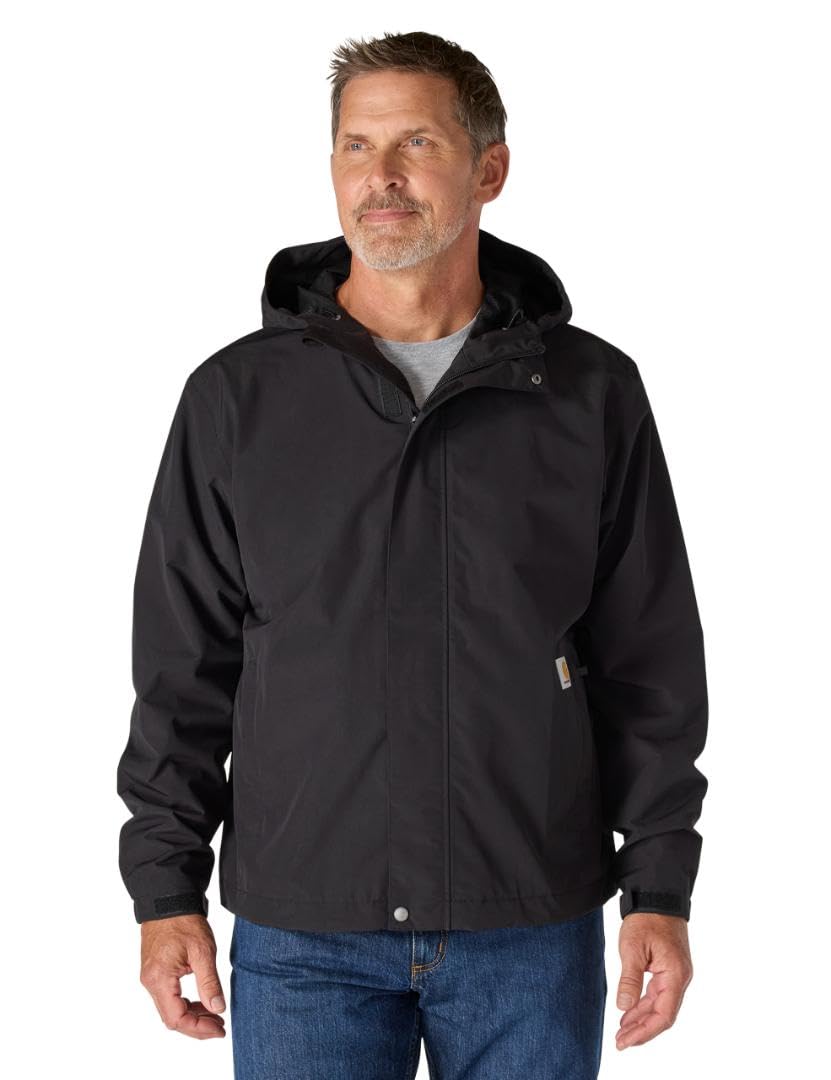
The Carhartt Men’s Bayou Jacket is a lightweight outer layer designed for work and outdoor use in cool, damp conditions. It’s not a heavy winter coat, nor is it a fashion piece—it’s a functional garment that fits into Carhartt’s long tradition of durable workwear. In this review, we’ll look at how the Bayou Jacket performs in real-world scenarios, what it does well, and where it falls short.
Real-world usage context
From what we’ve seen, the Bayou Jacket is often chosen by people who need a reliable layer for chores, light construction, yard work, or casual outdoor activities. It’s popular among those who work in cool but not freezing temperatures, where a heavy parka would be overkill. The jacket is also used as a mid-layer under a heavier coat in colder weather, thanks to its relatively trim fit. It’s the kind of jacket you might keep in the truck or by the door for quick trips outside when the weather is iffy.
Key functional features
The Bayou Jacket is made from a 12-ounce, 100% cotton sanded duck fabric, which is lighter than Carhartt’s traditional firm-hand duck. This makes it more flexible and comfortable from the start, though it may not be as abrasion-resistant as the heavier material. The jacket has a quilted lining for warmth, and a corduroy-trimmed collar that adds a bit of comfort around the neck. There are two large lower-front pockets and a zippered chest pocket, providing ample storage for tools or personal items. The front zipper is covered by a storm flap to keep out wind and light rain. The cuffs are adjustable with snap closures, and the waist has an adjustable drawcord. The jacket is available in sizes small through 5XL, with a relaxed fit.
Performance expectations
In terms of warmth, the Bayou Jacket is best suited for temperatures roughly between 40°F and 60°F (4°C to 15°C), depending on what you wear underneath. It’s not insulated enough for freezing conditions on its own. The cotton duck fabric is water-resistant but not waterproof; it will shed light rain for a while, but in a steady downpour, you’ll eventually get wet. It’s also not windproof, so on blustery days, you’ll feel the chill. The quilted lining adds some warmth but isn’t bulky, so you retain mobility. The jacket softens with wear and becomes more comfortable over time, but the initial stiffness of the duck fabric might take some getting used to.
Limitations and trade-offs
One notable limitation is that the Bayou Jacket is not designed for extreme cold or heavy rain. If you need a jacket for harsh winter conditions, this isn’t it. Another trade-off is the lack of a hood; the corduroy collar is comfortable, but in wet weather, you’ll need a separate hat or hood. The cotton material also means the jacket is not as breathable as synthetic fabrics, so if you’re doing strenuous activity, you might feel clammy. Additionally, the jacket is relatively short in the body, which is typical for work jackets but may not provide enough coverage for some users. The snap cuffs are functional but less adjustable than Velcro closures found on some other jackets.
Comparison to alternatives
Compared to a softshell jacket, the Bayou Jacket is more durable and provides better protection against abrasion, but it’s less breathable and not as water-resistant. A fleece jacket is softer and more breathable but won’t hold up to rough use as well. The Bayou is similar in concept to Carhartt’s own Detroit Jacket, but the Bayou has a lighter fabric and a quilted lining, making it more of a transitional piece. If you’re looking for a heavier, more protective work jacket, the Detroit might be a better choice; if you want something lighter and more packable, a synthetic insulated jacket could be more suitable.
Who it is and is not suitable for
The Bayou Jacket is well-suited for people who need a durable, no-frills jacket for cool weather work or casual wear. It’s a good option for farmers, mechanics, construction workers, or anyone who spends time outdoors in moderate conditions. It’s also a reasonable choice for everyday wear if you like the utilitarian look. However, it’s not ideal for those who need a jacket for extreme cold, heavy rain, or high-output activities where breathability is crucial. If you’re looking for a stylish fashion jacket, this probably isn’t it—the Bayou is function-first. Also, if you prefer a hood or a longer cut, you’ll need to look elsewhere.
Overall, the Carhartt Bayou Jacket is a solid, practical piece of workwear that does what it’s designed to do without unnecessary frills. It’s not without its limitations, but for the right user and conditions, it’s a dependable choice.