
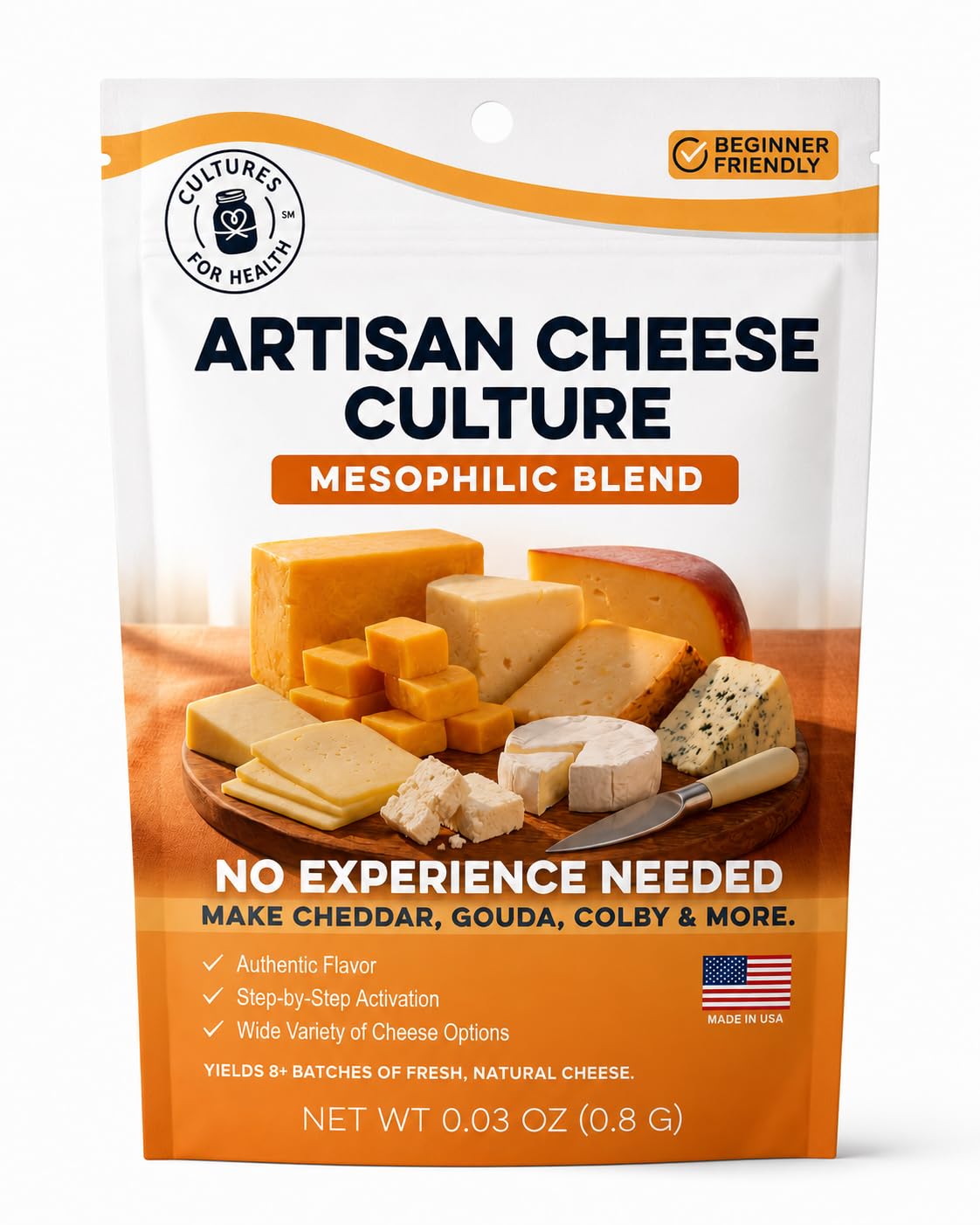
For home cheesemakers working with semi-soft and fresh cheeses, the Cultures for Health Mesophilic Cheese Starter bundle is aimed at a specific niche: cooks who want to make cheddar-style cheeses, quark, Colby, feta, cottage cheese, and similar varieties without maintaining a perpetual mother culture. The package includes four direct-set culture packets and two rennet tablets, which covers the two ingredients most beginners discover they need after buying their first gallon of milk.
The cultures are mesophilic, meaning they work at moderate temperatures roughly in the 70–90°F range rather than the warmer conditions required by thermophilic starters used for yogurt or mozzarella. In practice, this makes the product relevant for a defined set of recipes. A typical session involves heating milk, adding a packet, letting it ripen, then adding rennet and proceeding through cutting, draining, and pressing or salting depending on the cheese. The direct-set format means each packet is used once and discarded, which removes the step of propagating and storing a starter between batches.
Functionally, the four packets are portioned for single batches, and the two rennet tablets are enough for multiple makes since most recipes call for a quarter tablet or less. That ratio is worth noting: the culture will run out before the rennet does, so anyone planning a sustained schedule of cheesemaking will likely need to buy more culture separately. The tablets are standard animal-rennet style and need to be dissolved in cool, non-chlorinated water before use, a step that trips up some first-timers.
Real-world use tends to fall into two camps. The first is the occasional maker who wants to try feta or quark a few times without committing to a culture-maintenance routine. For them, the direct-set packets are genuinely convenient and the small quantity is appropriate. The second is the regular hobbyist making cheese most weekends, for whom the four packets represent a short runway. Those users often migrate to bulk direct-set cultures or a reusable mother culture, which is cheaper per batch over time but demands more attention and sanitation discipline.
Performance expectations should be realistic. Direct-set mesophilic cultures are reliable but not instant; expect ripening times in the range the recipe specifies, often 30 to 60 minutes, and note that milk quality, pasteurization status, and kitchen temperature all affect results. The culture does not compensate for poor milk or inaccurate thermometers. Cheeses like quark and cottage cheese are forgiving and make good starting points, while pressed varieties such as Colby demand more attention to pressing and aging. The rennet tablets, meanwhile, lose potency over time, so storing them properly matters more than the packet suggests.
Compared with liquid starter cultures, the direct-set packets trade cost efficiency for convenience and consistency. Liquid cultures can be propagated and stretched across many batches, but they require careful handling and a feeding schedule. Compared with a simple acid-set approach using vinegar or lemon juice, this product produces a more complex flavor and better texture in cultured cheeses, though it adds steps and waiting time. It also sits somewhere between a bare-bones rennet-only kit and a full cheesemaking kit that includes molds, thermometers, and cheese salt; this bundle assumes the buyer already has or will separately acquire that equipment.
Who is it for? It suits beginners who want to attempt cultured semi-soft and fresh cheeses with a low upfront commitment, and gift-givers putting together a starter package for someone curious about the hobby. It is less suitable for high-volume makers, anyone expecting to make mozzarella or other thermophilic cheeses (this culture will not do that job), or people who prefer the economy of a reusable culture. The absence of instructions beyond what is printed on the packets is also a limitation; novices will need a separate recipe source or book to use the product confidently.
Overall, this is a modest, functional bundle that does what it claims within a narrow scope. It is not a complete cheesemaking solution, and the culture-to-rennet ratio means repeat buyers will restock culture sooner than rennet. But as an entry point into cultured cheesemaking, it is a reasonable and honest starting package, provided expectations are set around batch count and the need for supplementary equipment and guidance.