
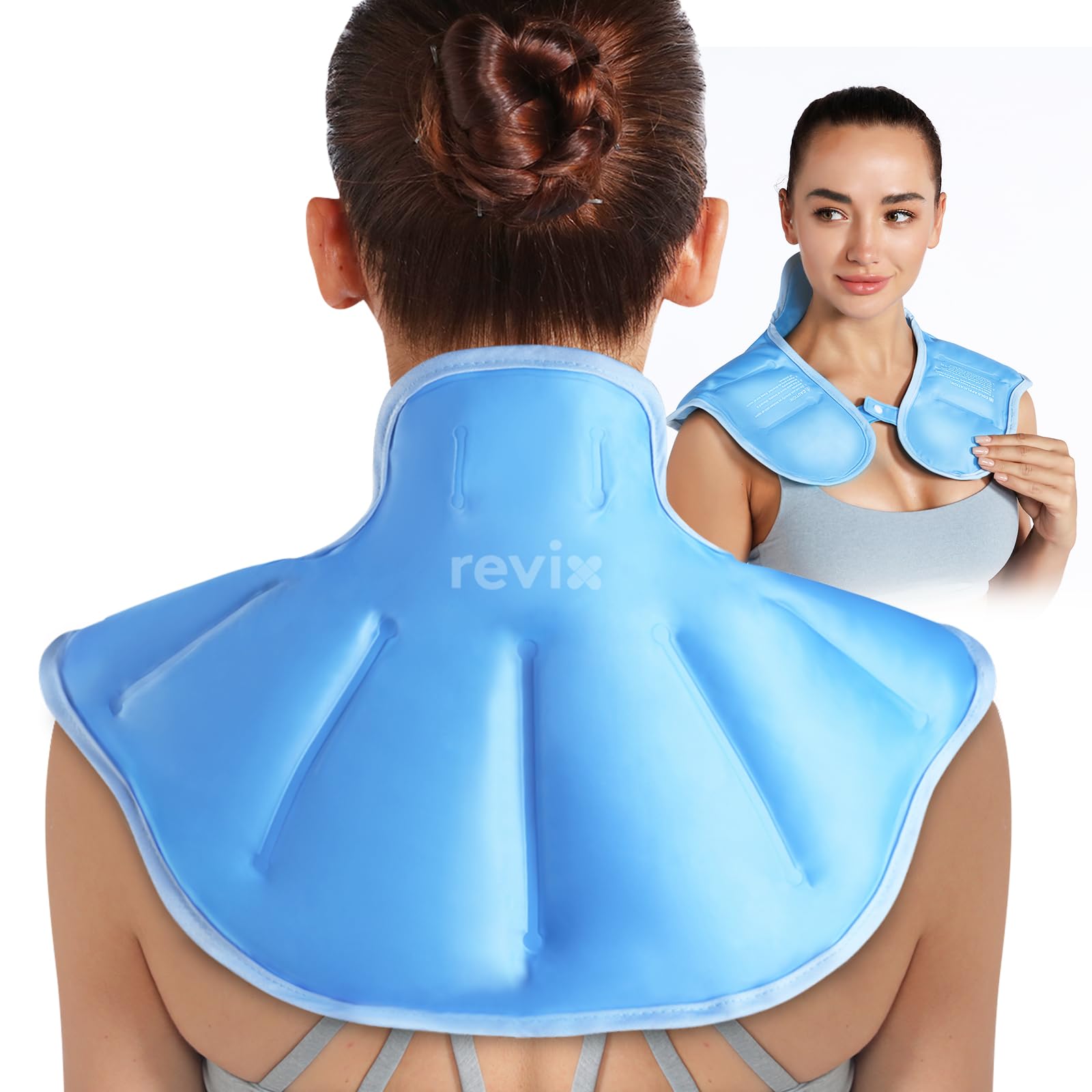
Cold therapy wraps occupy a crowded corner of the home recovery market, and the REVIX Ice Pack for Shoulders and Neck is a representative example of the wrap-style approach: a flexible sleeve filled with gel packs, designed to drape over the shoulders and upper back rather than being held in place by hand. It is aimed at people dealing with shoulder stiffness, post-workout soreness, or general upper-back discomfort who want a hands-free option they can wear while sitting or moving around the house.
The design logic here is straightforward. The wrap covers both shoulders and the neck area at once, which is more coverage than a single flat gel pack provides. Adjustable straps let the wearer cinch it down, and the gel inserts are segmented so the pack can bend around the shoulder contour instead of sitting rigidly on top of it. In practice, that segmentation matters — a flat pack tends to slide off a rounded shoulder, while a segmented one conforms better and stays put with modest strap tension.
How it tends to be used
Most buyers of this type of wrap are using it in one of a few scenarios: after physical therapy sessions, following shoulder or rotator cuff strain, during desk-work recovery, or as part of a post-exercise routine. Because it is wearable, it fits into situations where lying down with a flat pack is impractical — answering emails, watching TV, or doing light chores. The hands-free element is the core selling point, and it is the feature that most distinguishes this category from a simple cold compress.
The pack is typically stored in the freezer and rotated in and out. REVIX markets it as usable for both cold and heat, which is common for gel-based wraps; the same insert can be chilled or warmed depending on the need. That dual use is convenient but worth treating with realistic expectations — a gel pack warmed in a microwave holds heat for a shorter window than a dedicated heat wrap, and the cold retention is similarly finite.
What works and what to expect
- Coverage across both shoulders and the neck is genuinely broader than a single small pack, which suits people with diffuse upper-back tension rather than one pinpoint spot.
- The straps allow a customized fit, though the wrap is sized for average adult frames and can feel loose on smaller users or tight across the chest on broader ones.
- Cold duration is in line with typical gel packs — roughly 15 to 20 minutes of useful cooling before it needs to go back in the freezer. This is normal for the category, not a defect, but buyers sometimes expect longer.
- The fabric facing is soft enough to wear against skin for short sessions, though those with sensitive skin may prefer a thin layer underneath.
Where it falls short
The main trade-off is fit versus flexibility. A one-size wrap cannot flatter every body, and the shoulder-and-neck shape means it does not double well as a general-purpose pack for knees, ankles, or the lower back. If your pain is localized to one small area, a contoured single-joint pack will likely deliver more targeted cold and be easier to position. The wrap also adds bulk; wearing it under clothing is not realistic, and it is best used over a t-shirt or directly on skin for short periods. Finally, gel packs inevitably warm up, so anyone needing extended sessions will want a second insert or a plan to re-chill.
How it compares
Against a traditional flat gel pack, the REVIX offers better hands-free coverage and stays in place during movement, at the cost of bulk and a less precise fit. Against a dedicated heating pad, it is more versatile for cold therapy but less effective as a sustained heat source. Against single-use instant cold packs, it is reusable and more economical over time, though it requires freezer space and advance planning. In short, it sits in the middle of the market: more wearable than a basic pack, less specialized than a joint-specific wrap.
Who it suits, and who it does not
It is a reasonable choice for adults recovering from shoulder or upper-back strain who want a wearable pack for short cold sessions at home, and for people who find holding a pack in place tiring. It is less suitable for anyone with a very small or very large frame expecting a precise fit, for users who need long uninterrupted cooling, or for those whose discomfort is confined to a single small joint. As with any cold therapy product, it is a comfort aid rather than a treatment, and persistent pain warrants professional advice rather than a wrap alone.