
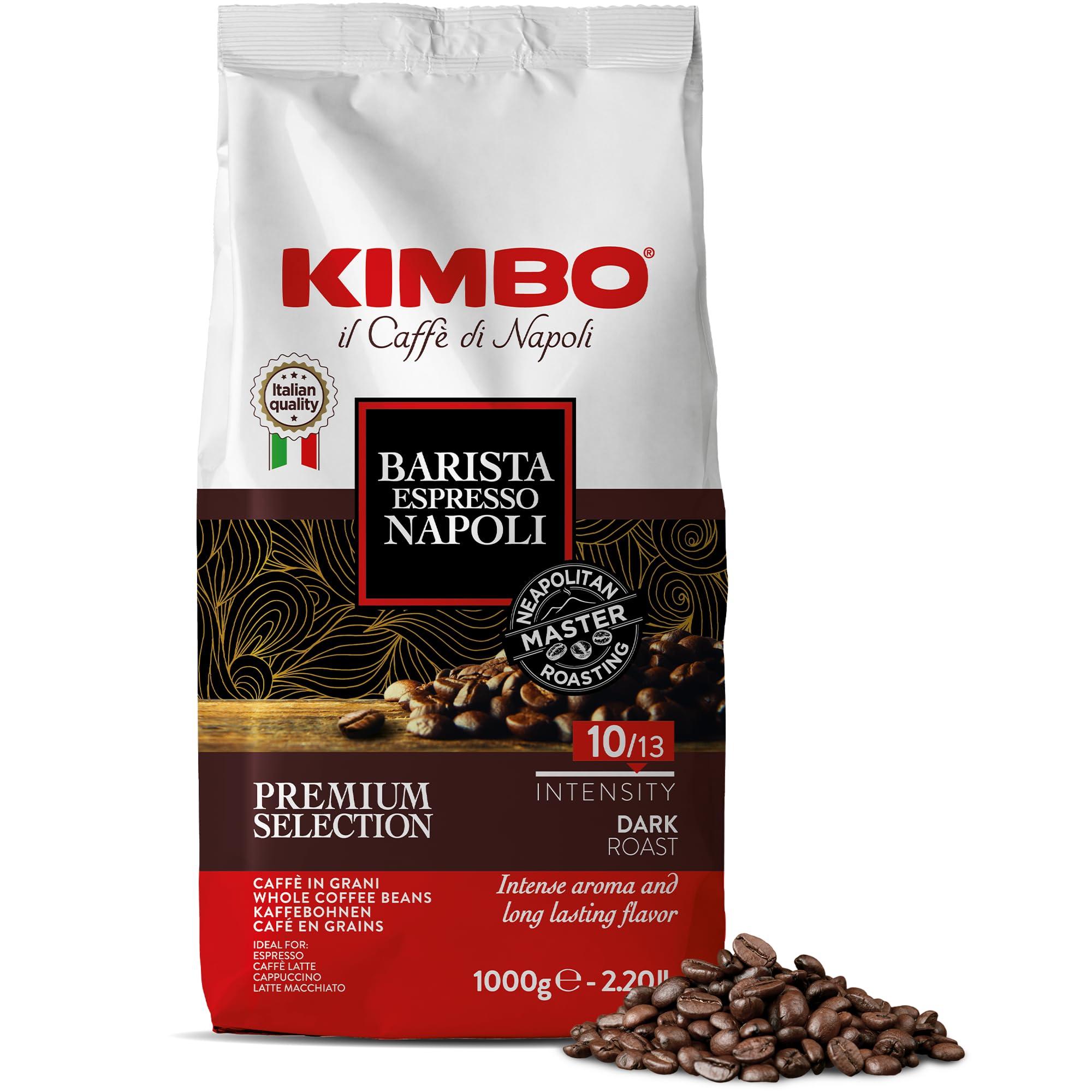
Kimbo is one of the names that shows up regularly on the shelves of southern Italian kitchens and in the supply closets of cafés that lean toward a Naples-style cup. The Napoli whole bean offering, sold in a 2.2-pound bag, is aimed at that tradition: a dark roast blend intended primarily for espresso and stovetop brewing. It is not a single-origin specialty coffee, and it does not pretend to be. Judging it by the standards of a third-wave light roast would miss the point entirely. The more useful question is whether it delivers a consistent, recognizable Neapolitan-style cup at a price that makes sense for daily, high-volume use.
The roast level is the first thing anyone will notice. These beans are dark, glossy in places, and visibly oily, which is typical of blends roasted for espresso extraction under pressure. In practice, that means the coffee is built to cut through milk and to hold up in a moka pot without turning thin or sour. Used as a drip coffee, it will taste considerably more bitter and less nuanced than most supermarket medium roasts, and that is a real limitation rather than a matter of taste preference. The blend is not designed for filter brewing, and it shows.
Where the Napoli blend tends to perform best is in a home espresso setup or a moka pot. The dark roast extracts quickly and forgivingly, which helps people who are still dialing in a grinder or working with an entry-level machine. Shots tend toward a thick, syrupy body with low acidity and a lingering finish that reads as dark chocolate and toasted nut rather than fruit. In milk drinks, the flavor does not disappear, which is more than can be said for many lighter roasts at this price. For a cappuccino or a small latte, it behaves the way a traditional Italian blend is expected to behave.
Some functional details are worth noting before buying:
- Format: Whole bean, 2.2 pounds (roughly 1 kg), which is a larger bag than most grocery-store coffee and suits households that go through a bag every few weeks.
- Roast: Dark, with visible surface oil, indicating a roast profile developed for pressure extraction.
- Blend: A multi-origin blend rather than a single origin, which is standard for consistency in Italian espresso.
- Packaging: Typically a foil bag with a one-way valve; once opened, the beans begin to decline within a couple of weeks, so the bag size is a trade-off between value and freshness.
That last point deserves more attention than it usually gets. A 2.2-pound bag is economical per pound, but whole bean coffee stales faster than most people expect, especially a dark, oily roast. If you brew one or two cups a day, the final third of the bag will likely taste flatter than the first. Splitting the bag into smaller airtight containers and freezing the portion you will not use within a few weeks is a practical workaround, but it is still a compromise compared with buying smaller quantities more often. Buyers who value peak freshness over unit price may find the format frustrating.
Compared with a typical medium-roast supermarket espresso blend, the Napoli is darker, heavier, and less acidic. Compared with a specialty espresso roast from a local roaster, it offers less complexity and less origin character, but it is also more consistent bag to bag and considerably cheaper per pound. It sits in a specific middle ground: better suited to traditional preparation than most commodity coffee, but not a substitute for a freshly roasted specialty blend if that is what you are used to. Anyone expecting fruit notes, floral aromatics, or a bright finish will be disappointed, and that is fine, because those are not the goals here.
Grind setting matters more with a dark roast than many people realize. Because the beans are brittle and oily, they tend to produce more fines and can clog some grinders or choke a pressurized basket. Starting slightly coarser than you would for a medium roast and adjusting from there is usually the more productive approach. In a moka pot, a medium-fine grind works well, and the blend is forgiving enough that small errors do not ruin the cup. In a French press, the heavy body and low acidity come through, but the fines make for a muddier cup than a coarser-roasted coffee would produce.
Who is this for? It suits people who drink espresso or moka coffee daily, often with milk, and who want a dependable, traditional-tasting cup without spending specialty prices. It also works for households that brew several cups a day and can finish a kilogram bag before it goes stale. It is less suitable for filter-coffee drinkers, for anyone who prefers light or medium roasts with visible acidity, and for small households where a large bag will sit open for months. Those buyers would be better served by a smaller bag of a medium roast, even at a higher cost per ounce.
The honest summary is that this is a competent, purpose-built Italian-style dark roast rather than a remarkable coffee. It does what it is designed to do, and it does it consistently. The main trade-offs are the dark roast’s limited versatility and the freshness risk that comes with a large bag. Buyers who understand those constraints and brew accordingly will likely find it a reasonable everyday option; those looking for nuance or flexibility should look elsewhere.