
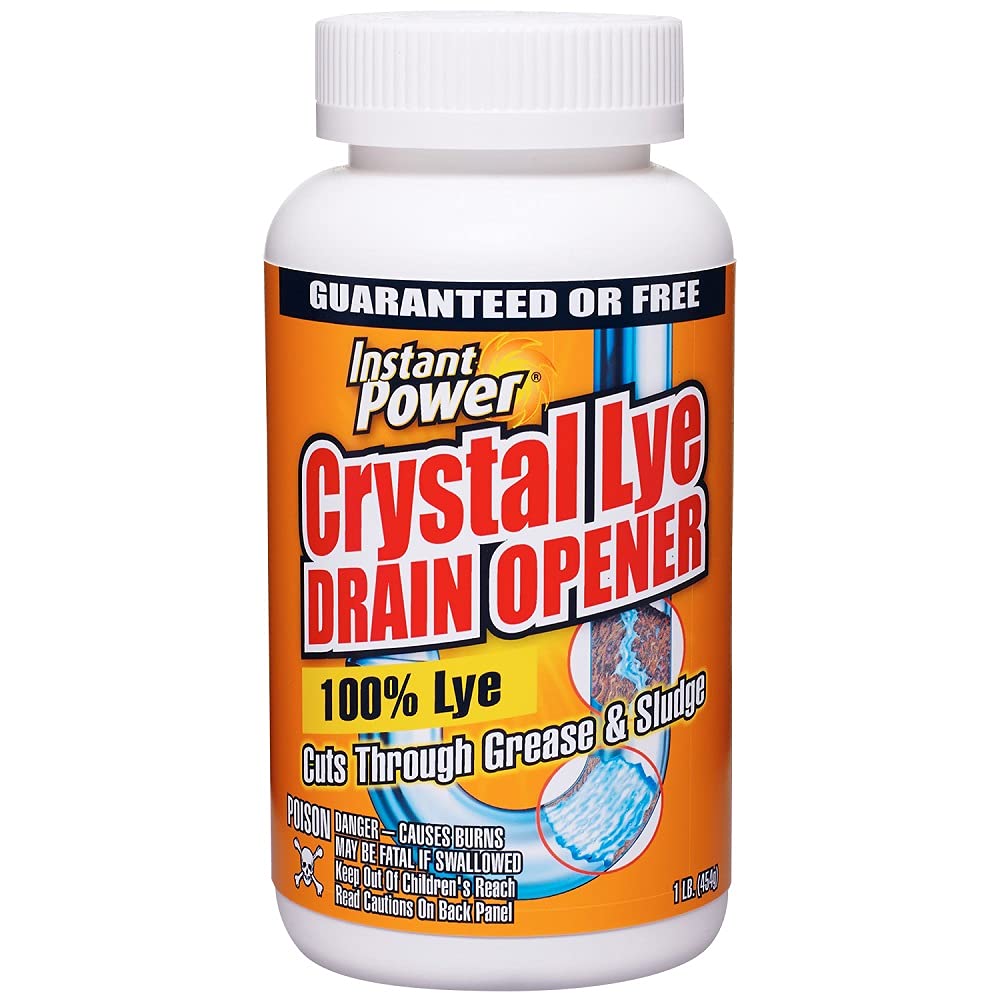
Instant Power Crystal Lye is a 1-pound container of 100% sodium hydroxide crystals, marketed for two distinct uses: clearing stubborn drain clogs and making soap from scratch. This dual-purpose positioning makes it an interesting case study in how a single chemical can serve both a household maintenance role and a craft ingredient role. The product is sold as a crystalline solid that must be dissolved in water before use, and it carries the inherent risks of any strong base. This review examines its practical applications, limitations, and suitability for different users.
In drain cleaning, the product is typically used by pouring a small amount of crystals into a slow or blocked drain, followed by a careful addition of water. The resulting exothermic reaction generates heat and a highly alkaline solution that can saponify greases and break down organic matter such as hair and soap scum. Users often leave it to sit for 15–30 minutes before flushing with hot water. It is most effective on clogs caused by grease, hair, and food residues, but it is not a fix for solid obstructions like toys, roots, or collapsed pipes. The 1-pound size provides multiple treatments for typical household drains, though the exact number depends on the severity of the clog and the dosage used.
For soap making, the same crystals serve as the alkali needed for cold-process or hot-process soap. Soap makers weigh the lye precisely and dissolve it in water or another liquid, then blend it with fats or oils. The product’s crystalline form dissolves readily, and its purity is generally consistent enough for soap recipes, though some crafters prefer lye beads for their easier handling and lower static cling. The 1-pound container is a convenient size for small batches, but it is not resealable in a way that protects the crystals from moisture over long periods; exposure to air causes clumping and eventual degradation. Proper storage in an airtight container is essential.
One of the main trade-offs of this product is its dual identity. While the dual use might seem economical, it also means the packaging and labeling must cater to two very different audiences. The drain-cleaning instructions are prominent, but soap makers might find the lack of detailed soap-making guidance on the label a drawback. More importantly, the product is a hazardous material: sodium hydroxide is corrosive and can cause severe burns. It requires careful handling with gloves, eye protection, and adequate ventilation. The exothermic reaction when mixed with water can generate enough heat to damage certain pipes, particularly older PVC or metal pipes with weak joints. Users should always follow the label directions and never mix lye with other chemicals, especially acids.
Compared to enzymatic drain cleaners, which use bacteria and enzymes to break down organic matter slowly and safely, lye is far more aggressive and fast-acting but also more dangerous. Enzymatic cleaners are better for maintenance and for pipes that cannot handle heat or strong chemicals, but they are ineffective on heavy clogs. Lye is also different from mechanical snakes, which physically remove blockages and are safer for pipes but require more effort. For soap making, lye crystals are a standard ingredient, but some crafters opt for pre-mixed lye solutions for convenience, though these are more expensive and less versatile.
Who is this product for? It suits homeowners who are comfortable handling caustic chemicals and who need a powerful, fast-acting drain opener for occasional severe clogs. It also appeals to soap makers who prefer to buy lye in crystalline form and are equipped to store and handle it safely. It is not suitable for households with young children or pets unless stored securely out of reach, nor for people who are uncomfortable with the risks of strong chemicals. Those with older or fragile plumbing should consult a plumber before using lye, as the heat and corrosiveness can exacerbate existing damage. Additionally, anyone looking for a gentle, maintenance-type drain cleaner should look elsewhere. For soap making, beginners might find pre-dissolved lye or lye beads easier to start with, but experienced crafters may appreciate the cost-effectiveness of crystals.
In summary, Instant Power Crystal Lye is a functional, no-frills product that does what it claims, provided users respect its hazards. It is not a product for casual or careless use, and its dual marketing may not perfectly serve either audience. However, for those who understand its properties and limitations, it can be a practical addition to both the utility closet and the soap-making shelf.