
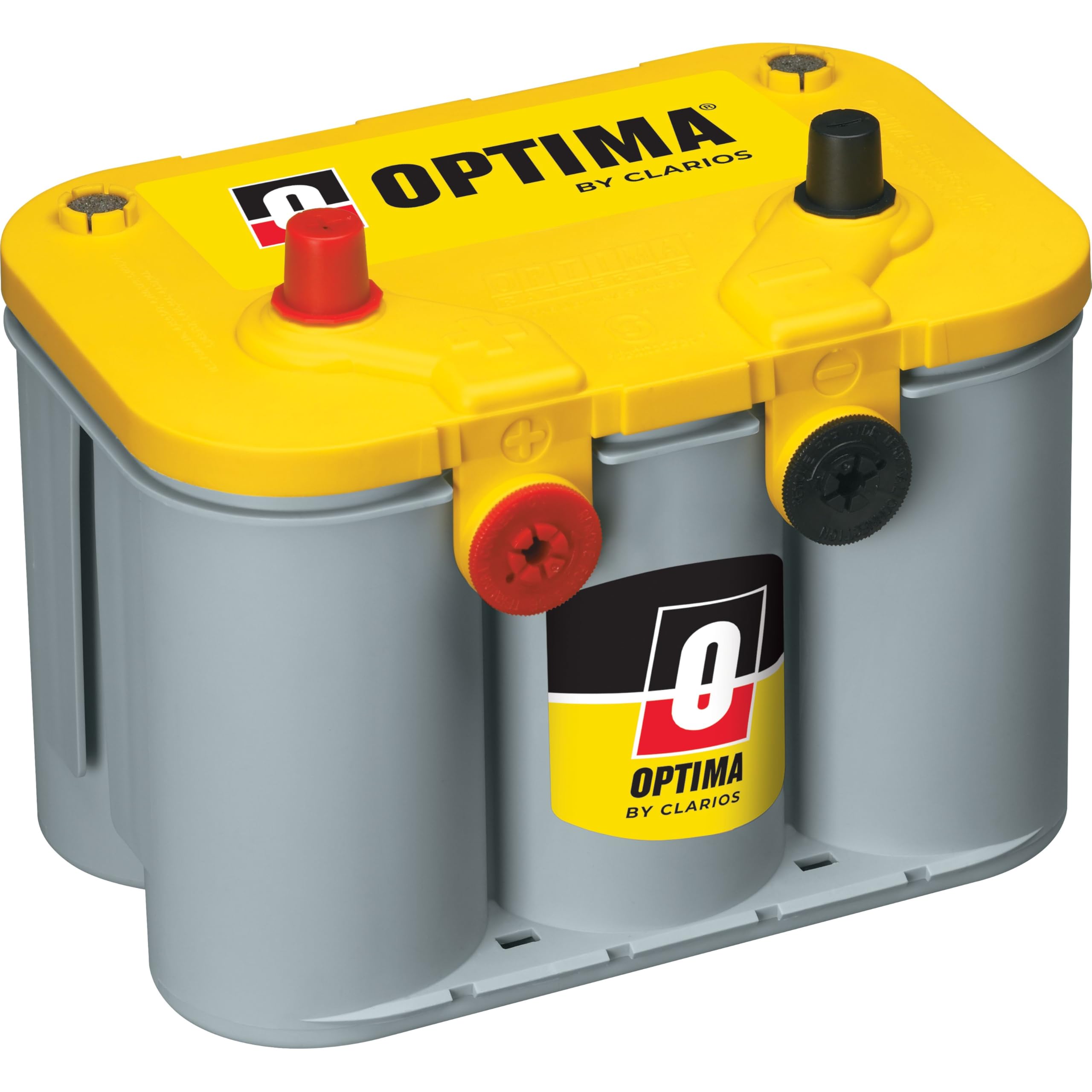
The OPTIMA D34/78 YELLOWTOP is a sealed absorbent glass mat (AGM) battery designed for dual-purpose use—starting engines and powering accessories. It’s often found in vehicles that need reliable cranking plus a reserve for winches, audio systems, or off-road lights. This review looks at its real-world behavior, trade-offs, and who should consider it.
Unlike standard flooded batteries, the YELLOWTOP uses spiral-wound AGM cells, which the manufacturer says improve vibration resistance and charge acceptance. The D34/78 case fits both top-post and side-terminal connections, making it adaptable to a range of vehicles. With a 55 Ah capacity and 750 cold-cranking amps (CCA), it’s positioned for mid-size engines and moderate electrical loads.
In practice, the YELLOWTOP shines in applications where the battery is asked to do more than just start the engine. Off-roaders with winches, overlanders running fridges, and car audio enthusiasts with amplified systems often choose it because AGM batteries can handle deeper discharges than flooded types. The sealed design also means no water topping, and it can be mounted in positions that would be risky for a flooded battery.
However, it’s not a deep-cycle battery. While it can handle moderate discharges, regularly running it below 50% state of charge will shorten its life. For heavy deep-cycle needs—like powering a trolling motor or a large solar setup—a dedicated deep-cycle AGM or lithium battery is a better fit. The YELLOWTOP sits in the middle: it starts reliably and provides some reserve, but it’s not a true deep-cycle unit.
Performance-wise, users report strong cranking even in cold weather, and the AGM construction resists vibration better than many flooded batteries. The D34/78 is relatively heavy (around 43 lbs), which is typical for AGM. Charging requires a compatible AGM profile; older chargers may not fully charge it, leading to premature failure. This is a common pitfall—using a standard flooded charger can undercharge the battery and reduce its lifespan.
Compared to a conventional flooded battery, the YELLOWTOP costs significantly more. The premium buys AGM benefits: spill-proof operation, better vibration resistance, and the ability to mount in unusual orientations. But if you just need a basic starting battery for a daily driver, a standard flooded battery will do the job for less money. The YELLOWTOP makes sense when you need the extra durability or plan to run accessories.
In terms of competition, the Odyssey PC1500 is a similar dual-purpose AGM, often praised for its deep-cycle resilience. The YELLOWTOP has a slight edge in cold-weather cranking and is widely available, but the Odyssey may tolerate deeper discharges. Both are premium options; the choice often comes down to availability and specific power needs.
Who is this for? It suits off-roaders, overlanders, and enthusiasts with moderate accessory loads who want a reliable starting battery that can also handle some cycling. It’s also a good fit for vehicles with high electrical demands, like those with winches or upgraded audio. Who is it not for? Budget-conscious drivers with standard vehicles, those needing a true deep-cycle battery for heavy cycling, and anyone who isn’t prepared to use an AGM-compatible charger. Also, if your vehicle requires a specific group size and the D34/78 doesn’t fit, you’ll need to look elsewhere.
One more limitation: AGM batteries are sensitive to overcharging and excessive heat. If your vehicle’s charging system isn’t compatible or you frequently operate in high-heat environments, the battery’s life may be shortened. This is true of most AGM batteries, but it’s worth noting.
Overall, the OPTIMA YELLOWTOP D34/78 is a solid choice for dual-purpose use, but it’s not a one-size-fits-all solution. It delivers on its promises of durability and starting power, provided you understand its limits and maintain it properly.