
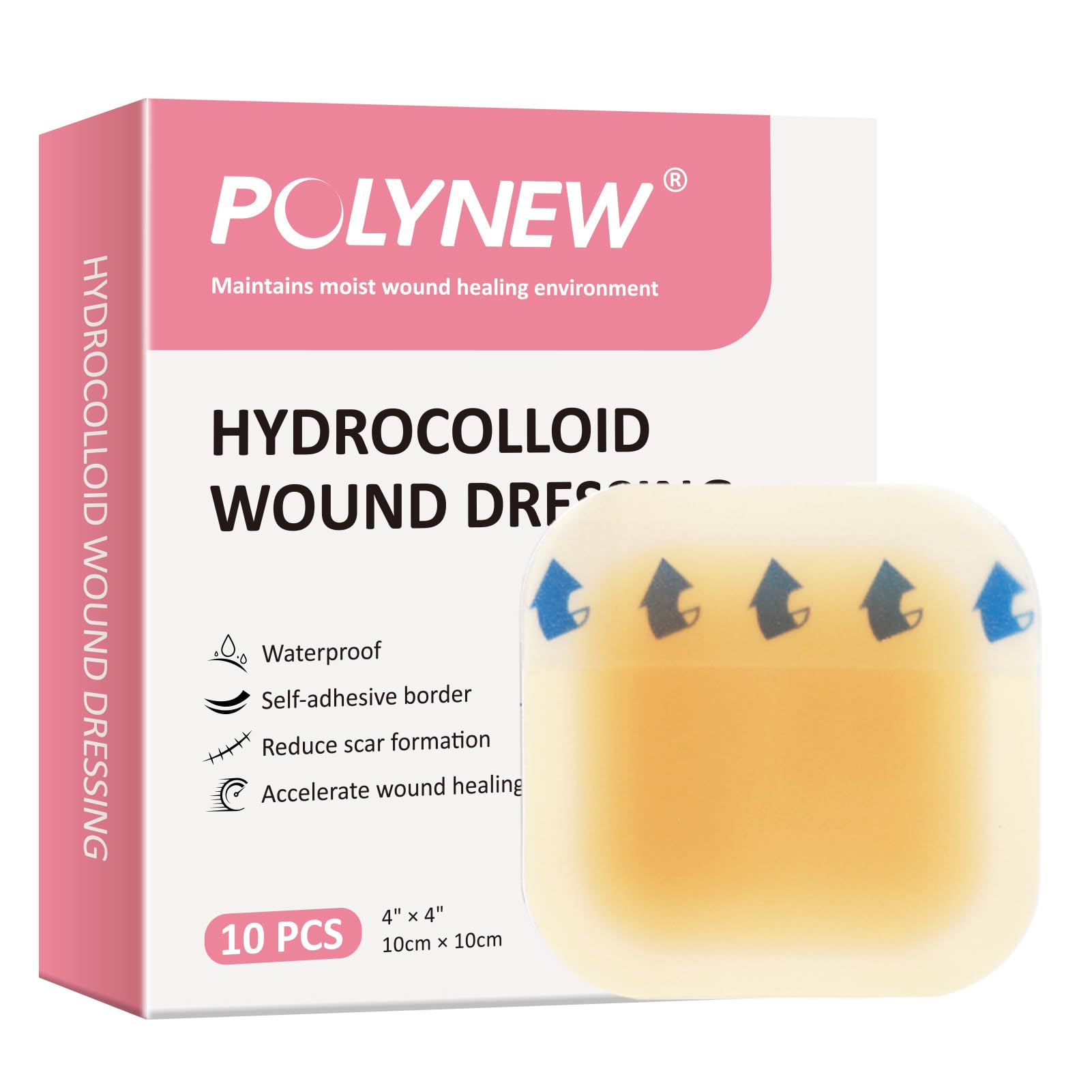
Hydrocolloid dressings occupy a useful middle ground in wound care: they handle light to moderate exudate, provide a moist healing environment, and can stay in place for several days. The POLYNEW 4″ x 4″ hydrocolloid dressing with border is a straightforward example of this category, sold in boxes of 10. This review looks at what the product offers, where it fits in real-world use, and where it falls short.
The dressings are square, 4 by 4 inches, and come with an adhesive border that extends beyond the absorbent hydrocolloid pad. That border is meant to secure the dressing to intact skin around the wound, creating a seal that keeps out water and bacteria. The hydrocolloid itself is a gel-forming material that absorbs light exudate and turns into a soft gel when it contacts wound fluid. The waterproof backing allows for showering without changing the dressing, though it’s not intended for swimming or prolonged immersion.
In practice, these dressings are often used on pressure ulcers, bed sores, and other shallow wounds with light drainage. The border makes application easier than borderless hydrocolloid sheets, which can be tricky to tape down evenly. The 4-inch size fits many common wound dimensions, but for larger areas, you’d need to use multiple dressings or choose a bigger size. The box of 10 is a reasonable quantity for home care or a small clinic, though frequent changers might go through it quickly.
One of the main advantages of hydrocolloid dressings is that they can be left in place for up to several days, depending on exudate levels. This reduces the frequency of dressing changes, which can be beneficial for patients with sensitive skin or for caregivers looking to minimize disruption. The waterproof feature adds convenience, as it allows for normal hygiene routines without compromising the dressing. However, it’s important to note that these dressings are not suitable for infected wounds or those with heavy exudate; in such cases, a different type of dressing, such as foam or alginate, would be more appropriate.
A common limitation of hydrocolloid dressings is that they can roll at the edges or lose adhesion in areas with high friction or moisture. The border helps mitigate this, but it’s not a guarantee. Also, the dressing can become opaque and bulge as it absorbs exudate, which can be disconcerting for some users, though it’s a normal sign that the dressing is working. The 4×4 size may be too small for some wounds, and the border can overlap the wound if not centered properly, so careful application is needed.
Compared to traditional gauze and tape, hydrocolloid dressings offer superior moisture retention and require less frequent changing. However, they are more expensive per dressing, and the cost may be a barrier for some. Compared to foam dressings, hydrocolloids are generally better for wounds with light exudate and are more discreet under clothing due to their low profile. Foam dressings, on the other hand, handle heavier exudate better and provide more cushioning.
Who is this product for? It’s suitable for individuals with minor pressure ulcers, bed sores, or shallow wounds with light drainage who want a waterproof, low-maintenance dressing option. It’s also useful for postoperative wounds that are healing well and not infected. It is not suitable for wounds with signs of infection (increased redness, warmth, swelling, or pus), heavily exuding wounds, or wounds with tunneling or undermining. Those cases require medical evaluation and different dressing types.
In terms of performance, users should expect the dressing to stay in place for 2-4 days, depending on the wound and activity level. It may need more frequent changes if the wound produces more exudate than anticipated. The adhesive border should be pressed firmly for at least 30 seconds to ensure a good seal. If the dressing gets wet and starts to lift, it should be replaced.
Overall, the POLYNEW hydrocolloid dressing with border is a functional, no-frills option for light exudate wounds. It does what it’s designed to do, but it’s not a one-size-fits-all solution. As with any wound care product, it’s best used under the guidance of a healthcare professional, especially for pressure ulcers and bed sores, which can be serious and require proper assessment.