
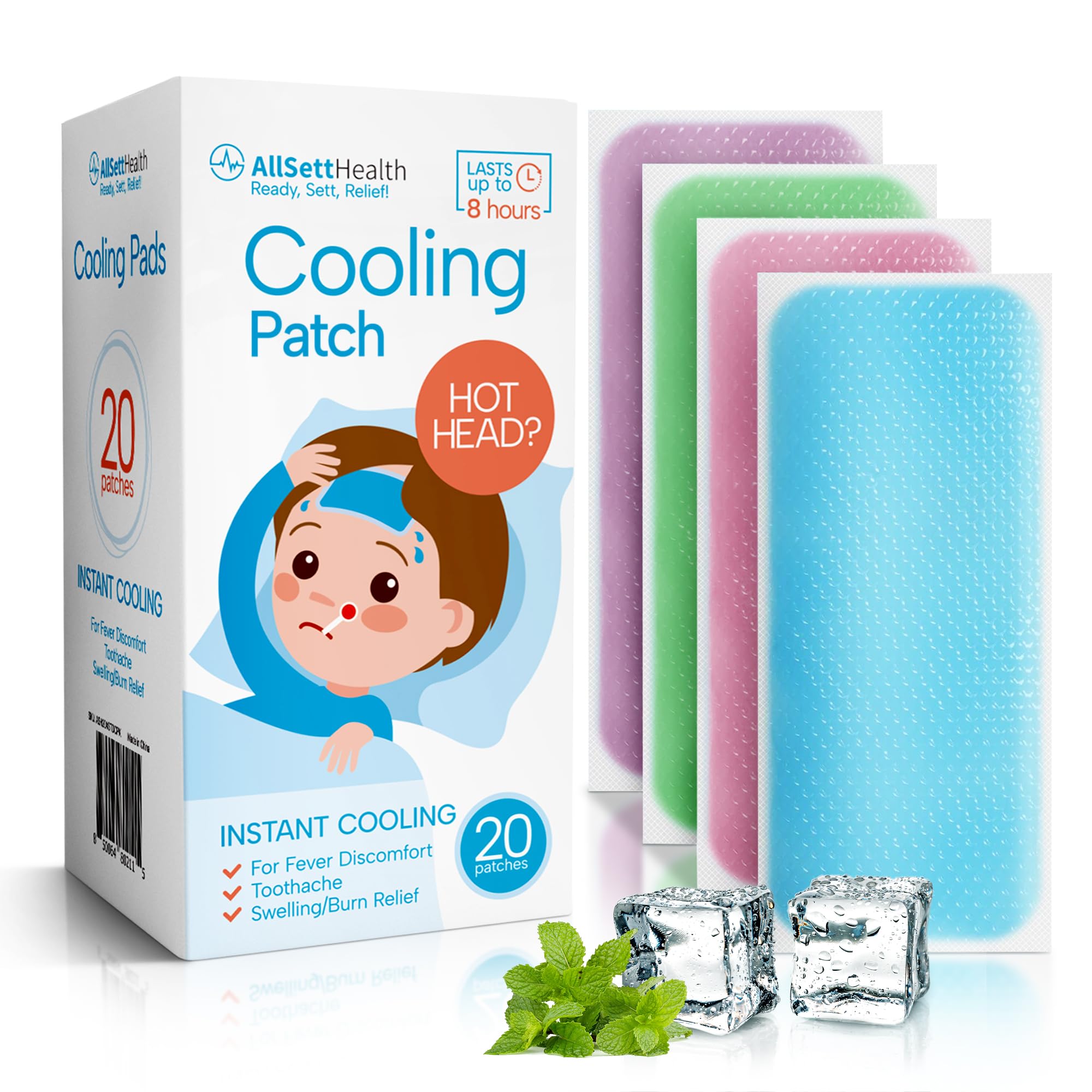
Cooling patches for children occupy a strange middle ground between medicine and comfort care. They don’t treat a fever or a headache, and the packaging rarely claims they do, but parents still reach for them at 2 a.m. when a child is flushed and miserable. This 20-pack of kids’ cooling patches is aimed squarely at that moment. The question worth asking is whether the product does anything useful beyond that, and where it falls short.
In practice, these pads are used in a few predictable ways. The most common is placing one on a child’s forehead during a low-grade fever, usually alongside a proper antipyretic rather than instead of one. They also show up for headaches, mild migraines in older children, and occasionally for heat discomfort during summer or after sports. Some parents use them for teething-adjacent fussiness or to calm a child during vaccinations. The cooling effect is mild and evaporative rather than refrigerated, so it is closer to a damp cloth than to an ice pack. That is the point: it is gentle enough for a child who would reject something colder.
Functionally, the pads are single-use hydrogel strips backed with an adhesive layer. Each one is individually wrapped, which matters more than it sounds, since a pack of 20 can sit in a cupboard for months and you don’t want the rest drying out after the first is opened. The adhesive is designed to hold on a moving child’s forehead without pulling at hair, and the gel layer is thin enough to conform to the curve of the head. Most versions of this product are sized for children rather than adults, which means the strips run small. A teenager or an adult borrowing one will find it covers only part of the forehead.
The cooling duration is where expectations need calibrating. These pads typically feel noticeably cool for somewhere in the range of 20 to 40 minutes, after which they settle to roughly skin temperature. They are not re-freezable and not reusable. For a fever that lasts through the night, a single pad is a short-lived intervention, and a 20-pack can disappear quickly during a bad week. That is the central trade-off: convenience and disposability versus cost and waste. A reusable gel pack or even a folded wet washcloth costs less over time and can be re-cooled indefinitely, though neither sticks to a restless child’s forehead or stays put while they sleep.
There are other limitations worth naming. The adhesive is not reliable on very sweaty skin, which is exactly the condition a feverish child tends to be in, so pads can peel at the edges within minutes. Children with sensitive skin may react to the adhesive or the menthol-like ingredients some brands include; this pack does not specify a strong scent, but it is worth checking the ingredient list if your child has reacted to topical products before. The pads also should not be applied over broken skin, near the eyes, or to infants without checking with a clinician, since very young babies cannot regulate temperature well and cooling measures need medical guidance.
Compared with the alternatives, the case is modest but real. A cool damp cloth is free and effective but requires constant re-wetting and doesn’t stay in place. A reusable gel bead pack is colder and longer-lasting but often too intense for a small child and needs a freezer. Oral fever reducers address the cause of the discomfort rather than the surface sensation. These patches sit in the comfort layer, not the treatment layer, and they are best understood as a way to help a child settle rather than a way to bring a temperature down.
Who is this for? Parents of children roughly three and up who want a low-effort comfort measure for fevers, headaches, or heat, and who value the individual wrapping for shelf life. It suits travel and school bags reasonably well for the same reason. Who is it not for? Families looking for a reusable or budget option, parents of infants under a year without medical advice, and anyone expecting a sustained cooling effect or headache relief comparable to medication. Children who dislike things stuck to their skin will simply pull the pad off, and no adhesive formulation solves that.
The honest summary is that this is a modest, disposable comfort product with a clear use case and clear limits. It works best as one small tool among several, not as a standalone remedy, and the 20-pack format makes sense for households that will actually use them within a season or two. Buy it for convenience and gentleness, not for potency.