
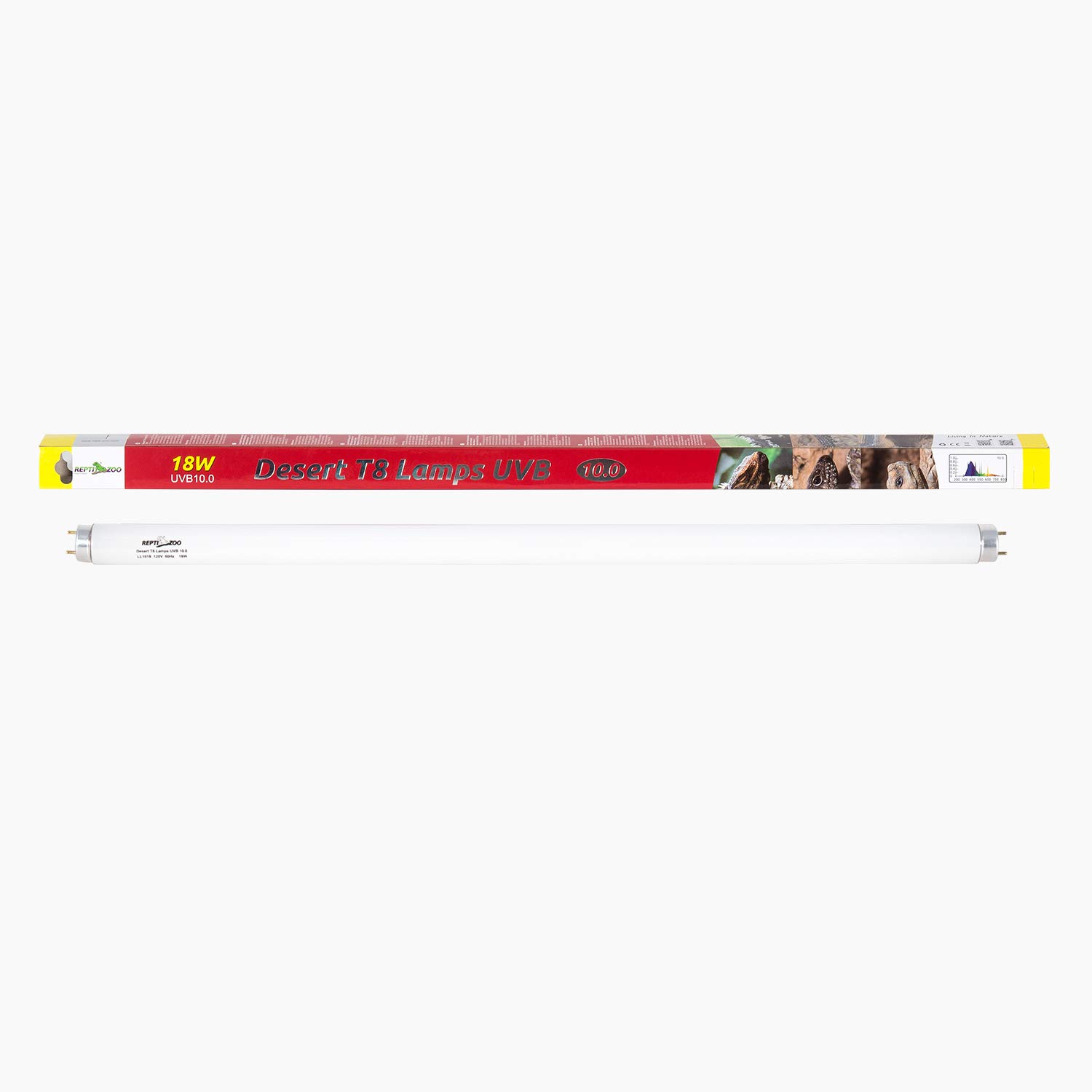
The REPTI ZOO 18W 10.0 UVB T8 fluorescent bulb is a 24-inch linear lamp aimed at keepers of desert and arid-zone reptiles. It slots into the familiar T8 tube category, which means it is a straightforward drop-in for fixtures designed around that format. The 10.0 designation places it toward the higher-output end of the UVB spectrum, which is the range typically associated with bearded dragons, uromastyx, and similar sun-loving species rather than tropical forest dwellers.
In practice, this bulb is used inside a reflective T8 fixture mounted either over a screen-top enclosure or inside the vivarium, usually running the length of the tank to create a UV gradient that the animal can move in and out of. Because it is a linear tube rather than a compact coil, it spreads UVB across a wider footprint, which is generally easier to manage than a single concentrated hotspot. Keepers typically pair it with a separate basking bulb for heat, since this lamp is a UV source and not a heat emitter.
The functional basics are worth stating plainly. It is an 18-watt T8 tube measuring 24 inches, rated at 10.0 UVB, and it is marketed for desert setups. Fluorescent tubes of this type produce a gradual decline in UVB output over their service life, so the output at month eight is not the output at week one. That is normal for the category, but it matters for planning: most keepers replace T8 desert tubes somewhere in the six-to-twelve-month window depending on the species and mounting distance, and a UV meter is the only reliable way to know when a specific tube has dropped below useful levels.
What the bulb does reasonably well is deliver a broad band of UVB across a long enclosure at a price point that is accessible compared with specialty high-output linear lamps. For a keeper running a standard 24-inch or 36-inch tank who wants a linear UVB source without rebuilding the lighting rig around T5 hardware, this is a workable option. The 10.0 rating gives more UVB than a 5.0 or 2.0 tube, which suits species that evolved under intense sun.
There are trade-offs, and they are not minor. T8 tubes are lower in output than T5 high-output lamps of comparable length, so the effective UVB distance is shorter. Mounting height and screen mesh both cut into what reaches the animal, and with a T8 the useful zone may sit fairly close to the tube. Keepers of large or tall enclosures often find they need a T5 HO setup instead to get adequate UVB at realistic basking distances. The bulb also requires a T8-compatible fixture and ballast; it will not fit T5 or T12 fittings, and buying the wrong fixture is a common and avoidable frustration. Output consistency between individual tubes is another consideration, and as with most budget-priced fluorescents, it is wise to verify with a meter rather than trust the label alone.
Compared with a compact coil UVB bulb, this linear tube covers more area and avoids the narrow cone of UVB that coils tend to produce, which is generally better for animals that need to move through a gradient. Compared with a T5 HO linear lamp, it is less intense and shorter-reaching, but also less demanding on fixtures and often cheaper to run and replace. The honest framing is that it sits in the middle of the linear UVB market: better spatial coverage than a coil, less punch than a T5 HO.
This bulb is a sensible fit for keepers of bearded dragons, uromastyx, and other arid species in standard-height enclosures who already run T8 fixtures and want a higher-UVB tube in that format. It is also reasonable for someone building a modest first desert setup on a budget. It is not the right choice for tall or large enclosures where the basking site sits far from the tube, for keepers who want the longer service life and higher output of T5 HO systems, or for tropical and crepuscular species that need lower UVB levels. Anyone without a UV meter should factor one into the budget, because guessing at replacement intervals with any fluorescent tube is unreliable.
Overall, the REPTI ZOO 10.0 T8 is a functional, mid-tier linear UVB option with clear limits. It does its job within the constraints of the T8 format, and it is best treated as one component in a lighting plan rather than a standalone solution.