
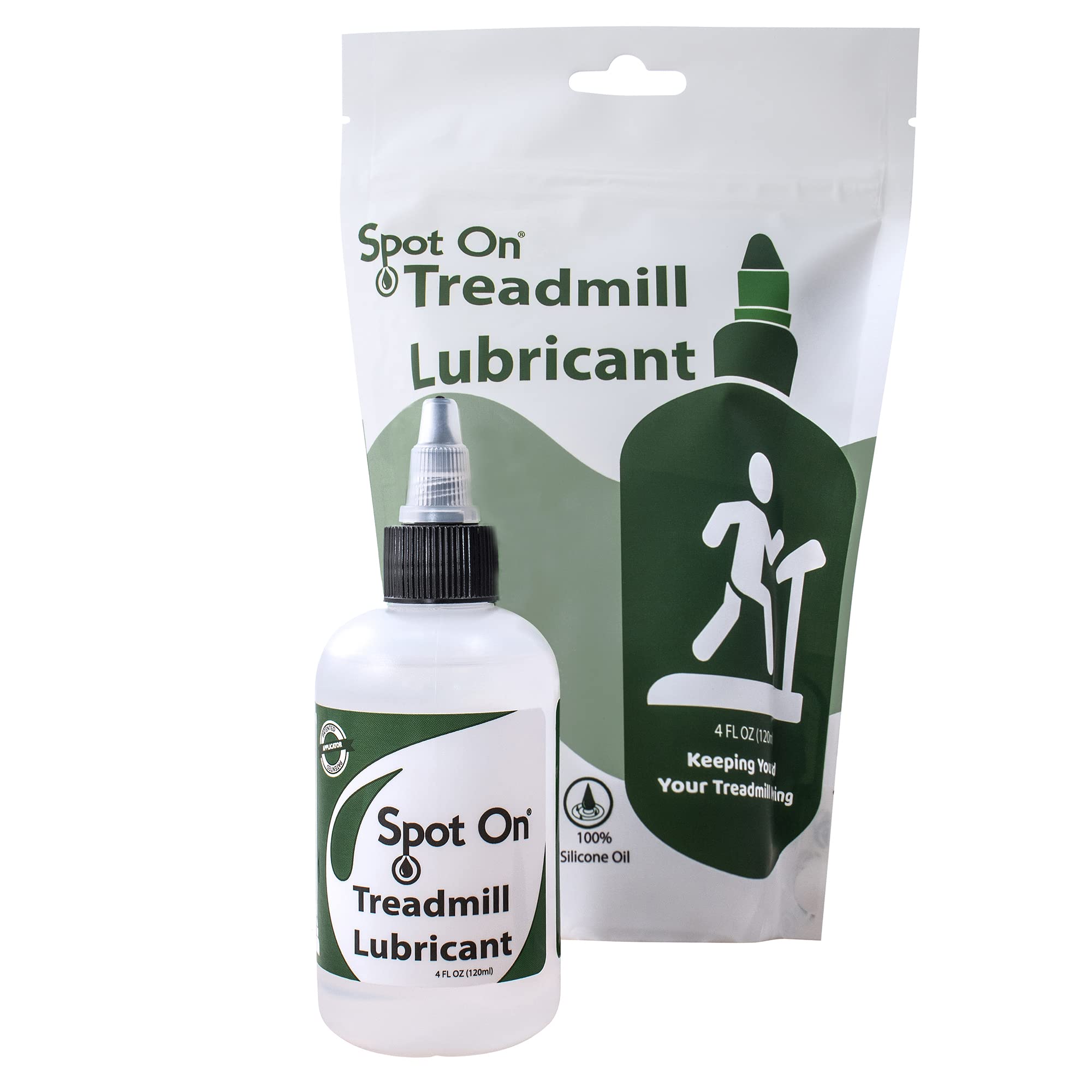
Treadmill belt lubricant is one of those maintenance items most people buy once and think about rarely, which makes the format of the bottle matter almost as much as what’s inside it. This particular product is a 100% silicone lubricant made in the USA, packaged in a squeeze bottle designed for controlled flow. It’s a straightforward proposition: a single-ingredient silicone oil meant to reduce friction between the belt and deck of a treadmill. Whether it’s the right choice depends largely on your machine and how you prefer to apply lubricant.
In practice, lubricating a treadmill means lifting or loosening the belt slightly, then applying a thin line of lubricant along the deck surface under the belt, usually near the center or across the width depending on the manufacturer’s instructions. The squeeze bottle is the practical part here. Silicone oil is slippery and easy to over-pour, and a controlled-flow nozzle lets you lay down a bead rather than dumping a puddle that then needs to be spread by running the machine at low speed. For anyone who has used a squirt-top bottle or a tube, the difference is noticeable in terms of mess.
As for the formulation, 100% silicone is the standard recommendation for most home treadmills, particularly those with a deck-and-belt setup rather than a lubricant-free or self-lubricating design. Silicone is chemically stable, doesn’t gum up like some petroleum-based alternatives can, and doesn’t attract dust the way sticky greases might. It’s also generally compatible with rubber belts, though it’s worth checking your treadmill manual, since a minority of manufacturers specify particular lubricant types or warn against silicone altogether.
What the product doesn’t do is solve the two most common points of confusion in treadmill maintenance. First, there’s no applicator tube or extension nozzle mentioned, which matters on machines where the belt gap is tight and the deck sits deep under the motor cover. On some treadmills, reaching the center of the deck with a bottle requires lifting the belt more than is comfortable, and a flexible applicator would help. Second, the bottle doesn’t come with any guidance on quantity or interval; that information lives in your treadmill manual, and it varies widely. A 100% silicone product is only as good as the amount you apply, and over-lubrication can cause belt slip just as under-lubrication causes wear.
A reasonable comparison is the aerosol spray lubricant category. Sprays are easier to apply in hard-to-reach spots and can cover a wider area quickly, but they’re harder to control, often contain propellants and solvents, and can leave overspray on the deck or floor. Squeeze-bottle silicone is slower and more deliberate, which suits people who want to apply a measured amount and avoid cleanup. The trade-off is that sprays may be more convenient for treadmill models with very limited access. There’s also the dry-film and wax-based lubricant category, which some manufacturers recommend for specific belt types; those aren’t interchangeable with silicone and shouldn’t be used unless the manual calls for them.
Realistic expectations matter here. Lubricant reduces friction and can extend belt and deck life, but it won’t fix a worn belt, a misaligned running deck, or a slipping belt caused by a loose tension setting. It’s maintenance, not repair. Applied correctly, most people will use a bottle like this over many months, since a typical application is a thin line rather than a full coating. That makes the made-in-USA claim and the simple formulation less about performance and more about consistency and peace of mind for buyers who prefer domestic manufacturing.
This product suits people with standard home treadmills who follow their manual’s lubrication schedule and want a clean, controlled application without aerosols. It’s a sensible pick for anyone replacing a messy squeeze tube or an imprecise spray. It’s less suitable for treadmill owners whose manual specifies a non-silicone lubricant, for machines with self-lubricating belts that shouldn’t be treated at all, and for anyone who needs a long applicator nozzle to reach the deck. It’s also not the right purchase for someone trying to diagnose a squeak or slip, since those issues usually point to belt tension or alignment rather than lubrication. Within those limits, it’s a functional, no-frills consumable that does what it says.