
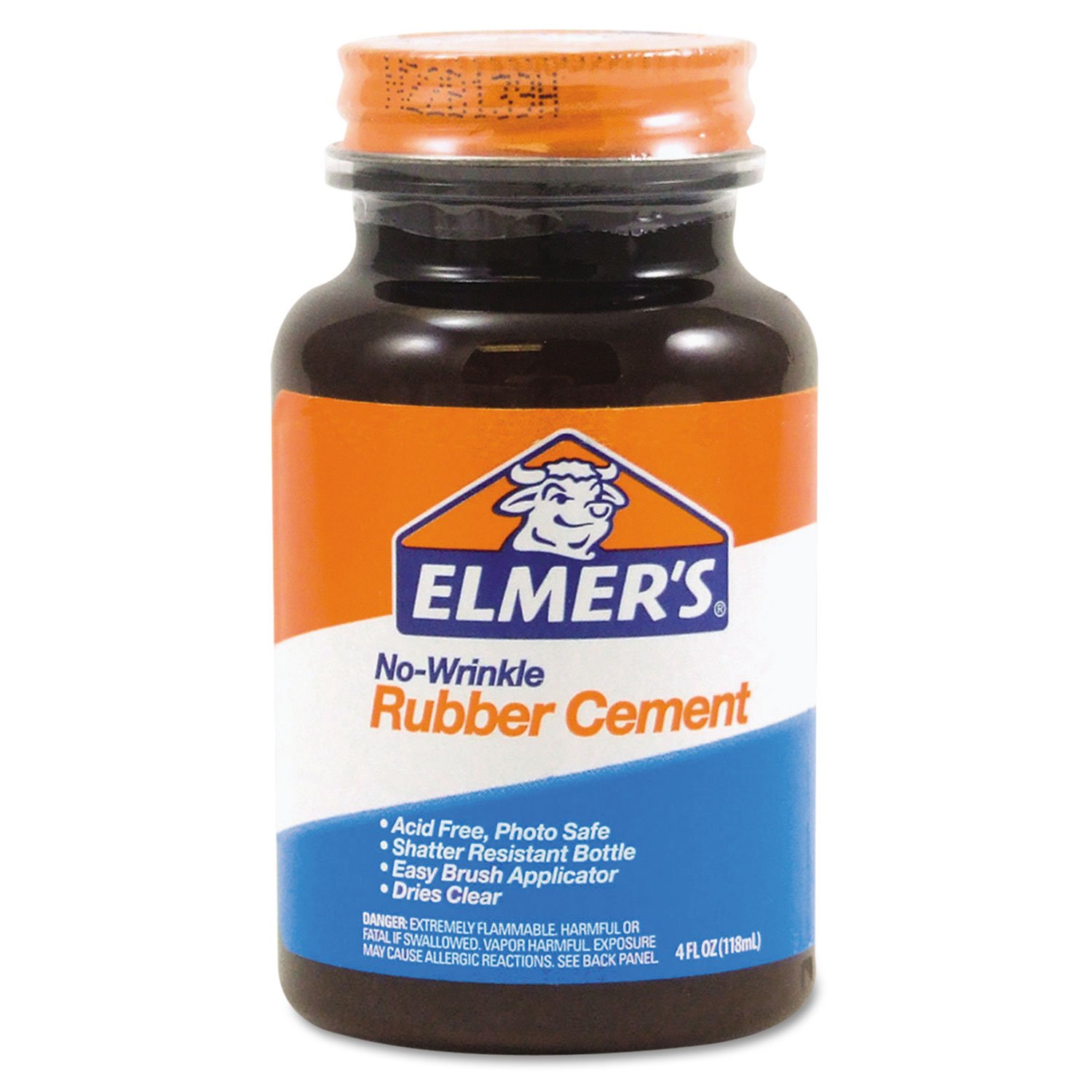
Rubber cement occupies a strange spot in the adhesives aisle. It is not as common as white glue or as aggressive as super glue, and many people encounter it for the first time in a school art class or while assembling a photo album. Elmer’s Rubber Cement, sold under the EPIE904 designation, is one of the more widely available versions of this older-style adhesive, and it is worth understanding what it does well before deciding whether it belongs on your shelf.
The core appeal of rubber cement is its reversibility. Unlike most glues, which form a permanent bond once cured, rubber cement is designed to be peeled or rubbed away. That single property explains most of its real-world use. Print shops and design studios use it for paste-up work, where paper elements need to be repositioned without tearing. Archivists and scrapbookers appreciate that it does not wrinkle paper the way water-based glues can. In classrooms, it is often the adhesive of choice for collage projects because mistakes are not permanent. Elmer’s formulation follows this tradition, arriving as a thick, rubbery liquid with a distinct solvent smell that fades as it dries.
Functionally, the product behaves the way rubber cement is expected to. It applies with a brush, which is typically included in the cap or sold alongside the bottle, and it grabs fairly quickly. The bond holds paper, cardstock, photographs, and similar lightweight materials well. One useful characteristic is that excess cement can be rolled into a ball and rubbed off with a finger or a special eraser, which keeps finished work looking clean. The adhesive remains somewhat flexible after curing, so it tolerates minor movement in the materials without cracking. Drying time is moderate, usually a few minutes depending on how thickly it is applied, and it does not require clamping or weights the way some contact adhesives do.
There are trade-offs, and they are worth taking seriously. The solvent smell is strong and lingers during application, so working in a well-ventilated room is not optional. The fumes can bother people who are sensitive to odors, and the product is flammable while wet, which means it should be kept away from open flames and stored carefully. Rubber cement also has limited strength on non-porous surfaces. It is not a substitute for a structural adhesive, and it will not hold heavy objects or materials under stress. Over time, rubber cement bonds can yellow or become brittle, particularly in warm conditions, which matters for anything intended to be kept long-term. The bond is also sensitive to heat and to certain plastics, so testing on a scrap piece first is sensible.
Compared with white PVA glue, rubber cement offers easier repositioning and cleaner removal but weaker holding power and a less pleasant application experience. Compared with spray adhesive, it is more precise and less messy in small areas, though slower to apply over large surfaces. Compared with double-sided tape, it is more forgiving of positioning but requires drying time and cleanup. In other words, it is a specialized tool rather than a general-purpose one, and it is best judged on that basis.
Who is this for? It suits people doing paper crafts, collage, scrapbooking, photo mounting, and design mockups where repositionability matters. Teachers and students working on temporary displays will find it practical. Anyone who needs to glue wood, metal, ceramics, or heavy materials should look elsewhere. It is also a poor fit for outdoor projects or anything exposed to heat, and people who dislike solvent-based products may prefer a water-based alternative even at the cost of reversibility. Those with respiratory sensitivities should be cautious, and households with young children should store it out of reach given the fumes and flammability.
The EPIE904 bottle is a reasonable size for occasional craft use, though frequent users may find themselves replacing it often. The brush applicator works but can become gummy if not cleaned after use, and the cap needs to be sealed tightly to prevent the cement from thickening. Storage in a cool, dry place extends its usable life. Overall, Elmer’s Rubber Cement is a dependable version of a classic adhesive, but it is a product with a narrow job description. Buy it for the tasks it was designed for, and keep a different glue on hand for everything else.