
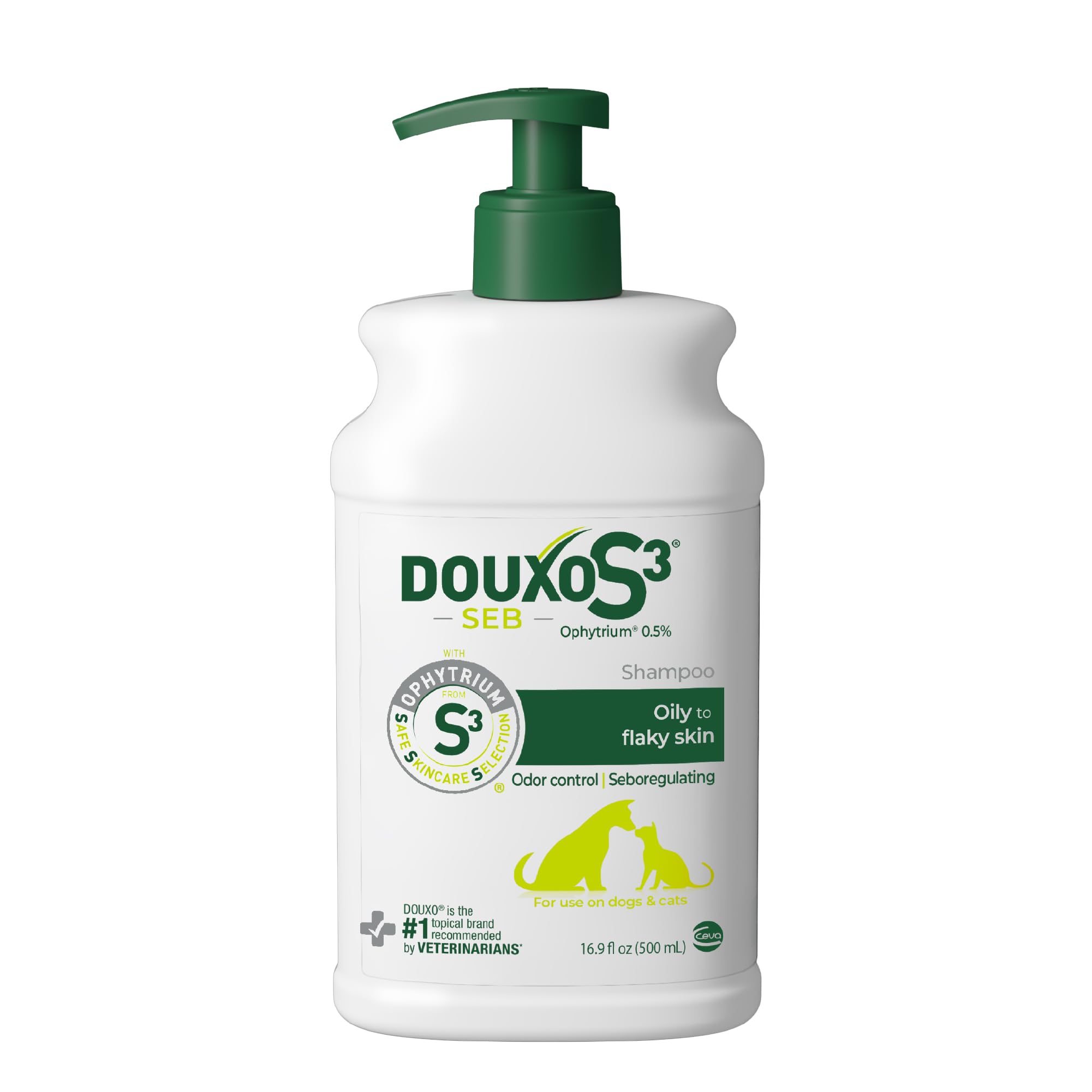
Douxo S3 SEB is a medicated-leaning shampoo aimed at dogs with seborrhea — skin that produces too much oil, sheds flakes, or carries an oily, yeasty smell. It sits in the middle of the Douxo lineup, between the milder maintenance formulas and the more intensive chlorhexidine-based products, and it is most often recommended by veterinarians rather than discovered on a store shelf. The 16.9 fl oz bottle is a standard size for a mid-length dog and lasts through several weeks of the typical twice-weekly bathing schedule the label suggests.
The active ingredient is 0.5% ophytrium, a patented complex rather than a classic drug. It is paired with a mild cleansing base and what the manufacturer describes as a sebum-regulating agent. In practical terms, the shampoo is designed to clean without stripping the skin barrier, which matters because harsh degreasing shampoos can trigger a rebound of oil production and make the problem worse over time. The formula is soap-free and pH-adjusted for canine skin, and it rinses out more easily than many medicated shampoos that leave a residue.
In real-world use, this is a bath-time product with a specific ritual. Most owners are told to wet the coat thoroughly, work the shampoo into a lather, leave it in contact with the skin for roughly five to ten minutes, then rinse completely. That contact time is the part people underestimate. A quick lather-and-rinse does little; the point of the formula is the dwell time on the skin. For dogs with thick or double coats, getting the shampoo down to the skin rather than sitting on the topcoat takes some effort, and a curry brush or your fingers are usually necessary. Expect to use more product per bath than with a standard pet shampoo, which affects how far a bottle actually goes.
Performance is gradual rather than dramatic. Owners typically report that greasiness and odor improve over several washes rather than after one, and flaking may briefly look worse before it settles as the skin turnover normalizes. It is not a cure for underlying allergies, hormonal conditions, or yeast infections, and it should not be treated as one. Dogs with confirmed malassezia overgrowth often need an antifungal ingredient alongside or instead of this product, and a vet should make that call.
The main trade-off is cost and frequency. This is a premium-priced shampoo, and the recommended bathing cadence — often two to three times a week during flare-ups — means a bottle can disappear faster than owners expect. The scent is mild and medicinal rather than perfumed, which some people appreciate and others find flat. It also does not produce a thick, luxurious lather, which can make owners feel it isn’t working; it is, but the experience is utilitarian.
Compared with a conventional oatmeal shampoo, Douxo S3 SEB is more targeted at oil control and odor rather than soothing itch alone. Compared with chlorhexidine shampoos, it is gentler and better suited to long-term maintenance, but it is not the right choice when an active bacterial infection needs treating. It occupies a useful middle ground: stronger than a cosmetic shampoo, milder than a prescription antimicrobial one.
This shampoo suits dogs with oily, flaky, or odorous skin that a vet has identified as seborrheic, and owners willing to commit to a consistent bathing routine. It is a reasonable maintenance option for breeds prone to greasy skin, and it works well as part of a broader plan that may include diet or topical spot treatments.
It is not suitable for dogs with broken or infected skin without veterinary guidance, for puppies below the age stated on the label, or for owners looking for a once-a-month convenience product. Anyone expecting an instant fix, or unwilling to leave the shampoo on for the full contact time, will likely be disappointed. It is also a poor fit as a general-purpose shampoo for a dog with normal skin — the cost and the targeted formulation are unnecessary there.
Overall, Douxo S3 SEB is a sensible, vet-adjacent product that does a specific job competently. It rewards patience and consistency more than it rewards a single bath, and it is best understood as part of a skin-care regimen rather than a standalone solution.