
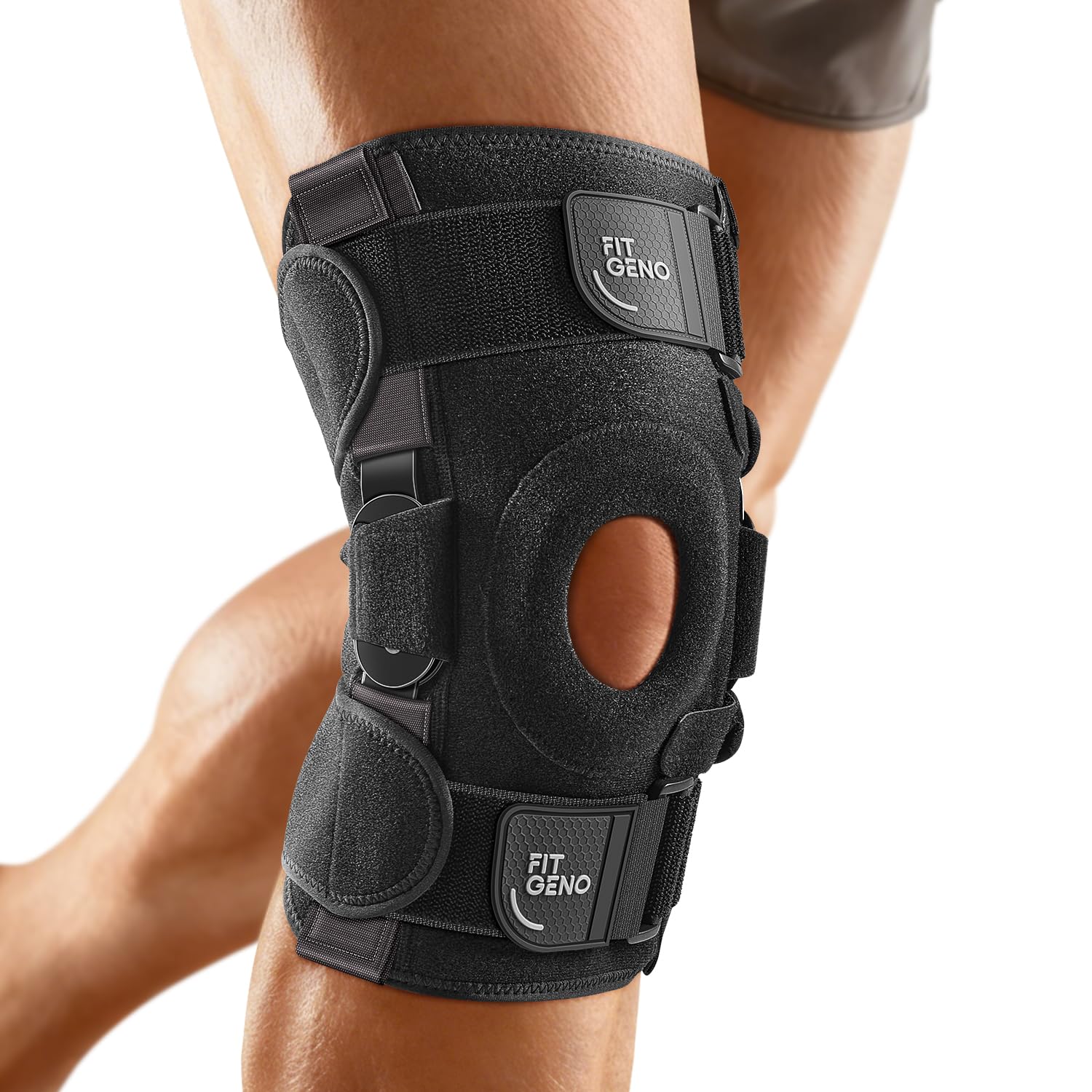
The Fit Geno hinged knee brace sits in a crowded category of orthopedic supports aimed at people recovering from meniscus injuries, ligament sprains, or general knee instability. Unlike a simple compression sleeve, this one uses metal side hinges and adjustable straps, which puts it closer to the type of brace a physical therapist might hand you after an appointment. That distinction matters, because the brace you choose should match the stage of recovery you are in, not just the severity of the original injury.
In practice, a hinged brace like this is typically worn during activities that involve bending, squatting, or uneven ground—walking the dog, climbing stairs, returning to light gym work, or getting through a workday on your feet. The side stabilizers are the defining feature: two rigid metal supports run along the inner and outer sides of the knee, connected by a hinge at the joint. The idea is to limit sideways movement while still allowing controlled flexion and extension. For a meniscus tear, that lateral restraint is often the point, since twisting and pivoting are what tend to aggravate the injury.
The Fit Geno version adds adjustable straps above and below the knee, plus a wrap-around or open-back design depending on the variant. The open-back style is easier to put on, especially if the knee is swollen or tender, and the straps let you dial in compression without relying on a single elastic tube. Breathable fabric and a cutout around the kneecap are common in this price bracket, and they help with heat buildup during longer wear. None of this is unusual for the category, but the combination of hinges, straps, and an accessible fit is what most buyers are paying for.
Realistically, this is a support brace, not a replacement for rehabilitation. It can help you feel more confident moving around, and it may reduce some of the apprehension that comes with a healing knee. What it will not do is fix a meniscus tear or substitute for strengthening the muscles around the joint. Reviewers of similar braces often report that the hinges feel stiff at first and that the fit takes some fiddling to get right—too loose and the brace slides down, too tight and it digs into the back of the knee or calf. Expect a break-in period of a few days, and expect to adjust the straps more than once during a long walk.
One limitation worth flagging is bulk. Hinged braces are inherently thicker than sleeves, and this one is no exception. It can be awkward under slim trousers, and the metal hinges may press against the opposite leg when sitting with knees together. For sleeping or lounging, most people will find it overkill and will prefer a soft sleeve. The sizing also tends to run on the generous side, and because the straps do most of the securing, a poor initial measurement can leave you with a brace that either bunches or migrates. Measuring the thigh and calf as instructed is not optional here.
Compared with a basic neoprene sleeve, the Fit Geno offers more mechanical support but less everyday comfort and discretion. Compared with a post-surgical ROM (range-of-motion) brace, it is far less restrictive and much easier to live in, but it also provides less rigid protection. It occupies the middle ground: more than a sleeve, less than a rehab-grade brace. That middle ground is useful for people returning to normal activity but not yet cleared for pivoting sports.
Who is it for? Adults dealing with mild to moderate knee instability, meniscus irritation, or a sprain who want lateral support during daily activity and light exercise. It suits people who are willing to adjust straps and wear something visible under clothing. Who is it not for? Anyone with a fresh surgical repair, a locked or severely swollen knee, or a prescription for a specific ROM brace should follow their clinician’s guidance rather than buying off the shelf. Athletes needing sport-specific bracing for cutting and jumping will likely want a more specialized design. And anyone hoping a brace alone will resolve pain should temper expectations—these devices assist, they do not heal.
Build quality is reasonable for the price, though the stitching and strap hardware are not premium. With regular use, the elastic and hook-and-loop closures are the parts most likely to wear first. Hand washing and air drying will extend the life of the brace, and checking the hinge screws occasionally is a sensible habit. Overall, the Fit Geno hinged knee brace is a functional, mid-range option for someone who needs moderate lateral support without committing to a clinical-grade device. It does its job without pretending to do more, provided the fit is right and expectations are realistic.