
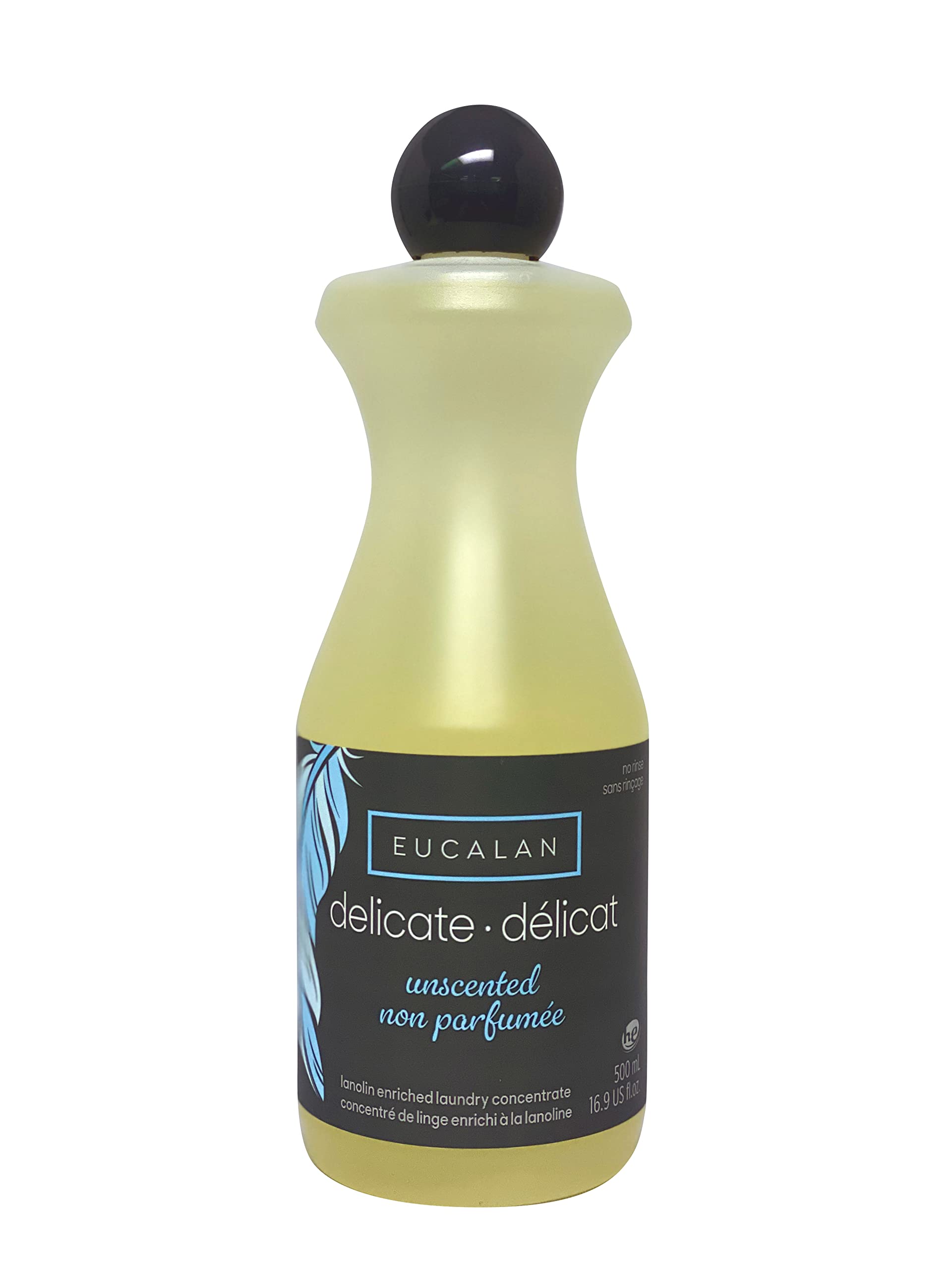
Fine fabric detergents occupy an odd middle ground in the laundry aisle. They cost more per load than a standard supermarket detergent, they come in smaller bottles, and they ask you to trust that a gentler formula is worth the premium. This 16.9-ounce unscented version is aimed squarely at people who own delicate garments, woolens, or technical fabrics and want to clean them without adding fragrance or risking damage. Whether it earns its place depends heavily on what you actually wash.
The most obvious use case is hand-washing or machine-washing items that a regular detergent would be too harsh for: silk blouses, wool sweaters, cashmere, lingerie, and the growing category of athletic wear with synthetic fibers. The unscented formulation matters here beyond personal preference. Fragrance is a common irritant for people with sensitive skin or allergies, and it can linger in wool and silk in ways that are hard to rinse out. A fragrance-free wash also plays well with garments that are worn close to the skin or layered under other clothing.
Functionally, the product is a concentrated liquid detergent, and the 16.9-ounce size is smaller than it looks. Concentration means you use less per wash, but it also means the bottle runs out faster than a comparable standard detergent. For occasional hand-washing of delicates, that is a reasonable trade. For someone doing several delicate loads a week, the economics start to look less favorable, and it is worth checking the per-load cost before committing.
The unscented formula does what it says on the label in the sense that it leaves no perfume behind. What it does not do is magically lift stains the way an enzyme-heavy mainstream detergent might. On light soil and everyday odors, performance is generally adequate. On set-in stains, grass, or heavy body oils, expect to pretreat or accept partial results. This is a maintenance detergent, not a rescue detergent, and treating it as the latter leads to disappointment.
Rinsing behavior is another practical consideration. Fine fabric formulas are typically designed to rinse clean without leaving residue, which matters for wool and silk because residue can stiffen fibers or attract moths over time. In practice, a second rinse cycle in a front loader or a thorough hand rinse is still a sensible habit, especially with cooler water. The product dissolves readily in cold water, which is the temperature most delicate garments should be washed at anyway.
Compared with a general-purpose gentle detergent, the main distinction is formulation philosophy. Mass-market gentle detergents often still include fragrance and optical brighteners, which can yellow whites and alter the hand of natural fibers over repeated washes. A dedicated fine fabric wash typically skips those additives. The trade-off is cost and availability: you are more likely to find this in a specialty shop or online than at a corner store, and you will pay more per ounce than for a supermarket brand. A mild baby detergent or a soap-based wool wash can serve as a rough alternative, though each has its own quirks, and none is a perfect substitute across every fabric type.
There are a few limitations worth naming. The bottle size is modest, so heavy users will repurchase often. The absence of scent is a feature for some and a drawback for others who associate clean laundry with a fresh smell; if you are in the latter group, this will feel flat. And while the formula is gentle, it is not a stain remover, so households with kids or outdoor-heavy laundry will still need a separate pretreatment product. It also does not soften fabrics on its own, so woolens may still benefit from a separate conditioner or a careful drying method.
Who is this for? People with a small rotation of delicate garments, wool or cashmere owners who wash by hand, anyone with fragrance sensitivity, and households that want a single gentle detergent for a mixed load of synthetics and natural fibers. It suits apartment dwellers without a utility sink who hand-wash in a basin, and it suits travelers who want a small bottle for sink washing. Who is it not for? Families with heavy everyday laundry, anyone looking for stain-fighting power, and shoppers who prioritize low cost per load over formulation. Those users are better served by a mainstream gentle detergent or a dedicated stain pretreatment plus a basic wash.
Realistic expectations help here. This is a competent, narrowly focused product that does a specific job without fuss. It will not transform your laundry routine, and it will not rescue a stained silk scarf. Used within its intended scope, on the right fabrics and with reasonable stain management, it performs as expected. Buy it for the fabrics you care about, not for the whole household’s wash.