
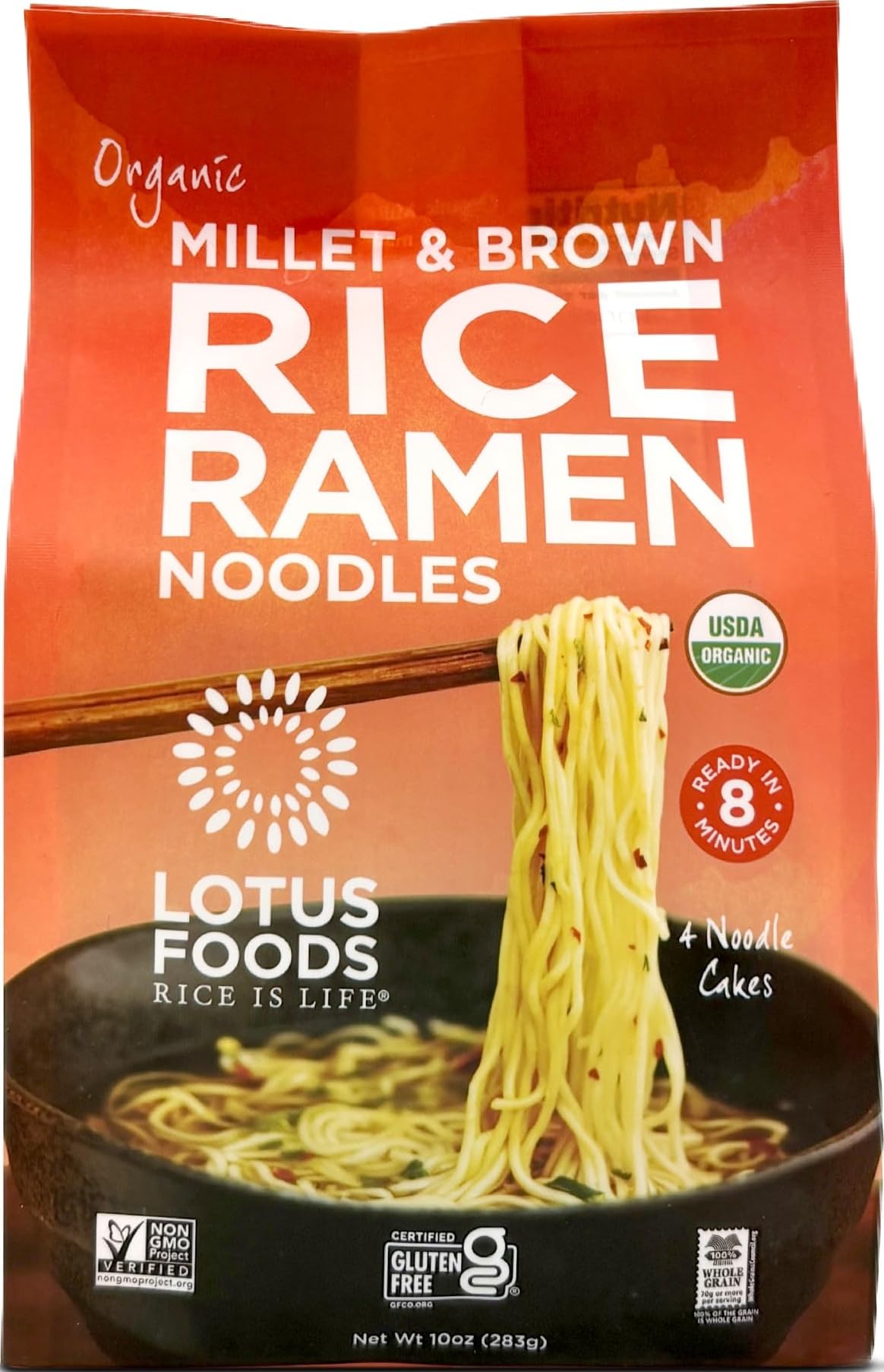
Lotus Foods has built a reputation for unconventional ramen, and this organic millet and brown rice version is one of its more intriguing offerings. Sold as a 10-ounce bag containing four individual cakes, it targets shoppers looking for a gluten-free alternative to traditional wheat-based noodles. But how does it actually perform in the kitchen? This review examines the product’s strengths, weaknesses, and ideal uses based on its composition and typical preparation methods.
The first thing to note is the ingredient list: organic brown rice flour, organic millet flour, and water. That’s it. No additives, no gums, no stabilizers. This simplicity is a double-edged sword. On one hand, it appeals to those avoiding processed ingredients. On the other, it means the noodles lack the elasticity and chew of ramen made with wheat gluten. Cooking requires a gentle touch—overboiling quickly turns them mushy, and they don’t hold up well to aggressive stirring. The recommended cooking time is four minutes, but we found that three and a half minutes yields a better texture for most applications.
In terms of functionality, these noodles behave more like rice noodles than traditional ramen. They have a slightly nutty flavor from the millet and a soft, somewhat porous texture that absorbs broth readily. That makes them well-suited for soup-based dishes, where they can soak up flavors. However, they are less successful in stir-fries or cold noodle salads, where a firmer bite is desired. The noodles also tend to clump if not rinsed after cooking, so a quick rinse under cold water is advisable if you’re not serving them immediately.
One notable limitation is the packaging. The 10-ounce bag contains four cakes, each individually wrapped in plastic. While this helps with portion control, it generates more waste than necessary. Additionally, the cakes are fragile and can break during shipping, resulting in broken pieces that cook unevenly. We’d prefer a more secure packaging format, perhaps a box or a resealable bag with cushions.
Compared to other gluten-free ramen options, such as those made with pure rice or buckwheat, this millet-brown rice blend offers a slightly more complex flavor and a bit more structure. It’s also organic, which may justify the higher price point for some shoppers. However, if you’re looking for a noodle that mimics the texture of traditional ramen, this isn’t it. It’s a different product entirely—closer to a rice noodle cake than a springy ramen noodle.
In terms of real-world usage, these noodles shine in quick weeknight meals. They cook fast, pair well with a variety of broths, and can be dressed up with vegetables and protein. We found them particularly good in miso soup or a simple ginger broth. They also work as a base for bowl-style meals, where the noodles can be topped with stir-fried veggies and a sauce. However, they are not ideal for meal prep, as they become overly soft upon reheating.
Who is this for? It’s a solid choice for anyone on a gluten-free diet who misses ramen and is willing to accept a different texture. It’s also suitable for those who prefer organic, minimally processed foods. However, it’s not for purists seeking authentic ramen texture, nor for those on a tight budget—the price per serving is noticeably higher than conventional ramen. Additionally, if you’re sensitive to millet’s slightly earthy flavor, you might prefer a plain rice noodle.
Overall, Lotus Foods Organic Millet and Brown Rice Ramen is a niche product that delivers on its promise of a gluten-free, organic noodle. It has limitations in texture and packaging, but for the right consumer, it fills a gap in the market. It’s not a perfect substitute for wheat ramen, but it’s a respectable alternative for specific uses.