
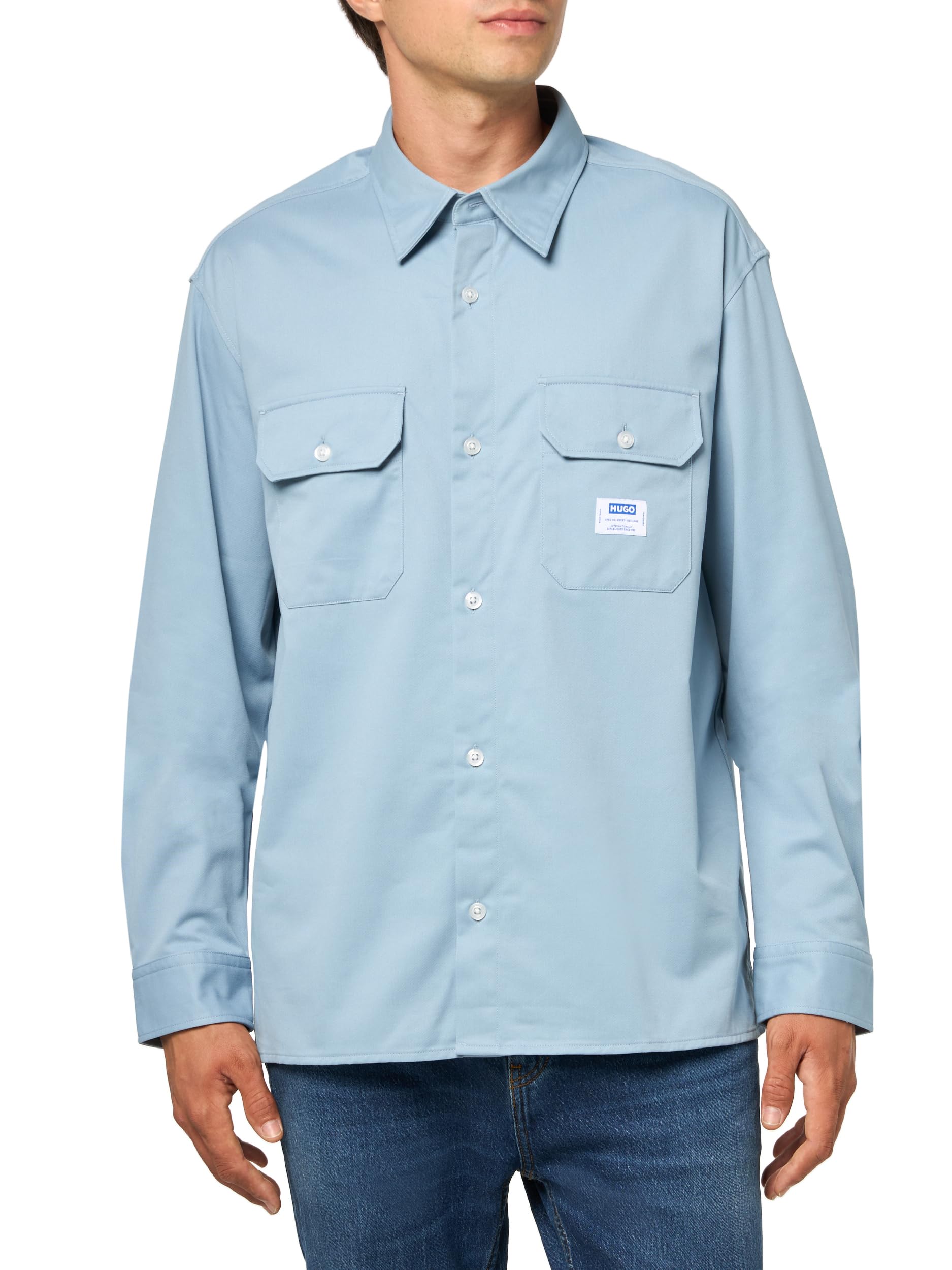
The HUGO Cotton Twill Woven Patch Overshirt sits in a category that has quietly become one of the most useful things in a wardrobe: the shirt-jacket. It is not a jacket, and it is not quite a shirt, and that ambiguity is exactly the point. In misty blue, the M size (approximately a 38–40 chest, depending on how you layer) reads as a soft, slightly dusty tone that works with denim, chinos, and most neutral trousers without demanding attention. The question is whether the execution justifies the price and the branding.
In practice, an overshirt like this gets worn in the transitional moments of the year — spring mornings, early autumn evenings, and the air-conditioned limbo of offices and trains. It is the layer you grab when a T-shirt is not enough and a coat is too much. The cotton twill here has enough body to hold a shape but not so much that it feels stiff. Expect it to soften with washing, which is typical for mid-weight twill. The button front, chest pockets, and patch detailing give it a workwear-adjacent look, though the cut is cleaner and more urban than a true chore coat.
Functionally, the overshirt does what it should. The buttons are easy to manage, the pockets are usable for a phone or wallet without sagging, and the length sits around the hip, which means it works untucked over a tee or layered under a heavier coat. The patch detail — a woven HUGO logo patch — is the most divisive element. It is visible but not enormous, stitched onto the chest area. For some, that is a clean branding touch; for others, it is an unnecessary logo on an otherwise understated garment. This is a recurring issue with HUGO’s casual line: the design is often solid, but the branding is hard to ignore.
One limitation worth flagging is the weight. This is a light-to-mid-weight twill, not a heavy flannel or wool blend. That makes it versatile for indoor and mild outdoor use, but it will not replace a proper jacket in cold weather, and it offers little wind resistance. If you are looking for a true overshirt for late autumn, you may find yourself reaching for something heavier. The misty blue color is also lighter than it appears in some product photos, which makes it less forgiving around stains and marks — a practical consideration for a garment likely to be worn casually and often.
Compared to a denim jacket or a chore coat, the overshirt is lighter and easier to pack, and it layers more naturally under outerwear because it lacks bulky seams and hardware. Compared to a flannel shirt, it has more structure and a more polished look, though less warmth. The closest generic alternative is a cotton-twill shirt-jacket from a workwear brand, which typically costs less and offers similar utility without the logo patch. The HUGO version leans more fashion than function, and the price reflects the label as much as the material.
Who is this for? It suits someone who wants a smart-casual layer that bridges office and weekend, values a recognisable brand, and does not mind a visible logo. It is also a reasonable choice for travellers who want one layer that works across seasons and outfits. Who is it not for? Anyone who prefers unbranded clothing, anyone who needs genuine warmth or weather protection, and anyone who expects a heavyweight overshirt will be disappointed. It is also not the best value proposition if utility is your main criterion — a plain twill overshirt from a workwear label will do the same job for less.
In terms of fit, the M is a regular cut, not slim, which means it accommodates a hoodie or thick tee underneath without pulling at the buttons. Sleeves are long enough for average arm lengths, and the shoulder seam sits where it should. The cotton twill is not pre-washed to a soft finish, so the first wear may feel slightly crisp; it relaxes after a few washes. Care is straightforward — machine wash cold, hang dry — though the lighter color means you should treat stains promptly.
Overall, the HUGO Cotton Twill Woven Patch Overshirt is a well-made, versatile layer with a clean silhouette and a logo that will divide opinion. It performs best as a transitional piece, not a winter garment, and it asks a premium for the brand name. If the patch does not bother you and you want a light, easy overshirt that works across casual and smart-casual settings, it is a sensible option. If you want maximum utility per pound, there are cheaper alternatives that do the same job without the branding.