
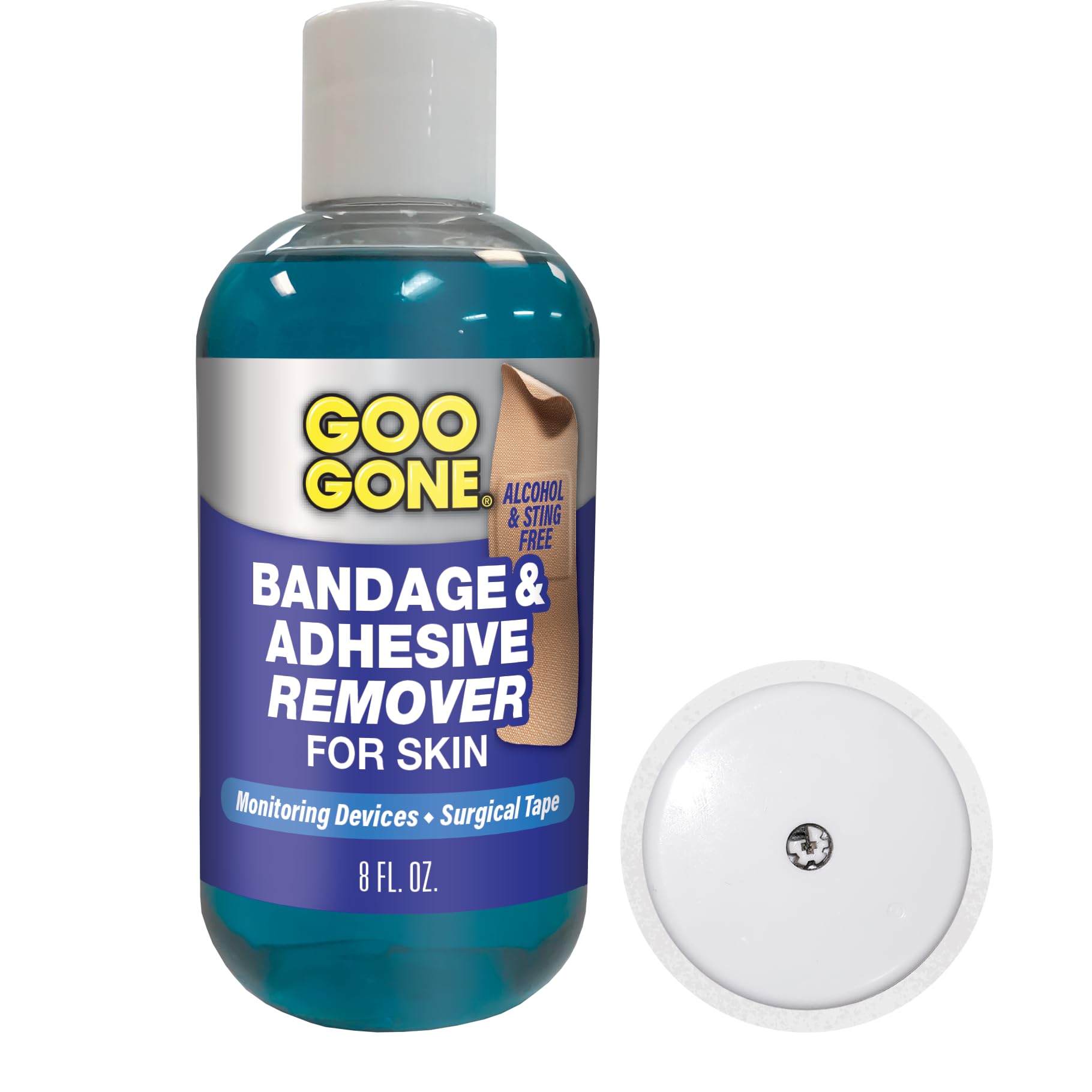
Adhesive residue left behind by bandages, medical tape, ostomy wafers, or sensor patches is one of those minor annoyances that becomes genuinely irritating when it happens repeatedly. Goo Gone Skin Adhesive Remover is a liquid formulated specifically to break down that sticky film without the rubbing and picking that often comes with removal. It sits in a crowded category alongside adhesive remover wipes, medical-grade silicone sprays, and plain old rubbing alcohol, so the question is whether it earns a place in a bathroom cabinet or first-aid kit.
The product is a liquid rather than a wipe, which shapes how it gets used in practice. Most people apply a small amount to a cotton ball or pad, or dab it directly around the edges of the adhesive, let it sit briefly, and then wipe or peel the residue away. That application method gives more control than a pre-soaked wipe because you can target just the sticky area and avoid slathering the surrounding skin. It also means you need to keep cotton pads or swabs on hand, which is a small but real logistical difference from the peel-and-use format of adhesive remover wipes.
The core function is straightforward: the liquid softens the adhesive bond so the tape or patch releases with less pulling on skin and hair. This matters most for people who use adhesives regularly, such as those managing diabetes devices, ostomy supplies, or frequent bandage changes. In those contexts, the value is less about convenience and more about reducing the mechanical trauma of repeated removal, which can leave skin raw and irritated over time. The formulation is designed to be gentler than industrial solvents, and it is intended for external skin use only.
Where the product tends to perform well is on intact adult skin with common medical and consumer adhesives. Bandage residue, the gummy ring left by athletic tape, and the sticky outline from sensor patches generally come up with a modest amount of product and light wiping. It is not instantaneous, and expecting a single swipe to dissolve a heavy adhesive layer will lead to disappointment. In practice, a short dwell time of a few seconds to half a minute improves results noticeably.
There are limitations worth being clear about. The liquid format is messier than wipes, and it is easy to dispense more than needed, which wastes product and leaves skin feeling slick until it is washed off. It carries the familiar oily-citrus scent associated with the Goo Gone brand, and while that is not unpleasant to everyone, it is noticeable and lingers briefly. Anyone sensitive to fragrance or citrus-based ingredients should patch-test first. The product is also not intended for use on broken skin, open wounds, or mucous membranes, and it should be kept away from the eyes. For people with very reactive or compromised skin, a silicone-based medical adhesive remover may be the more conservative choice, since silicone products work by reducing surface tension rather than by solvent action and are often recommended in clinical settings for fragile skin.
That comparison is the most useful one for shoppers. Silicone adhesive removers, including sprays and wipes, tend to be gentler and are widely used around medical devices, but they can be slower on stubborn residue and are often more expensive per use. Alcohol-based options are cheap and widely available but can sting and dry out skin with repeated use. Goo Gone Skin Adhesive Remover sits somewhere in the middle: more targeted than a wipe, more skin-oriented than a hardware solvent, and reasonably effective on typical household and medical adhesives without being the gentlest option on the shelf.
As for suitability, it makes the most sense for adults dealing with recurring adhesive residue from bandages, tape, or wearable devices who want a liquid they can apply precisely and who do not mind the extra step of using a cotton pad. It is also a reasonable pick for caregivers helping others with tape removal. It is less suitable for anyone with sensitive or easily irritated skin, for use on children without checking with a clinician, for broken or healing skin, or for people who prefer the no-fuss format of a pre-moistened wipe. Those managing medical devices on fragile skin should probably start with a silicone-based remover instead.
Realistic expectations help here. This is a useful solvent-style remover that makes adhesive cleanup easier and less abrasive than picking at residue, but it is not a miracle product, it will not suit every skin type, and it requires a bit of technique to use efficiently. Treated as a targeted tool rather than an everyday staple, it does what it claims with a few practical trade-offs.