
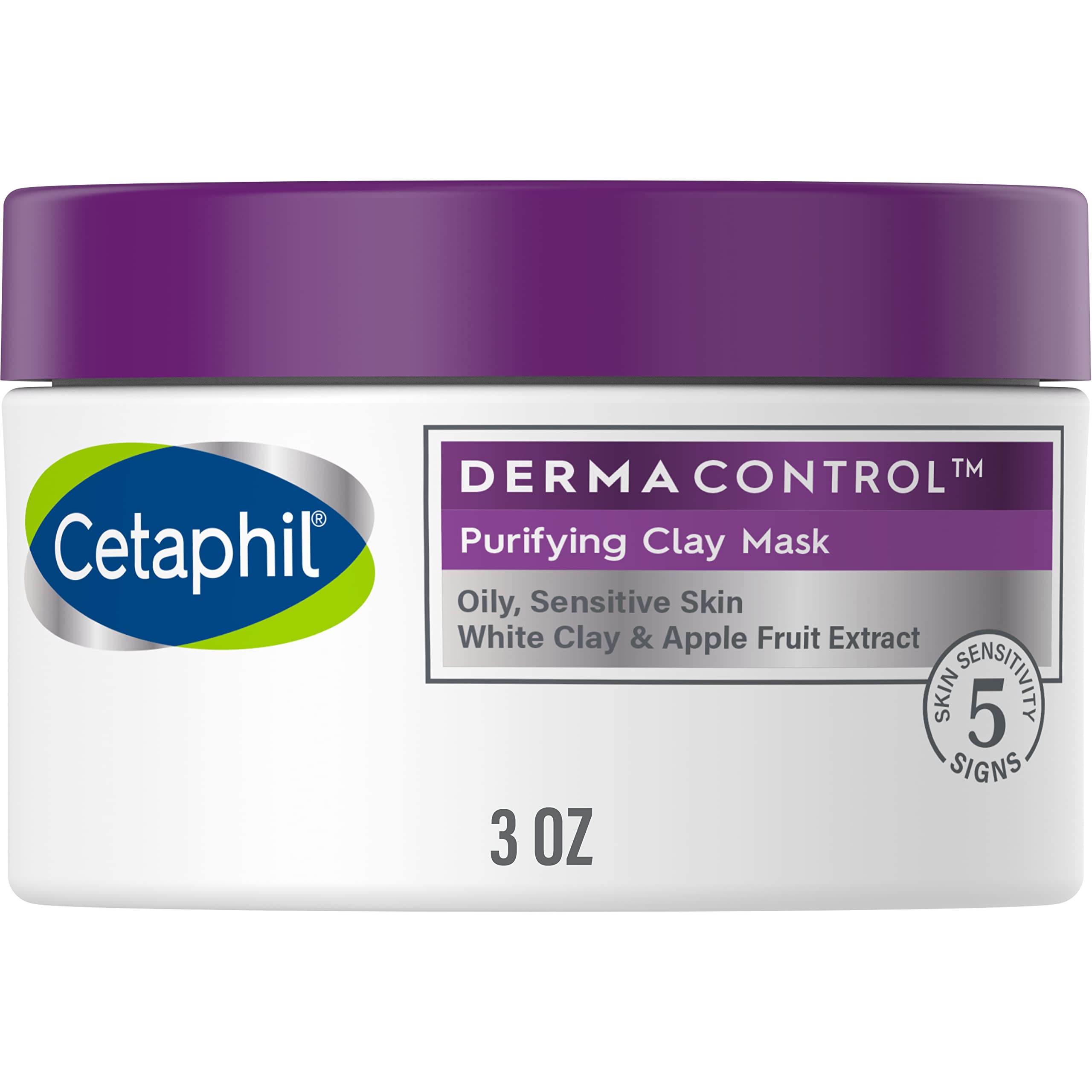
Clay masks occupy an odd spot in skincare routines. They promise to pull oil and debris from pores, but many deliver a tight, stripped feeling that sends sensitive or dehydrated skin running. Cetaphil’s DermaControl Purifying Clay Face Mask sits in the middle of that spectrum, aimed at oily and combination skin types that want some oil control without the post-mask tightness. It is a 3 oz tube, which is on the smaller side for a clay mask, and it is sold as part of the broader DermaControl line rather than as a standalone treatment. The question is whether it does enough to justify a place in an already crowded category.
The formula relies on kaolin clay as the primary absorbent, which is a common and relatively mild choice compared with stronger clays like bentonite. That matters for how the mask behaves in practice. Kaolin absorbs surface oil without gripping the skin as aggressively, so the experience is closer to a soft cleanse than a full-on detox treatment. Cetaphil also includes glycerin and a small amount of soothing ingredients, which helps offset the drying effect clay can have. There is no fragrance listed as a headline feature, and the texture is a smooth, spreadable cream rather than a thick paste, which makes it easier to apply evenly and rinse off without scrubbing.
In real-world use, this is a mask people tend to reach for two or three times a week, usually in the evening after cleansing. A thin layer across the T-zone and any congested areas is enough; leaving it on until fully dry is not necessary and can work against the formula’s gentler design. Most users will find five to ten minutes is plenty. Rinsing with lukewarm water takes a little patience because the cream holds together well, but it does not leave a residue. The immediate result is skin that feels cleaner and slightly less shiny, with a matte finish that lasts a few hours rather than all day. It is not a substitute for a salicylic acid treatment or a retinoid when it comes to actual pore clearing, and it should not be treated as one.
Where the product earns some credit is in consistency. The 3 oz size is small, but a little goes a long way, so a tube can last a couple of months with regular use. The packaging is a simple squeeze tube, which is more hygienic than a jar and easier to control than a pump for a product you apply to specific zones. The lack of fragrance is a genuine plus for anyone whose skin reacts to added scent, and the formula does not include the drying alcohols that show up in some oil-control masks.
The limitations are worth being direct about. First, this is a mild mask, and people with genuinely stubborn blackheads or cystic acne will likely find it underwhelming. It manages surface oil and gives a temporary clean feeling, but it does not treat acne, and Cetaphil does not claim that it does. Second, the 3 oz size is modest for the price point; comparable clay masks from drugstore brands often come in 4 to 6 oz formats, so the cost per use is higher than it first appears. Third, the matte effect is short-lived. If the goal is all-day oil control, a mattifying moisturizer or a niacinamide serum will do more of the heavy lifting. Finally, dry or dehydrated skin types should be cautious; even a gentle clay mask can tip reactive skin toward tightness, especially in winter.
Compared with a traditional bentonite clay mask, this Cetaphil option is noticeably less aggressive. Bentonite-based masks tend to dry down hard and can leave skin feeling parched, which makes them better suited to very oily skin used sparingly. Cetaphil’s kaolin approach is more forgiving and better for combination skin that has oily zones but dry patches elsewhere. Compared with a chemical exfoliant like a BHA toner, the clay mask offers immediate surface oil absorption but no real exfoliation or long-term pore refinement. The two serve different purposes and are not interchangeable; a clay mask is a quick fix, while an exfoliant is a routine step.
Who is this for? It suits people with oily or combination skin who want a low-drama weekly mask that will not sting, strip, or leave a heavy scent behind. It also works for those who find stronger clay masks too drying but still want some oil absorption. It is a reasonable choice for someone building a simple routine and not looking to add actives. Who is it not for? Anyone expecting visible pore reduction or acne treatment will be disappointed. People with very dry or sensitive skin should probably skip it or use it only on the T-zone. And those who prefer a more substantial, spa-like mask experience may find the lightweight cream texture underwhelming.
Overall, the Cetaphil DermaControl Purifying Clay Mask is a competent, unremarkable product in the best sense: it does a modest job without causing problems. It is not the most effective oil-control mask on the market, and the small size makes it a questionable value, but it fills a specific gap for people who want gentle clay treatment without the tightness. Buy it if your skin is oily but easily irritated and you want a mask you can use a few times a week without thinking about it. Skip it if you need real acne treatment or you are watching cost per ounce.