
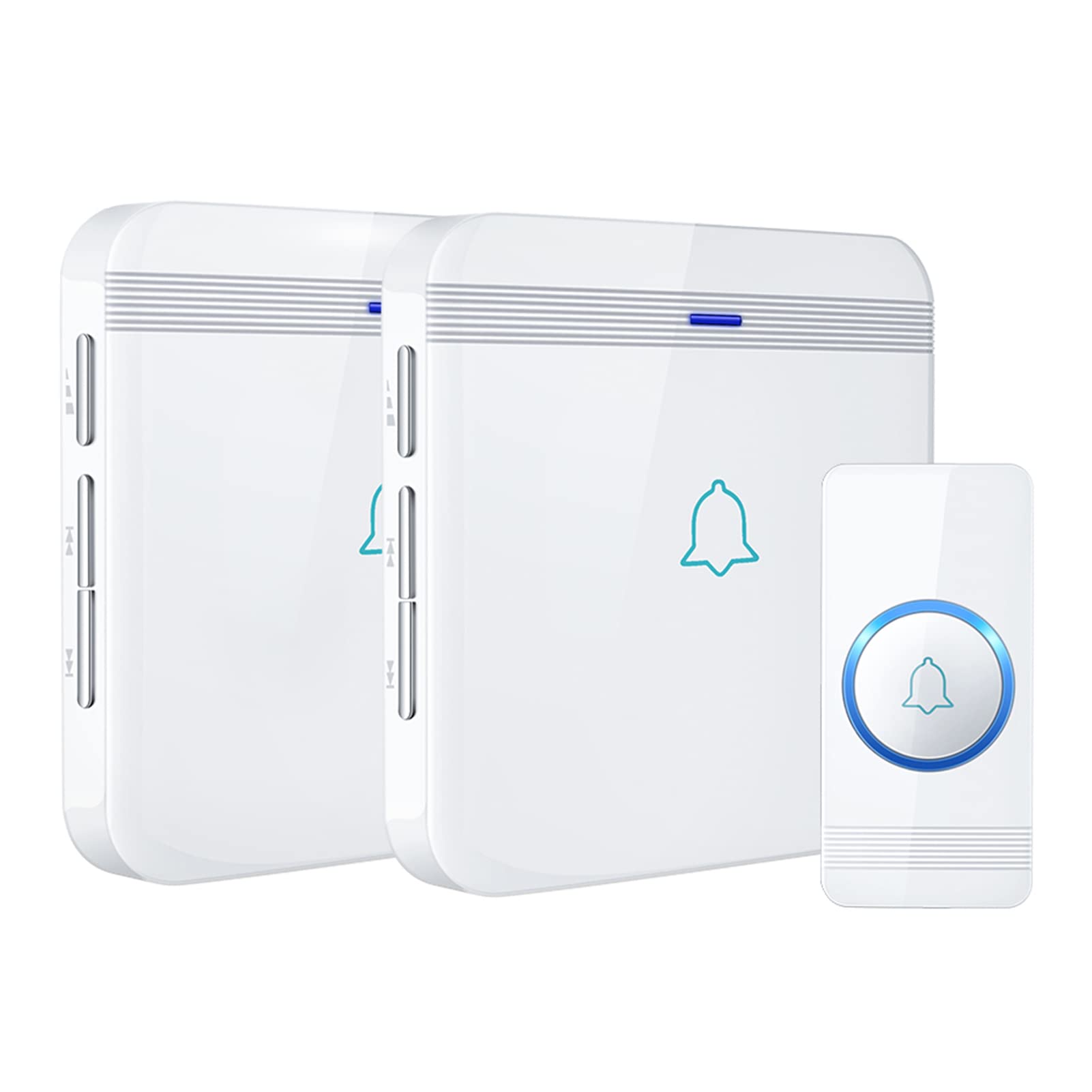
Wireless doorbells are one of those small purchases that can quietly improve daily life—or become a minor annoyance if they don’t work as promised. The AVANTEK Wireless Doorbell, with its claimed 1300 ft range, waterproof design, and two receivers, sits in the budget-friendly end of the market. We’ve looked at the specs and typical user experiences to give you a realistic picture of what to expect.
At its core, this is a straightforward kit: a battery-powered push button (transmitter) and two plug-in receivers. The button is designed to be weatherproof, so it can be mounted outdoors, while the receivers plug into standard wall outlets indoors. The 1300 ft range is the headline spec, but as with any wireless device, that number is measured in open air with no obstructions. In a typical home with walls, doors, and other electronics, you can expect significantly less—perhaps 100–200 feet depending on the layout. That’s still enough for most houses, but don’t expect to cover a large property or multiple outbuildings without issues.
One of the practical advantages of a two-receiver setup is coverage across floors or distant rooms. For example, you could place one receiver in the kitchen and another in a upstairs bedroom, so you’re less likely to miss a visitor. The receivers offer a choice of chimes (typically 52 melodies) and four volume levels, including a mute mode. The button is easy to install—either with screws or adhesive tape—and comes with a battery already included. The receivers are plug-and-play, with no wiring required.
In real-world use, these doorbells are commonly installed in apartments, small homes, and offices where a wired doorbell would be impractical or too expensive to retrofit. They’re also popular for adding a doorbell to a back door or side entrance. The waterproof rating on the button means it can handle rain and splashes, but it’s not designed for extreme conditions; if you live in an area with heavy snow or extreme cold, the battery life may suffer.
As for limitations, the build quality is functional but not premium. The plastic feels a bit lightweight, and the button mechanism may not hold up as well as a metal-wired button over years of use. Some users report that the adhesive backing on the button can fail over time, especially if mounted on uneven surfaces. Also, the chime selection process—cycling through 52 melodies with a single button—can be tedious if you want a specific tune. And while the range is decent, it’s not immune to interference from thick walls or other wireless devices; in some cases, the signal may not reach a basement or far corner of the house.
Compared to a traditional wired doorbell, the AVANTEK is far easier to install and doesn’t require an electrician. However, wired doorbells are generally more reliable and don’t depend on batteries or wireless signal. Compared to smart doorbells (like Ring or Nest), the AVANTEK lacks video, app connectivity, and customization, but it’s also a fraction of the price and doesn’t require a subscription. If you just want a basic doorbell that works without fuss, this is a reasonable choice.
Who is this for? It’s ideal for renters who can’t hardwire a doorbell, homeowners looking for a quick solution for a back door, or anyone on a tight budget who needs a simple, functional doorbell. It’s not for those who want smart features, integration with a security system, or a premium look and feel. If you have a large home with thick walls, you might need a system with a stronger signal or a repeater. Also, if you’re looking for a doorbell that will last a decade, you might want to invest in a more robust model.
In summary, the AVANTEK Wireless Doorbell is a practical, no-frills option that covers the basics. It’s not without its quirks, but for the price, it’s a sensible pick for many households.