
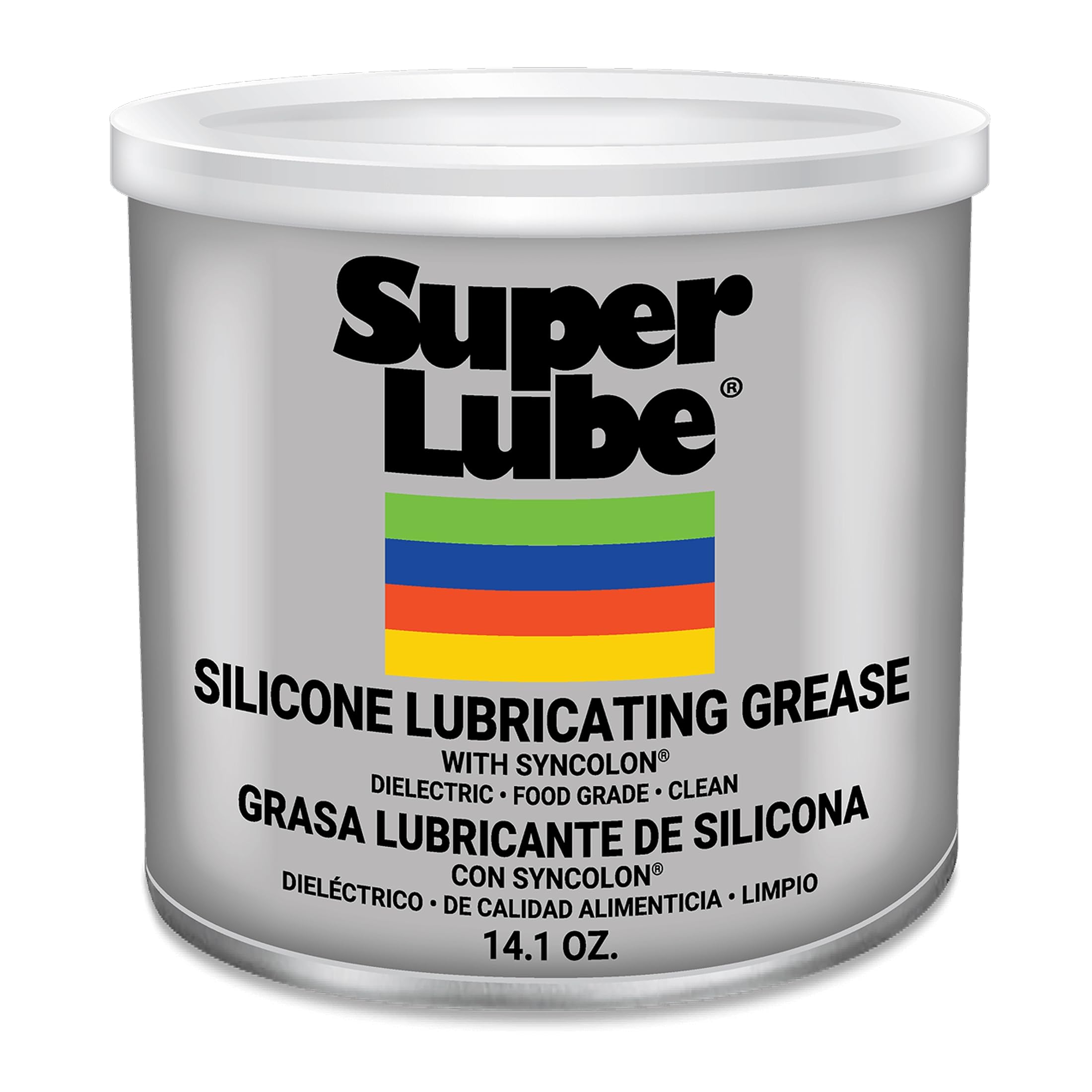
Super Lube’s silicone grease with Syncolon (PTFE) is one of those products that turns up in a lot of garages and maintenance cabinets, often bought for one job and then kept around because it handles several others. The 14.1 oz canister format—a tub rather than a tube or cartridge—suggests it’s meant for repeated shop use rather than a single repair, and the translucent white grease inside is thick, tacky, and stays where it’s put. It carries a food-grade rating (NSF H1), which broadens its appeal beyond automotive work into kitchens, breweries, and anywhere incidental food contact is a concern.
The core value here is the combination of silicone base oil and Syncolon (a PTFE additive). Silicone grease is inherently water-resistant and doesn’t wash away easily, and the PTFE adds a bit of slickness and load-carrying ability beyond what plain silicone provides. In practice this means it works well on sliding surfaces, O-rings, seals, threaded fittings, and hinges that see moisture. It’s also dielectric, so it’s commonly used on electrical connections and battery terminals to keep corrosion at bay. The rust protection claim is reasonable for a grease that clings and repels water, though it’s not a substitute for a dedicated anti-seize or a heavy chassis grease in high-load, high-heat applications.
Where this grease earns its keep is in mixed-material situations. Because it’s silicone-based, it’s safe on most plastics and rubbers—unlike petroleum greases that can degrade certain elastomers. That makes it a sensible choice for brake caliper slide pins (where specified), weatherstripping, plumbing O-rings, and RV or marine fittings. The food-grade rating also means it can be used on meat slicers, espresso machine seals, and similar equipment without a second thought. A little goes a long way; the tacky consistency means thin films are usually enough, and the 14.1 oz tub will last a long time for a home user.
There are trade-offs worth knowing before buying. Silicone grease is not a high-temperature bearing grease in the way a lithium complex or polyurea grease is; it has its limits, and it shouldn’t be treated as a universal replacement for chassis or wheel-bearing lubricants. It’s also not ideal for high-speed rolling-element bearings, where its tackiness and film behavior can cause drag or channeling. And because it’s silicone, it should be kept away from surfaces that will be painted or refinished—silicone contamination is notoriously difficult to remove and causes fish-eyes in paint. That’s a real practical concern for anyone doing bodywork in the same shop.
Compared with a general-purpose lithium grease, the Super Lube product trades some load capacity and high-temperature endurance for water resistance, material compatibility, and the food-grade rating. Compared with a plain silicone dielectric compound (the small tubes sold for spark plug boots and electrical connectors), this tub is far more economical per ounce and thick enough for mechanical use, though the small tubes are more convenient for precise electrical work. Against a dedicated marine grease, it holds up well against washout but isn’t formulated for the same extreme-pressure demands.
Realistic expectations matter here. This is a good, versatile utility grease—not a miracle lubricant. It excels at sealing, protecting, and lightly lubricating in wet or mixed-material environments. It will not silence a worn bearing or fix a failing joint, and it shouldn’t be expected to. The canister lid can be awkward to reseal cleanly once the grease gets on the threads, a minor annoyance common to tub formats. The translucent color also makes it hard to see how much has been applied on dark surfaces, though that’s a small point.
Who it’s for: home mechanics, boat and RV owners, homebrewers, and anyone maintaining food equipment or plumbing who wants one grease that handles seals, O-rings, threads, and light sliding contact without worrying about material compatibility. It’s also a reasonable pick for electrical corrosion protection.
Who it’s not for: anyone needing a high-load, high-temperature bearing grease, chassis lube for heavy vehicles, or a product for painted surfaces where silicone contamination is a risk. If your main need is packing wheel bearings or lubricating suspension components, a conventional NLGI grease is the better tool. For the mixed, moisture-prone, material-sensitive jobs it’s designed for, it’s a solid and genuinely useful staple.