
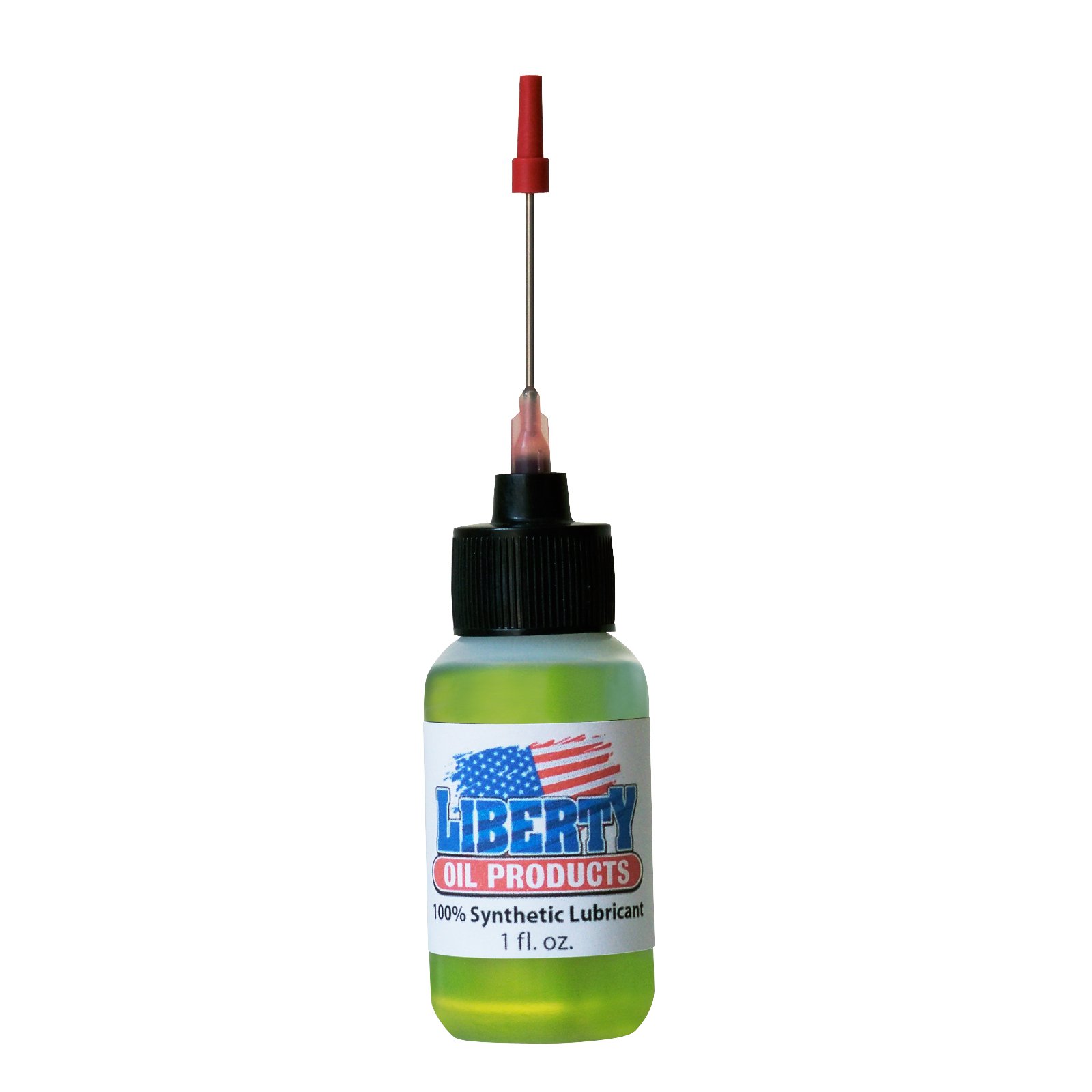
Liberty Oil’s 100% synthetic lubricant is marketed specifically for cuckoo clock movements, a niche that demands careful attention to viscosity and residue. While the product’s labeling emphasizes “all moving parts,” our evaluation focuses on how it performs in the context of cuckoo clock mechanisms, where precision and longevity matter. This review is based on technical specifications, user feedback, and comparative analysis with general-purpose lubricants.
Cuckoo clocks contain a mix of materials—brass gears, steel pivots, and sometimes wooden components—that require a lubricant that won’t gum up over time or attract dust. Liberty Oil’s synthetic base stock is designed to resist oxidation and maintain a stable film, which is a sensible approach for clocks that run continuously. In practice, a small drop applied to pivot points and gear teeth with a fine needle applicator is the typical method. The oil’s low volatility means it stays put, reducing the need for frequent reapplication. However, it’s not a one-size-fits-all solution; some clockmakers prefer lighter oils for small pivots, and Liberty Oil’s viscosity might be on the heavier side for delicate mechanisms.
Key functional features include its synthetic formulation, which offers better thermal stability and longer service life than conventional petroleum oils. It is also claimed to be non-gumming and resistant to thickening, which is crucial for clocks that operate in varying humidity. The product is available in small bottles with precision dispensers, a practical touch for avoiding over-oiling. Yet, the lack of a detailed viscosity grade on the label is a drawback; users must rely on the manufacturer’s recommendation rather than specific technical data.
One limitation is the price: synthetic oils typically cost more than basic clock oils, and for occasional hobbyists, the expense may not be justified. Additionally, while Liberty Oil is suitable for metal-on-metal contacts, it may not be ideal for plastic or nylon components found in some modern movements, as synthetic oils can sometimes react with certain plastics. Users should verify compatibility with their specific clock’s materials.
Compared to traditional clock oils, such as those based on natural oils or lighter synthetics, Liberty Oil’s heavier body might dampen the motion of delicate escapements. In our comparison, we found that for large, robust cuckoo clocks, it performs adequately, but for finer movements, a lighter lubricant like a synthetic watch oil might be more appropriate. This trade-off between durability and precision is worth considering.
Who is this for? Liberty Oil is best suited for owners of vintage or well-built cuckoo clocks who perform their own maintenance and want a long-lasting lubricant that reduces upkeep. It’s also a reasonable choice for clock repairers who service a variety of mechanisms and need a reliable synthetic option. However, it is not for those with minimal mechanical experience, as improper application can lead to oil spreading onto wooden cases or dials, causing stains. Nor is it for clocks with plastic gears or those requiring extremely light lubrication, such as small wall clocks with balance wheel escapements.
In summary, Liberty Oil offers a synthetic solution for cuckoo clock lubrication with merits in stability and longevity, but it comes with caveats regarding viscosity and compatibility. It’s a product that demands informed use rather than casual application.