
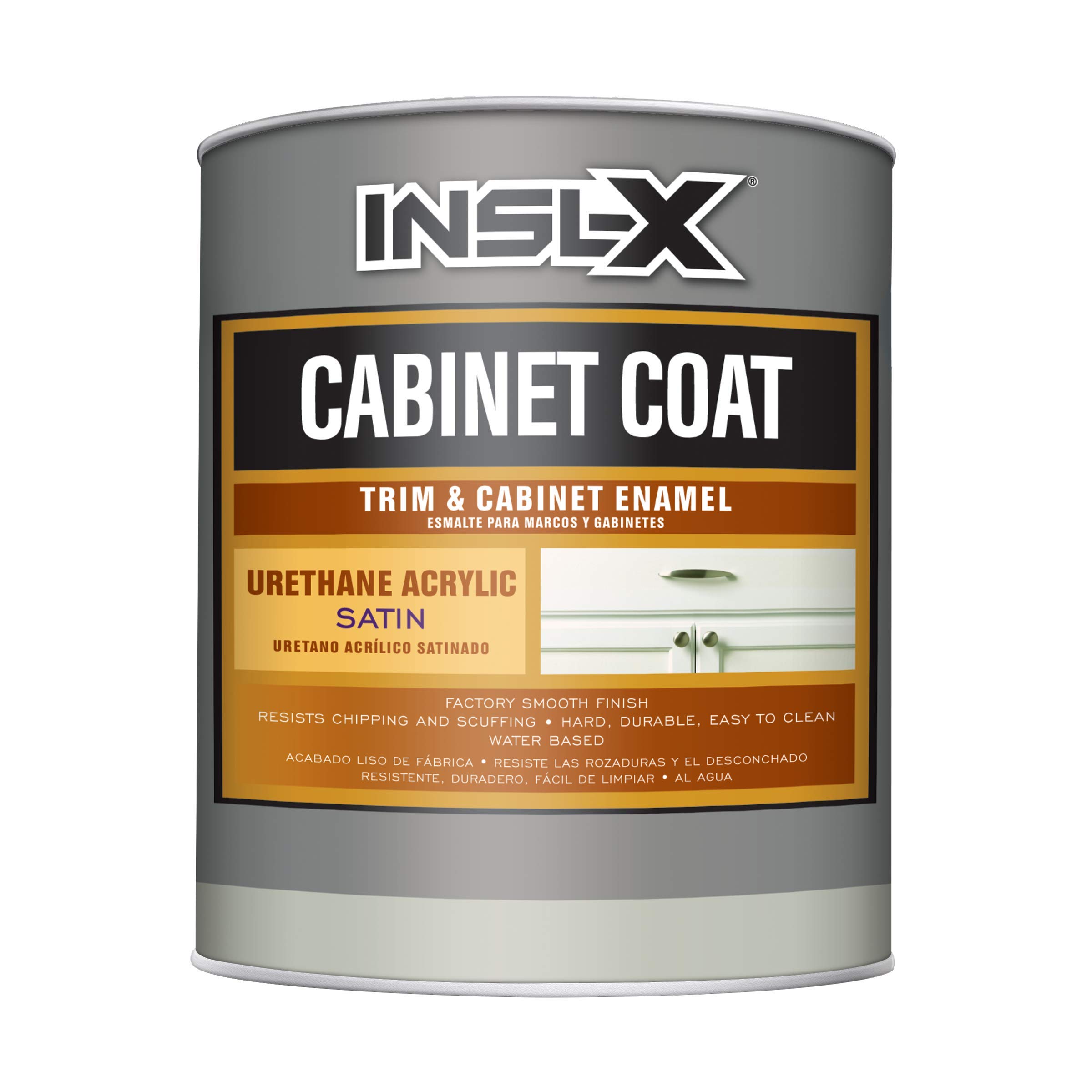
INSL-X Cabinet Coat is a water-based urethane acrylic enamel designed for interior cabinetry, trim, and furniture. It’s marketed as a hard, satin-finish coating that can be applied without a primer over previously painted or properly prepared surfaces. In practice, it’s a common choice for DIYers and professionals looking to refresh kitchen cabinets without the hassle of oil-based paints. But does it live up to the claims? Here’s an editorial look at its performance, strengths, and shortcomings.
Real-world usage – Cabinet Coat is typically rolled or brushed onto cabinet doors, frames, and drawers, as well as baseboards, window casings, and furniture. Its water-based formula means easy cleanup with soap and water, and it dries relatively quickly, allowing for multiple coats in a day. The satin sheen offers a subtle reflection that hides minor surface imperfections better than gloss, while still providing a smooth, wipeable finish. It’s often used in kitchens and bathrooms where moisture and frequent handling are concerns.
Key functional features – The product is a urethane acrylic enamel, which combines the hardness of polyurethane with the convenience of acrylic. It’s formulated to bond well to existing coatings, including previously painted surfaces, without the need for a separate primer in many cases. The satin finish is available in a range of tintable colors, though the base is white. It’s low-VOC and low-odor compared to solvent-based enamels, making it suitable for indoor use with ventilation. Drying time is about 1-2 hours to touch, with recoat after 2-4 hours, and full cure in about 7 days.
Performance expectations – When applied properly over a clean, dull surface, Cabinet Coat forms a hard, durable film that resists blocking (sticking together) and withstands light cleaning. However, it’s not indestructible. On high-traffic cabinets, especially around handles, it may show wear over time, and touching up can be tricky because the satin sheen can vary between batches or application methods. Like many water-based enamels, it can raise the grain on bare wood, so a primer is still recommended for raw wood. Also, while it adheres well to most surfaces, glossy or greasy surfaces need thorough deglossing and cleaning to avoid peeling.
Limitations and trade-offs – One notable limitation is the learning curve: Cabinet Coat dries fast, so brush marks and lap lines can be an issue if you’re not careful. It also tends to level less than oil-based paints, meaning spray application yields the smoothest results. For brush-and-roll work, a high-quality synthetic brush and a fine-nap roller are essential. Additionally, the satin finish, while durable, may not hide imperfections as well as a matte finish, and it can appear slightly plastic-like compared to the depth of an oil-based enamel. Another trade-off is the cure time: while it dries quickly, it takes about a week to fully harden, so cabinets should be handled gently during that period.
Comparison to alternatives – Compared to traditional oil-based enamels, Cabinet Coat offers easier cleanup, faster drying, and lower odor, but it may not achieve the same level of hardness or smoothness without spraying. Compared to standard water-based acrylic paints, it provides better adhesion and durability, making it more suitable for high-use surfaces. However, for those seeking a factory-like finish, a professional spray application of a conversion varnish or lacquer might be preferable, though those come with higher safety and equipment requirements.
Who it’s for and not for – Cabinet Coat is well-suited for DIY homeowners and painters who want a durable, water-based finish for cabinets, trim, and furniture, and who are willing to invest in proper preparation and application tools. It’s also a good choice for rental properties or quick refreshes where low odor and fast recoat times are beneficial. However, it’s not ideal for those expecting a perfect, brush-mark-free finish without spraying, or for surfaces subject to heavy abrasion or chemical exposure. Professionals accustomed to solvent-based products may find the fast dry time and leveling characteristics challenging. Also, if you’re looking for a dead-flat finish or a very high gloss, this satin sheen may not meet your needs.
Overall, INSL-X Cabinet Coat is a solid performer in the water-based enamel category, offering a reasonable balance of durability, convenience, and ease of use. It’s not a miracle product, but with realistic expectations and proper technique, it can deliver good results for interior projects.