
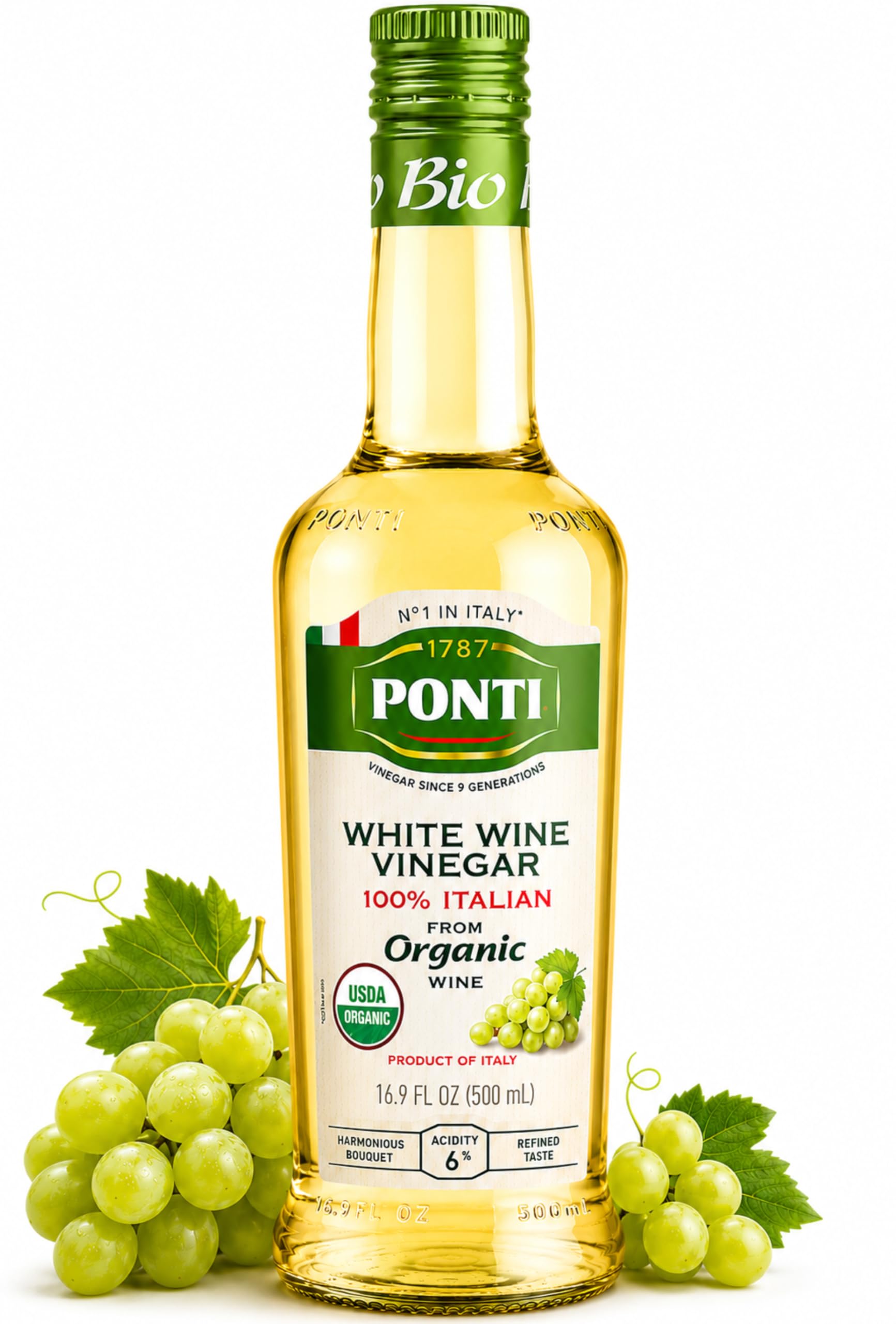
White wine vinegar occupies a strange middle ground in most kitchens. It is called for in recipes often enough that a bottle is worth keeping, but rarely is it the ingredient anyone gets excited about. This organic Italian white wine vinegar, sold in a 16.9 fl oz (500 ml) bottle, is aimed at cooks who want a straightforward, reasonably priced option for dressings, marinades, and quick pan sauces. Whether it earns counter space depends on how much you value subtlety over sheer acidity.
In practice, this is a workhorse vinegar. It appears most often in vinaigrettes, where a tablespoon or two gets whisked with olive oil and mustard; in marinades for chicken or pork; and in the deglazing step after searing, when a splash lifts browned bits off the pan. It also shows up in pickling brines and in the poaching liquid for eggs. Because white wine vinegar is milder than distilled white vinegar, it can go into a dressing without the sharp, almost chemical bite that distilled vinegar brings. That milder profile is the main reason cooks reach for it.
Functionally, the bottle delivers what the label promises: organic white wine vinegar of Italian origin, 16.9 fluid ounces, with the standard acidity you would expect from a wine-based vinegar (typically around 6 percent, though the exact figure depends on the bottling). The organic designation matters to some buyers and not at all to others; it is a certification, not a guarantee of flavor. The bottle size is sensible for a household that cooks regularly but does not go through vinegar quickly. A 500 ml bottle lasts months in normal use, which is both convenient and a reminder that vinegar is not a product you restock often.
Flavor is where expectations should be calibrated. White wine vinegar is not a sipping vinegar, and this one is no exception. It is clean and tart, with a faint fruitiness that reads more as background than as a distinct wine character. In a vinaigrette it behaves well, especially when balanced with a little honey or Dijon. In a marinade, its job is tenderizing and brightening, and it does that without overpowering the other ingredients. Where it can disappoint is in applications that call for a more assertive, complex vinegar. If a recipe wants the depth of a good sherry vinegar or the rounded sweetness of a balsamic, this will read as thin by comparison. It is a supporting player, not a star.
- Mild acidity: More forgiving than distilled white vinegar in dressings and sauces.
- Organic certification: Relevant if that is a priority for you; otherwise neutral.
- 500 ml bottle: Practical size for occasional-to-regular cooking, though slow users may find it sits a long time.
- Italian origin: A regional cue, though flavor varies by producer and vintage.
The main trade-off is versatility versus character. This is a general-purpose vinegar, and general-purpose means it does not excel at any one thing. Compared with a good red wine vinegar, it is less bold in salads and less suited to hearty, assertive dressings. Compared with rice vinegar, it is sharper and less suited to delicate Asian-style preparations. Compared with a specialty white balsamic, it lacks sweetness and body. It is the vinegar you buy when you need a neutral, wine-based acid on hand, not the one you buy to make a dish sing. That is a fair limitation, not a flaw, provided you know it going in.
Storage and handling are unremarkable, which is the point. It keeps well in a cool cupboard, and the screw cap seals reliably. There is no sediment to speak of in a filtered white wine vinegar of this type, and no need to refrigerate. One practical note: because the flavor is mild, it is easy to over-pour. A heavy hand in a vinaigrette turns the dressing sharp quickly, so measuring rather than free-pouring is worth the small effort.
Who is this for? Home cooks who make vinaigrettes, marinades, and pan sauces regularly and want an organic, wine-based vinegar at a moderate price. It suits people who keep a small rotation of vinegars and need a reliable neutral option. It is also a reasonable choice for anyone transitioning away from distilled white vinegar in everyday cooking. Who is it not for? Cooks who want a single vinegar with real character, or who mostly make bold, vinegar-forward dishes where a red wine or sherry vinegar would serve better. Anyone expecting a pronounced wine flavor will be underwhelmed; this is subtle by design.
Overall, this is a competent pantry staple rather than a standout ingredient. It does the jobs white wine vinegar is asked to do, in a bottle size that makes sense, with an organic label that some shoppers will value. If you already have a vinegar you like for dressings, there is little reason to switch. If you are building a pantry from scratch, this is a sensible addition, provided you also keep something with more personality on the shelf.