
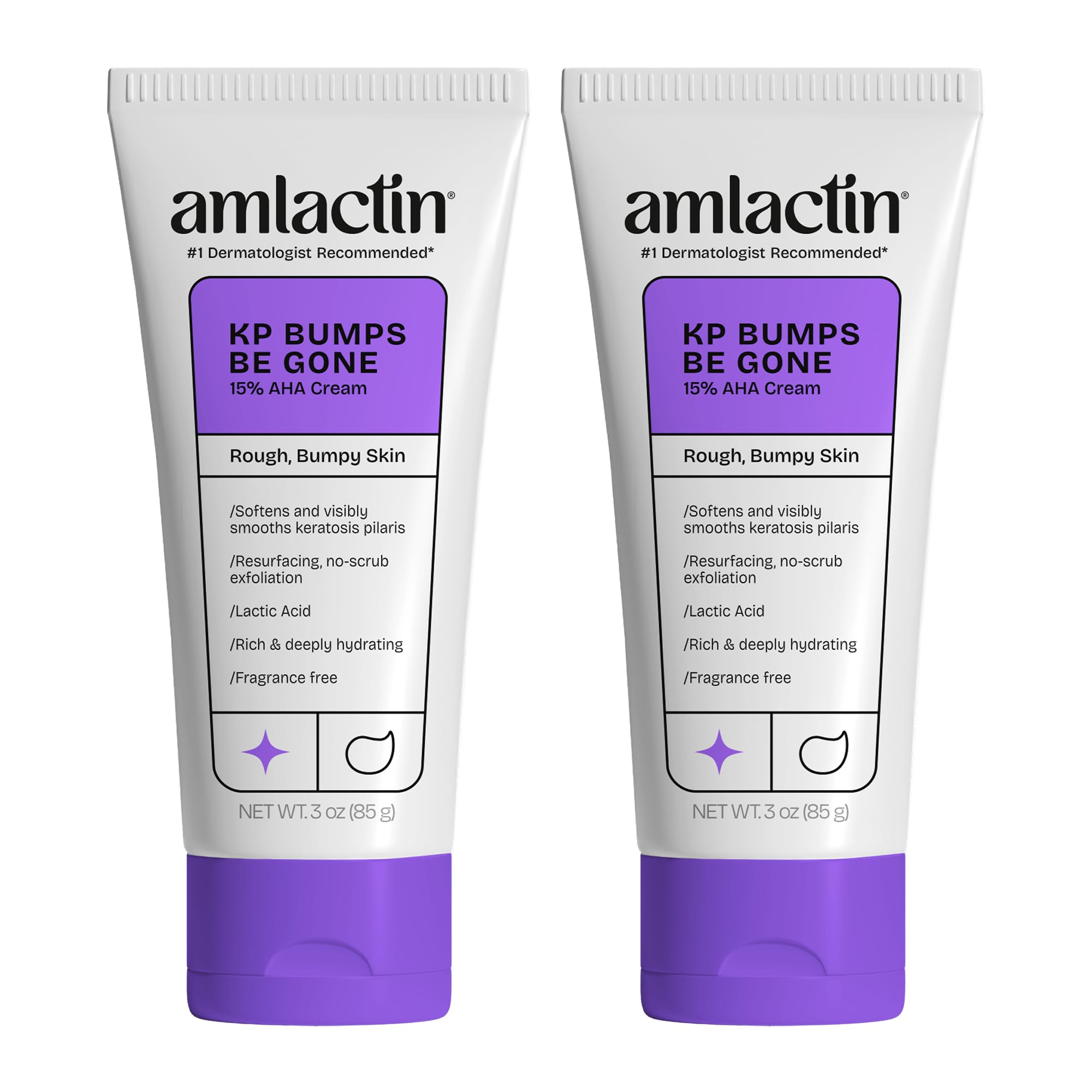
Amlactin’s KP Bumps Be Gone Body Cream is a targeted treatment for keratosis pilaris (KP), those small, rough bumps that commonly appear on the backs of arms, thighs, and sometimes the cheeks. This review covers the 3 oz, 2-pack version, which offers a total of 6 oz of product. The key selling point is the 15% lactic acid concentration—an alpha-hydroxy acid (AHA) that exfoliates and hydrates simultaneously. But how does it perform in real-world use, and who should consider it?
From an editorial standpoint, the product is straightforward: a thick, fragrance-free cream that relies on lactic acid to break down the keratin plugs that cause KP. It’s not a miracle cure, but it’s a practical option for those dealing with mild to moderate cases. Below, we break down its features, limitations, and how it compares to alternatives.
Real-world usage context
This cream is typically applied once or twice daily to affected areas after showering, when skin is still damp. The 3 oz tubes are small enough to toss in a gym bag or keep on a nightstand, and the 2-pack ensures you have a backup. Users often report seeing gradual improvement over several weeks—not overnight. It’s important to note that consistency is key; skipping days can slow progress. The cream absorbs reasonably well but leaves a slight tackiness for a few minutes, so it’s best used when you have a moment to let it dry.
Key functional features
- 15% lactic acid: A moderate-to-high concentration for an over-the-counter body product. Lactic acid is both an exfoliant and a humectant, meaning it helps shed dead skin cells while drawing moisture into the skin.
- Fragrance-free and dye-free: Suitable for sensitive skin, though the lack of fragrance means it has a faint, slightly medicinal scent from the lactic acid itself.
- Emollient base: Contains glycerin and mineral oil, which help counteract the potential dryness from the acid. The texture is rich but not greasy.
- Compact 3 oz tubes: Convenient for travel or targeted use, though the small size means you’ll go through them quickly if using on larger areas like thighs.
Performance expectations
Based on user feedback and the nature of KP, this cream can smooth bumps and reduce redness over time, but it won’t eliminate them entirely. Most people notice improvement after 2–4 weeks of daily use. The 15% lactic acid is strong enough to be effective but may cause stinging on broken or freshly shaved skin. It’s not a product for those seeking instant results or a permanent fix—KP is a chronic condition that often requires ongoing management.
Limitations and trade-offs
The biggest drawback is the potential for irritation. Lactic acid at 15% can be too much for some skin types, especially if used on sensitive areas or in conjunction with other exfoliants (like scrubs or retinoids). Starting with once-daily application and monitoring for redness or stinging is wise. Additionally, the 3 oz size is small for a body product; if you’re treating both arms and legs, you might finish a tube in a few weeks. The 2-pack helps, but it’s still a modest amount compared to larger 12 oz bottles of similar creams. Also, the cream’s consistency is thick and can be hard to dispense from the tube when it’s nearly empty.
Comparison to alternatives
Compared to physical exfoliants like sugar or salt scrubs, Amlactin’s chemical exfoliation is gentler and more consistent, but it requires more patience. Scrubs offer immediate tactile satisfaction but can be abrasive and don’t provide the same hydrating benefits. Another alternative is urea-based creams (e.g., 10-20% urea), which also exfoliate and moisturize but work differently; urea can be less irritating for some. Amlactin’s lactic acid formula is a solid middle ground, but those with very sensitive skin might prefer a lower concentration (e.g., 5-10% lactic acid) or urea.
Who it is suitable for
This cream is best for adults with mild to moderate KP on the body who are willing to commit to daily use and can tolerate AHAs. It’s also suitable for those looking for a fragrance-free exfoliating moisturizer for rough elbows or feet. It is not suitable for children, people with very sensitive or compromised skin, or those who cannot avoid sun exposure on treated areas (AHAs can increase photosensitivity). Pregnant women should consult a doctor before using lactic acid products. If you have severe KP or dermatitis, a dermatologist’s guidance is recommended.
Overall, Amlactin KP Bumps Be Gone is a functional, no-frills treatment that delivers on its promises if used consistently. It’s not a cure, but it’s a reasonable tool in the management of KP. The 2-pack offers decent value, though the small size may be a drawback for some. As with any acid-based product, patch testing and gradual introduction are advised.