
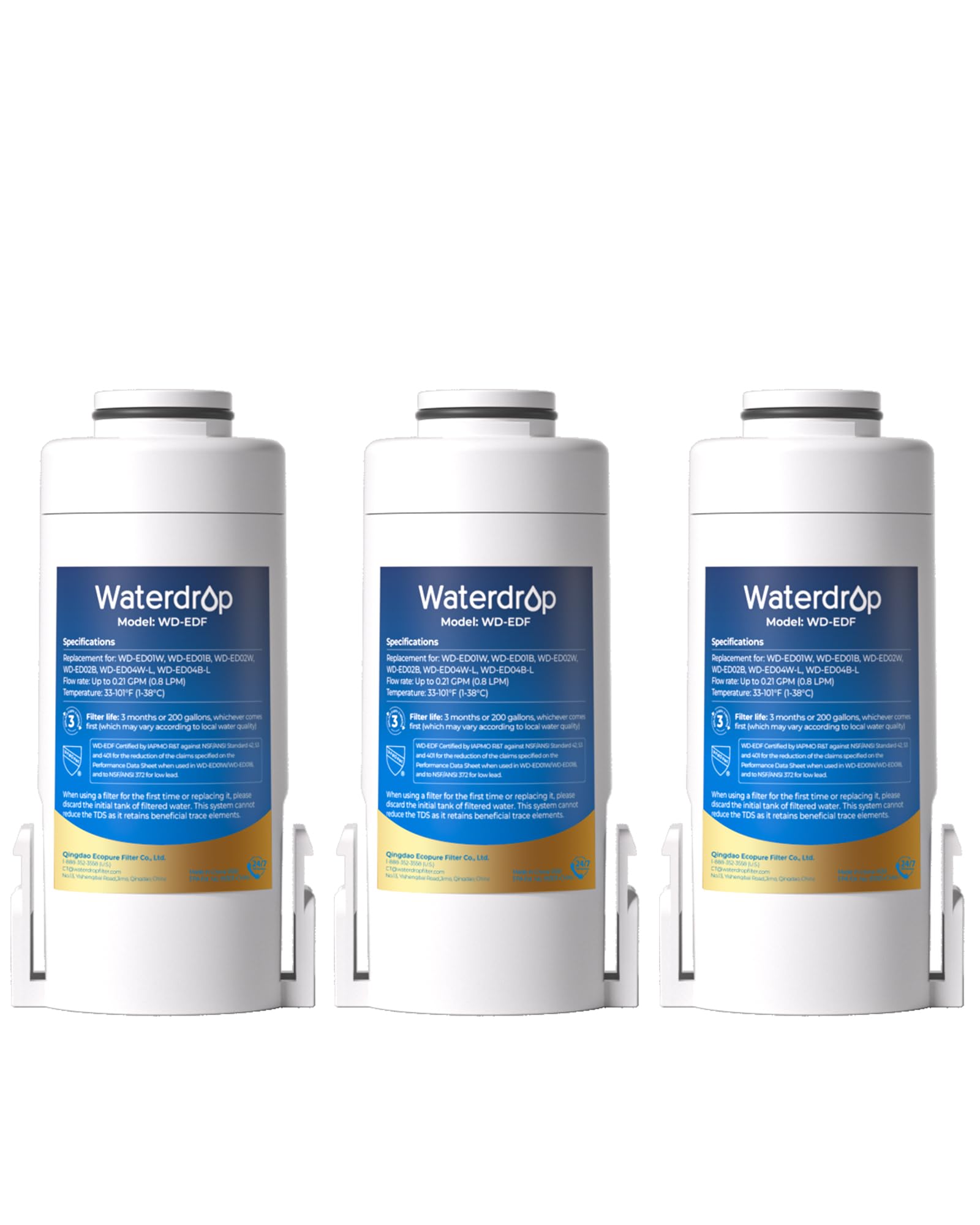
Replacement filters are one of those purchases that rarely get much thought until the water starts tasting off or the indicator light won’t stop nagging. The Waterdrop EDF three-pack is aimed squarely at that moment: it’s a multi-pack of replacement cartridges for the company’s ED01, ED02, and ED04 pitcher and dispenser systems. The appeal is straightforward — buying three at once cuts down on the frequency of reordering and usually lowers the per-filter cost compared with singles. Whether that convenience outweighs the trade-offs depends a lot on how you actually use your pitcher.
In day-to-day use, these filters slot into the same routine as any pitcher cartridge: soak or rinse per the instructions, seat it in the housing, run a few batches through to flush carbon fines, and then get on with normal use. For a two-person household filling a pitcher a few times a day, a single cartridge typically lasts somewhere in the range of a couple of months, though that figure moves a lot with water hardness, how much you filter, and whether you’re also using the water for cooking. The three-pack essentially covers a good chunk of a year for lighter users, which is where the value case is strongest.
Functionally, these are carbon-based filters designed to reduce chlorine taste and odor, along with sediment and some common contaminants, which is the standard job description for pitcher filtration. They are not a reverse-osmosis system and shouldn’t be treated as one. If your tap water has serious issues — high nitrate, arsenic, or a boil-water notice — a pitcher filter is the wrong tool regardless of brand. For municipal water that’s safe but tastes flat or chlorinated, this is the category that makes sense.
One thing worth flagging is compatibility. These are explicitly built for the ED01, ED02, and ED04 models, and they are not interchangeable with the wider universe of pitcher filters. That’s normal for this product type, but it does mean you’re locked into Waterdrop’s ecosystem for as long as you own the pitcher. Third-party or generic cartridges sometimes claim fit, and the results vary; the OEM route is the safer bet if you want the housing to seal properly and the filter to seat without wobble. The flip side is that OEM multi-packs tend to cost more per unit than the cheapest generics, so the three-pack is really a middle ground — cheaper than buying singles, not as cheap as the least expensive compatible alternatives.
Performance expectations should be realistic. These filters do a decent job on taste and smell, and most users notice clearer-tasting water within the first few pitchers. They will not soften hard water in any meaningful way, and they won’t remove dissolved minerals that cause scale. If you’re dealing with limescale on kettles or fixtures, you need a descaling routine or a different filtration approach entirely. Likewise, flow rate tends to slow as the cartridge approaches the end of its life, which is a useful but sometimes annoying signal that it’s time to swap.
Maintenance is minimal but not zero. The filter needs periodic flushing if the pitcher sits unused for a while, and the housing itself should be cleaned when you change cartridges. Storing the spare two filters matters too — keep them sealed and dry until needed, since exposed carbon cartridges can pick up odors from their surroundings. A three-pack is convenient, but it’s not a reason to leave them rattling loose in a cupboard.
- Strengths: straightforward installation, consistent fit for the specified models, lower per-unit cost than singles, and adequate chlorine and sediment reduction for typical municipal water.
- Trade-offs: model-specific compatibility limits your options, no softening capability, and the multi-pack ties up money in inventory you may not need for months.
Compared with a faucet-mounted or under-sink filter, pitcher cartridges like these are cheaper to start with and require no plumbing, but they filter less water per unit of effort and need more frequent attention. Compared with generic compatible cartridges, the OEM version offers better fit assurance at a higher price. Neither comparison makes one option universally better — it comes down to how much you value convenience and seal quality versus upfront cost.
This three-pack suits households that already own a compatible Waterdrop pitcher or dispenser and go through filters at a steady pace. It’s a reasonable buy for a small family or a heavy tea-and-coffee drinker who filters daily. It’s a poor fit for anyone with a different pitcher brand, for homes with significant water quality problems that need more robust treatment, or for very light users who might not finish three cartridges before their storage conditions or the pitcher itself become the bigger issue. Buy it if the fit is right and the cadence makes sense; otherwise, a single cartridge is the more sensible starting point.