
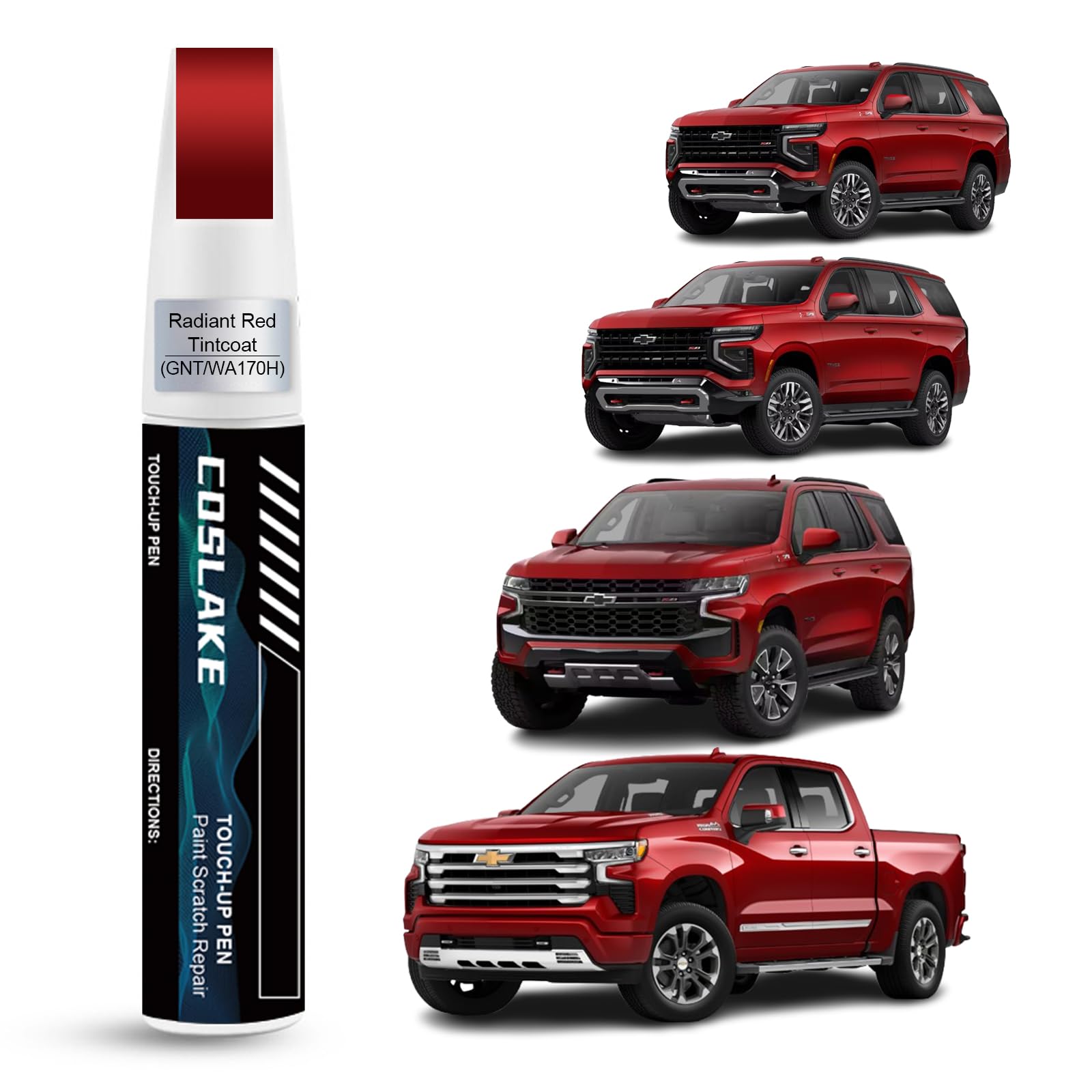
Touch-up paint is one of those products that rarely gets much attention until you actually need it. A door ding from a parking lot, a chip from a stray stone on the highway, or a scratch from a bicycle handlebar — these are the moments when a small bottle of color-matched paint suddenly matters. The COSLAKE Car Touch Up Paint in Radiant Red Tintcoat (GNT/WA170H) is aimed squarely at Chevrolet owners dealing with exactly that kind of minor damage. It is not a body shop in a bottle, and it does not claim to be, but it occupies a useful niche for people who want to slow down rust and make small blemishes less obvious without spending hundreds of dollars.
The product is a color-matched touch-up paint formulated for the Radiant Red Tintcoat used across a range of Chevrolet models. The GNT/WA170H code is the important part here. GM uses specific paint codes, and matching them correctly is the difference between a repair that blends in and one that looks like a red dot on a red car. COSLAKE lists the OEM code directly, which makes verification straightforward — buyers can check their vehicle’s door jamb sticker or glovebox label to confirm the code before ordering. That said, paint matching is never a perfect science. Factory paint fades over time, and a fresh bottle of Radiant Red may not perfectly match a five-year-old finish, especially on horizontal surfaces like the hood or roof that see more sun.
In practice, the product is used in a fairly simple way. The paint comes in a small applicator bottle, typically with a brush or pen-style tip depending on the variant. For a small chip, the process involves cleaning the area, possibly applying a small amount of paint with the brush, and letting it cure. For deeper scratches that have exposed primer or metal, a layered approach works better — thin coats rather than one thick blob. The paint is a single-stage touch-up formula, meaning it does not include a separate clear coat in most versions, though some kits may include one. This is worth noting because Radiant Red Tintcoat is a tinted clear coat color from the factory, and a single-stage touch-up will not replicate that depth exactly. From a few feet away, the repair will likely be invisible. Up close, under direct light, a trained eye may notice a slight texture or gloss difference.
Functionally, the product does what it says. It covers small areas, dries to a reasonably hard finish, and provides a barrier against moisture that can lead to rust on exposed metal. The color match is generally good for the specified code, though results vary by batch and by the age of the vehicle’s paint. The applicator is small, which is appropriate for chips and thin scratches but frustrating for anything larger than a pencil eraser. Users should expect to apply multiple thin layers for the best result, and patience during curing matters — rushing the process tends to produce a raised, uneven patch that stands out more than the original damage.
- Strengths: Correct OEM code matching, affordable compared to professional repair, easy to store and use for small chips, good rust prevention on exposed metal.
- Limitations: Single-stage formula may not match the factory tinted clear coat perfectly, applicator is too small for larger areas, color can vary on older or sun-faded paint, and the finish may not be as durable as a professional respray.
Compared to alternative approaches, touch-up paint sits somewhere between doing nothing and paying for a professional repair. A body shop can blend and clear coat a panel for a seamless result, but that costs far more and is overkill for a single chip. On the other end, paint pens from generic brands often have poor color matches and inconsistent coverage. COSLAKE’s offering lands in the middle — more precise than a universal red, less comprehensive than a professional job. For anyone considering a DIY paint pen versus a small bottle and brush, the bottle tends to offer more control for chips, while a pen is easier for thin scratches. Neither replaces proper surface preparation, which is the step most people skip and later regret.
Who is this for? It suits Chevrolet owners with minor cosmetic damage who want a low-cost, low-effort fix that prevents rust and reduces visibility of chips. It is also reasonable for people leasing a vehicle who want to address small wear before turn-in. Who is it not for? Anyone expecting a flawless, invisible repair on a large scratch or a panel-wide scuff should look elsewhere. Similarly, owners of vehicles with significantly faded paint may find the match disappointing, and those unwilling to spend time on prep and layered application may end up with a result they are not happy with. This is a maintenance product, not a restoration product, and judging it by body-shop standards misses the point.
Realistic expectations matter here. A small chip on a door edge or rocker panel is a good candidate. A long key scratch across a door is not. The paint will cover it, but the texture and depth will be visible. Used within its limits, the COSLAKE touch-up paint is a sensible, inexpensive way to handle the inevitable small damage that comes with driving. It is not exciting, and it is not meant to be. It is a small tool that does a specific job reasonably well, provided the user understands what that job actually is.