
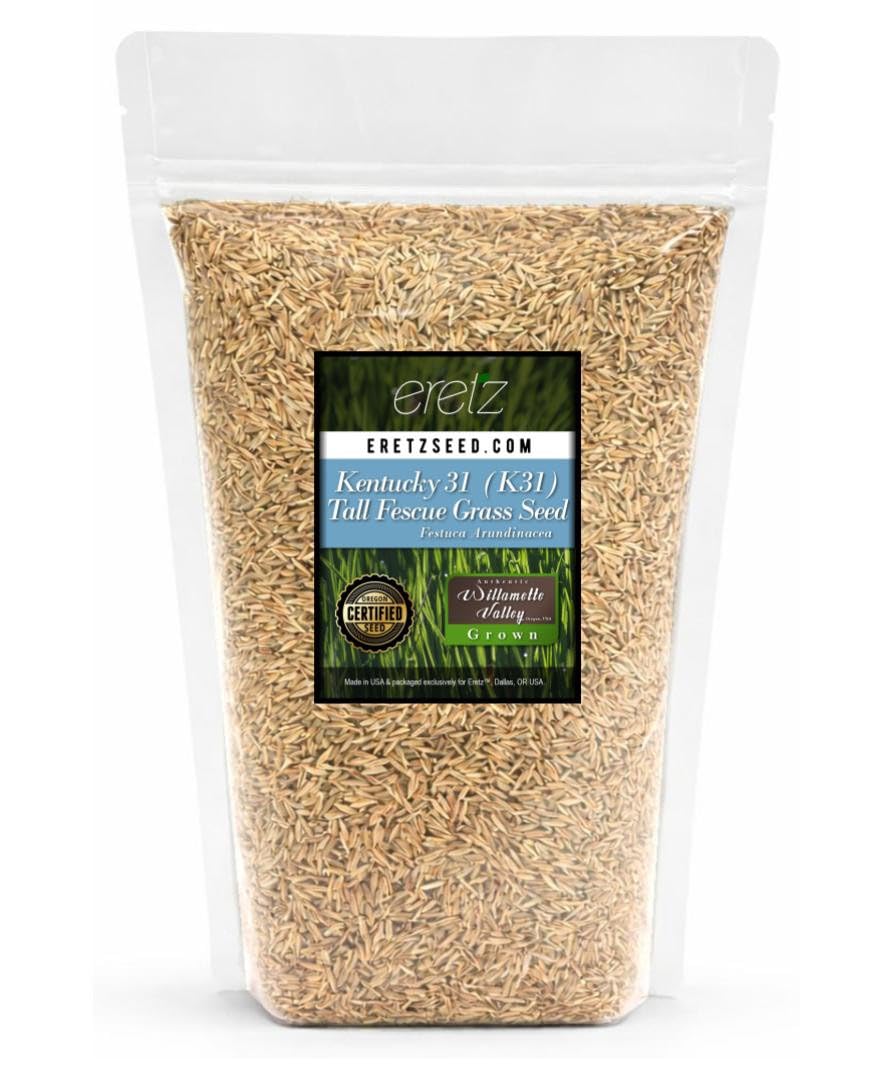
Kentucky 31, often shortened to K31, is a name that comes up a lot in discussions about tall fescue grass seed. This version from Eretz is a state-certified product that markets itself as having no fillers, no weed seeds, and no other crop seeds. It’s a straightforward offering for anyone looking to establish or overseed a lawn with a durable, low-maintenance grass type.
In real-world use, K31 tall fescue is typically chosen for areas that get a lot of foot traffic, like backyards where kids play or dogs run, or for larger properties where you don’t want to fuss with constant watering or fertilizing. It’s also common in transitional climate zones where cool-season grasses struggle with heat and drought. The grass itself forms a coarse, bunch-type growth habit, which means it doesn’t spread via runners like Kentucky bluegrass or Bermuda grass. This is important to know because it affects how the lawn fills in over time.
Key functional features of this particular seed include its state certification, which is a plus for buyers who want assurance that what’s in the bag matches the label. The absence of fillers and weed seeds is another practical benefit—you’re paying for actual grass seed, not inert material that won’t grow. The seed is also sold in various sizes, so you can pick a 1-pound bag for small patches or larger quantities for bigger areas. Tall fescue itself is known for deep root systems, which help it tolerate drought better than many other cool-season grasses. That said, it still needs regular watering during establishment and in prolonged dry spells.
One limitation worth noting is that K31 has a noticeably coarser leaf texture compared to modern turf-type tall fescues. If you’re used to the fine, soft feel of a manicured lawn, this grass might feel a bit rough underfoot. It also has a lighter green color, and some homeowners find it less visually appealing than newer varieties. Another trade-off is that because it’s a bunch-type grass, bare spots can take longer to fill in naturally, so you may need to reseed patches periodically. The seed itself is relatively affordable, but you get what you pay for in terms of aesthetics.
When comparing K31 to something like a turf-type tall fescue blend, the differences become clear. Turf-type varieties are bred for finer blades, darker color, and denser growth, but they often cost more and may require better soil and more maintenance. K31 is more like the workhorse option—it’s tough, it survives, but it won’t win any beauty contests. If you’re comparing it to a fine fescue or Kentucky bluegrass, note that those grasses have different growth habits and care requirements. Bluegrass spreads and repairs itself, but it needs more water and fertilizer. Fine fescues are shade-tolerant but less durable under foot traffic. K31 sits somewhere in between: it handles sun and moderate shade, but it’s not ideal for deep shade.
This product is suitable for homeowners who prioritize durability and low cost over a pristine appearance. It works well for large areas, slopes, or utility lawns where you just want something green and resilient. It’s also a decent choice for erosion control or pasture mixes, though it’s primarily sold as lawn seed. It is not suitable for people who want a fine-textured, dark green lawn that feels like a golf course fairway. If you’re looking for something ornamental or you have a small, shady yard, you’d be better off with a different grass type. Also, if you’re not willing to do some manual weeding or spot-seeding in the first year, this grass might not meet your expectations for uniform coverage.
Overall, Kentucky 31 from Eretz is a no-nonsense product for a specific use case. It delivers on its promises of being clean seed with no extras, and it grows into a tough lawn that can handle real wear and tear. Just go in with realistic expectations about its appearance and growth habits.