
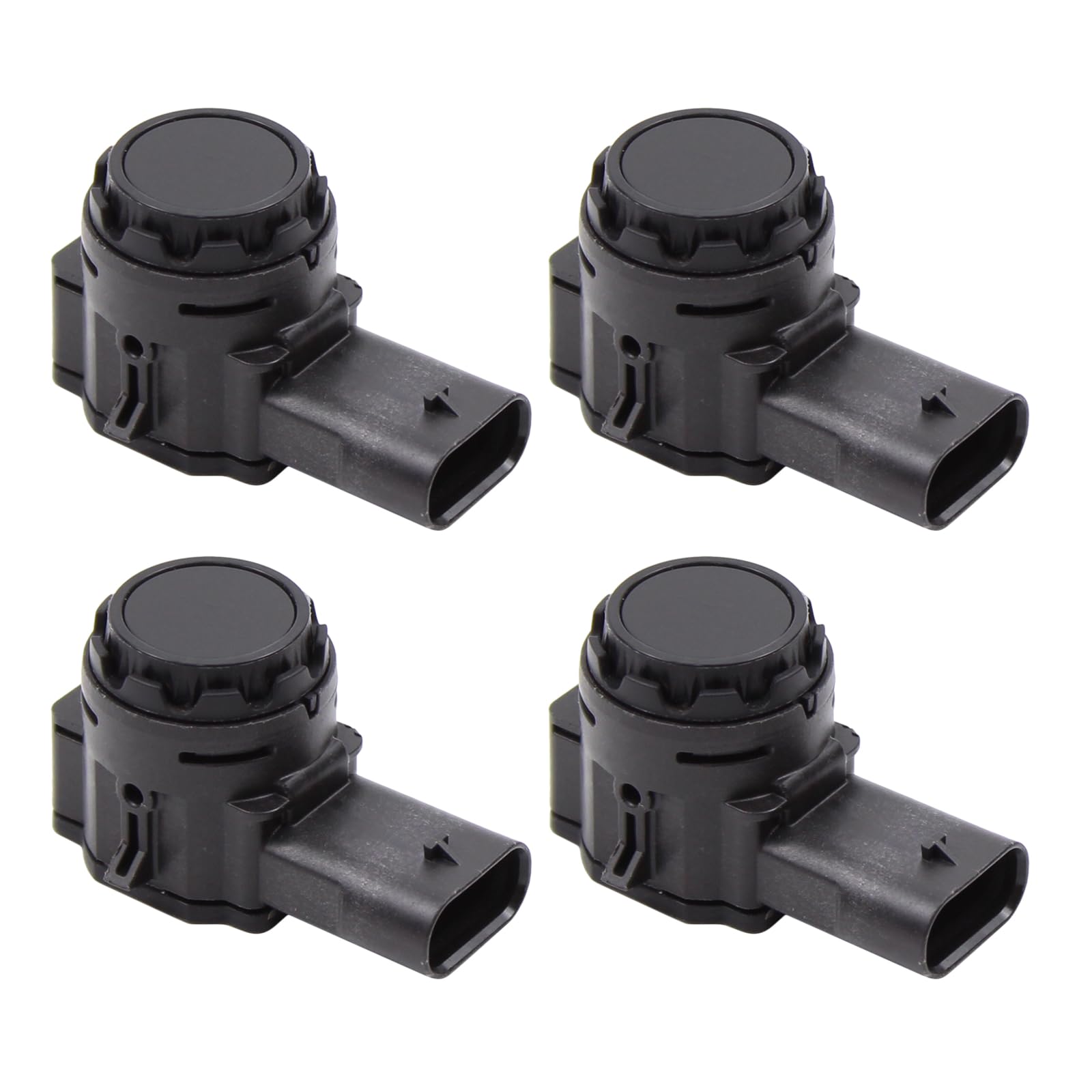
Parking sensors occupy an awkward spot in the aftermarket. They are cheap enough to buy on impulse, yet they require drilling into a bumper, running wiring through a vehicle, and trusting a control module of unknown provenance to beep at the right moment. This front and rear sensor kit marketed for Chevrolet and GMC trucks and SUVs sits squarely in that category. It is not a factory option, and it does not pretend to be one. The question worth asking is whether it makes sense for a particular owner and vehicle, and under what conditions.
The kit is intended to add obstacle detection to both ends of a vehicle, which matters most on full-size trucks and body-on-frame SUVs where the hood line and tailgate height make close-quarters maneuvering genuinely difficult. A Silverado or Sierra in a crowded lot, a Suburban backed into a tight garage, or a Tahoe nosed up to a low parking block are the scenarios this product addresses. In practice, drivers install the sensors in the front and rear bumpers, route wiring to a small display or buzzer inside the cabin, and rely on audible or visual cues as they approach an object. That is the entire use case, and it is a reasonable one for vehicles that predate standard park assist.
Functionally, the kit consists of ultrasonic sensors, mounting hardware, wiring, and a control unit with an alert interface. The sensors emit ultrasonic pulses and calculate distance from the returning echo, which is the same basic principle used by factory systems. Most versions include a small LED display that indicates distance and direction, plus an audible alert that increases in frequency as the vehicle closes on an obstacle. Detection ranges are typically quoted in the range of roughly 0.3 to 2.5 meters for rear sensors and somewhat less for front units, though real-world performance depends heavily on sensor placement, bumper curvature, and whether the bumper is plastic or steel.
What the kit does not do is match factory integration. There is no steering-wheel-linked trajectory overlay, no automatic braking, and no camera feed. Alerts come from a separate display that has to be mounted somewhere on the dash, which is the most common aesthetic complaint about these systems. The display is functional but visibly aftermarket, and on a newer truck with a large infotainment screen, it can feel like a step backward. Buyers comparing this to an OEM retrofit or a camera-based system should understand the trade-off: sensors tell you distance and direction without a line of sight, while cameras show you what is actually there but can be obscured by dirt, rain, or glare. Neither is a substitute for the other, and many owners end up wanting both.
Installation is the dividing line for this product. Drilling holes in a bumper is permanent, and hole placement is unforgiving. Sensors mounted too high, too low, or too close to a curve in the bumper can produce false alerts or dead zones. On trucks with tow hitches, rear sensors may pick up the hitch or a trailer as an obstacle, and on vehicles with steeply angled front fascias, the front sensors can be triggered by curbs or sloping driveways. Wiring routing through firewalls and trim panels takes time, and the control module needs a clean, dry location. None of this is insurmountable, but it is a weekend project for someone comfortable with basic tools, not a plug-and-play accessory.
Durability is another realistic consideration. Aftermarket ultrasonic sensors are generally sealed against splashes, but they are not immune to pressure washing directed at close range, road salt accumulation, or impact from debris. Expect occasional false alerts in heavy rain or snow, and expect to clean the sensor faces periodically. Factory systems face the same physics, but they are validated to a higher standard and integrated into the vehicle’s diagnostics. This kit will not report a failed sensor on your dashboard; you will simply notice that one corner has stopped responding.
Who should consider it? Owners of older Chevrolet or GMC trucks and SUVs without factory park assist, particularly those who regularly park in tight urban spaces, garages, or crowded job sites, are the most logical audience. People who are comfortable with DIY installation and who value an audible warning over a visual one will get the most from it. Who should look elsewhere? Owners of newer vehicles with factory sensors or 360-degree camera systems will find this redundant and less refined. Anyone unwilling to drill into a bumper should choose a camera-based or magnetic temporary system instead. And drivers expecting factory-level accuracy, silent operation, and seamless integration will be disappointed, because that is not what this product is.
The honest summary is that this is a utility product with a narrow but legitimate use case. It adds a layer of awareness that can prevent low-speed collisions, and it costs far less than an OEM retrofit. It also brings permanent modification, occasional false alerts, and an aftermarket display into the cabin. Buyers who understand those terms will find it useful; those expecting a factory experience will not.