
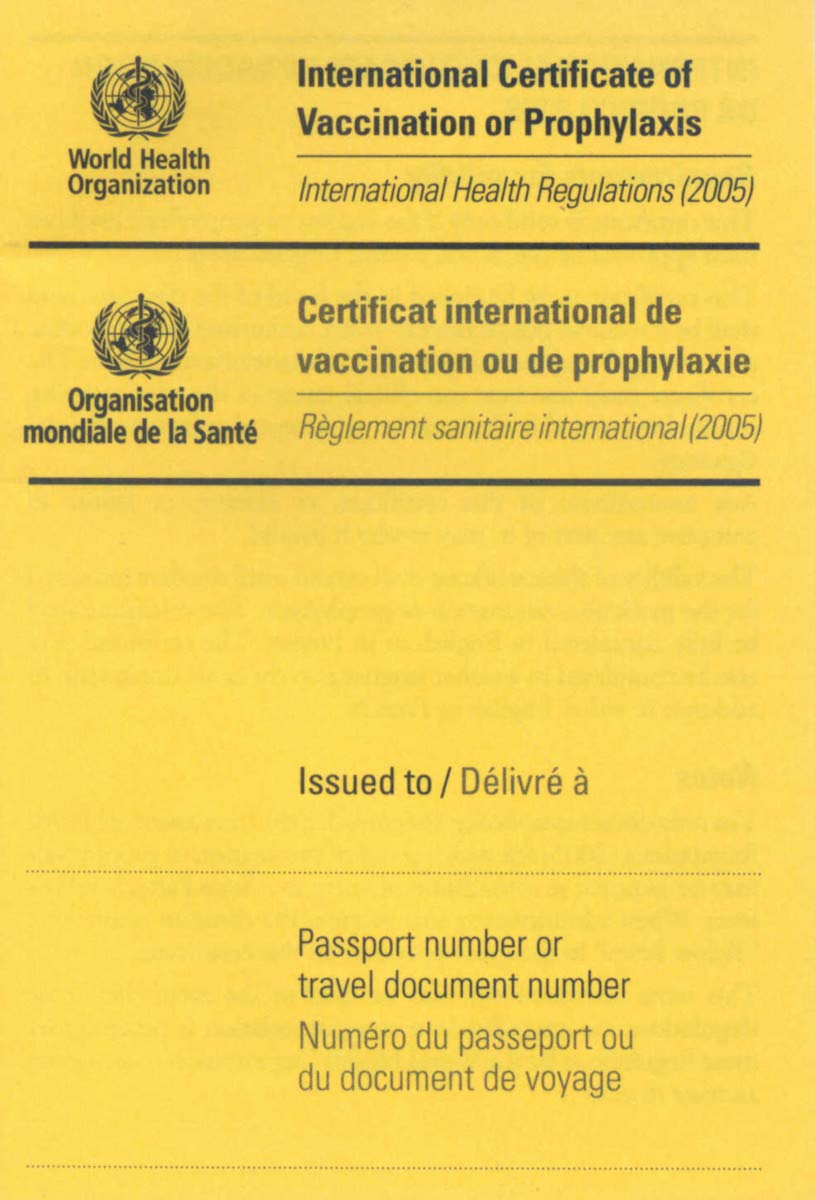
The International Certificate of Vaccination, often called the “yellow card,” is one of those documents most travelers don’t think about until a border official asks for it. This version, published by the World Health Organization in a bilingual format and sold with a vinyl document holder, is the standard-issue booklet used to record yellow fever and other vaccinations required for entry into certain countries. It is a practical item rather than an exciting one, and it is worth understanding what it actually is before buying.
The core product is a small paper booklet printed in both English and French, following the WHO’s model layout. Inside, there are fields for the traveler’s personal details, the vaccine administered, the date, the batch number, the manufacturer, and the signature and stamp of the administering clinician. The current edition dates to 2007, which is worth noting: the design has been stable for years, and the booklet remains the internationally recognized format under the International Health Regulations. The vinyl holder is a simple sleeve that protects the booklet from creasing, moisture, and the general wear of being carried in a bag or pocket.
In real-world use, the booklet is typically filled out by a travel clinic or public health office at the time of vaccination, not by the traveler. The clinician records the yellow fever vaccine details and applies an official stamp, which is what border authorities actually inspect. Travelers then carry it alongside their passport, often for trips to parts of Africa and South America where proof of yellow fever vaccination is a condition of entry. Some countries also request it for other vaccinations, though yellow fever is the main one with formal international requirements.
Functionally, the booklet does what it needs to. The paper is lightweight and the layout is clear enough for officials to scan quickly. The bilingual printing is a genuine convenience in francophone countries, where a French-language record avoids confusion at checkpoints. The vinyl holder adds a reasonable layer of protection; it is not waterproof in any serious sense, but it keeps the booklet from getting dog-eared and keeps the stamp and signature legible, which matters because a smudged or damaged entry can cause problems at a border.
There are limitations worth being upfront about. The 2007 publication date means the booklet is an older edition, and while the format is still accepted, some travelers prefer the most current printing to avoid any question. More importantly, the booklet itself is only as valid as the entries in it: a blank certificate purchased online is not a vaccination record, and border officials will not accept one that hasn’t been properly completed and stamped by an authorized provider. Buyers sometimes mistake this for a document they can fill in themselves, which it is not. The vinyl holder is also fairly basic; it protects against scuffs but not against being lost, and it adds a small amount of bulk compared with carrying the booklet loose.
Compared with alternatives, the main choice is between a physical booklet like this and a digital vaccination record, such as the QR-code-based certificates increasingly used in some regions. Digital records are convenient and harder to lose, but international border acceptance is inconsistent, and many countries still expect the physical yellow card. A plain paper certificate without a holder is cheaper but more vulnerable to damage. This version sits in the middle: the standard document plus modest protection.
Who is it for? Travelers planning trips to countries with yellow fever entry requirements, people who need a durable place to keep their vaccination record, and anyone who wants the bilingual format for francophone destinations. It is also a sensible spare for households that travel frequently. Who is it not for? Anyone expecting a ready-to-use certificate without visiting a clinic, travelers who rely entirely on digital records, and people who need the very latest edition printing. It is a utilitarian purchase, and it should be treated as one: useful, unglamorous, and only as good as the stamp inside it.