
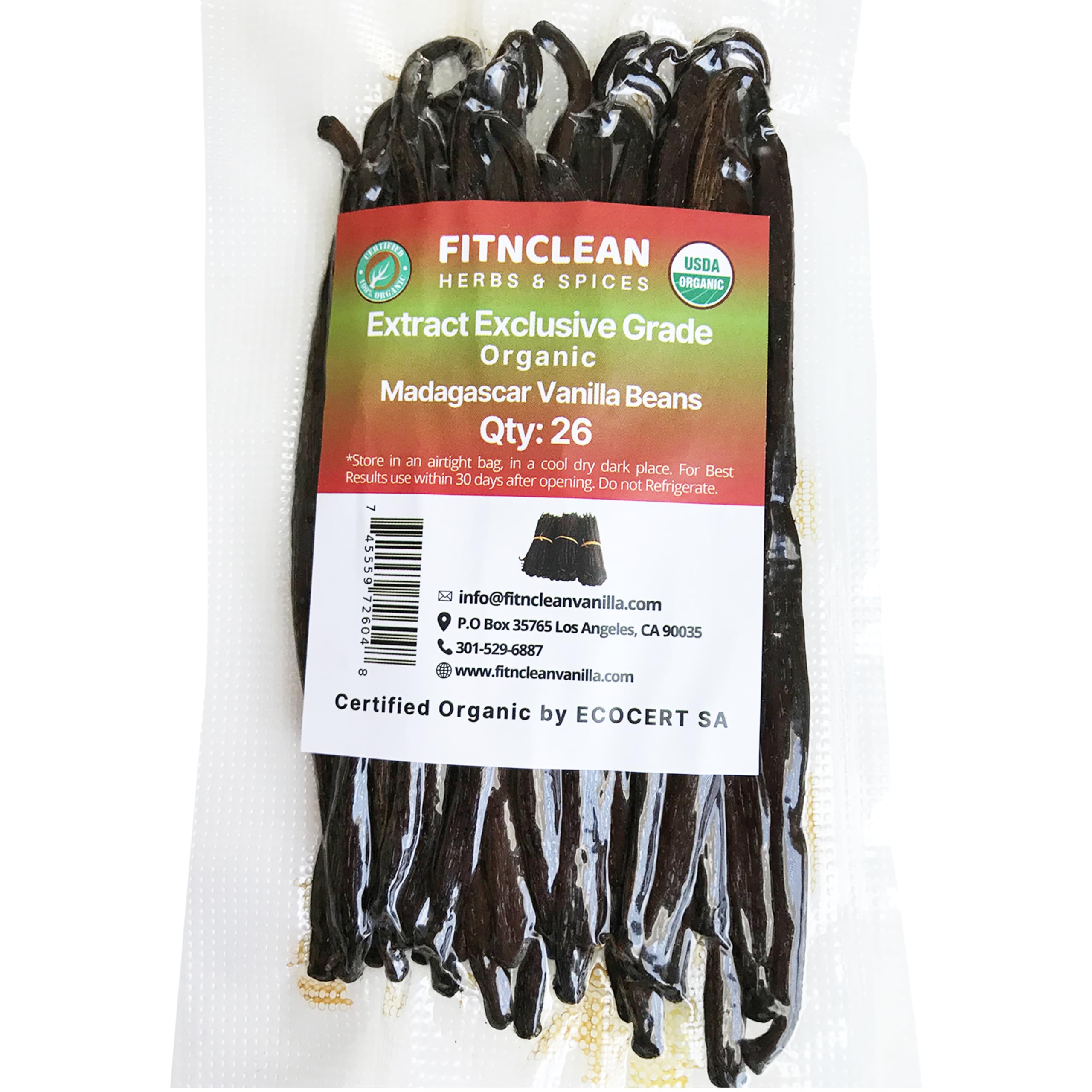
FITNCLEAN’s Organic Madagascar Vanilla Beans are a bulk option aimed at home extract makers and kitchens that go through a lot of vanilla. The beans are Grade B, which in vanilla terms means they’re drier and less plump than the glossy Grade A pods sold for splitting and scraping. That’s not a flaw—Grade B is the standard choice for extracting because the lower moisture content and higher concentration of seeds and oils per weight often yield a stronger infusion. These pods measure 4.5 to 5.5 inches and are certified USDA Organic and non-GMO, which matters if you’re steeping them in alcohol or glycerin for months and want a clean starting material.
In practice, these beans are most often used to make homemade vanilla extract: split or chopped, submerged in vodka or rum, and left to steep for several weeks to months. They also work for vanilla sugar, custards, and simmered syrups, though the dry texture means you won’t get the same visual appeal as Grade A if you’re garnishing desserts. The pods arrive whole and flexible enough to split with a paring knife, though some will be drier and more brittle than others—a normal variation in bulk Grade B lots.
What you get is straightforward: a bulk quantity of whole Bourbon vanilla pods from Madagascar, packed in a resealable bag. The beans are unsplit and uncut, so you control how you use them. For extract, plan on about 6–8 beans per 8 ounces of alcohol for a robust result; using fewer will give a milder, slower infusion. The 4.5–5.5 inch size is on the shorter side—some premium Grade B beans run 6 inches or more—so you may need to use slightly more per batch to hit the same intensity. That’s a trade-off worth factoring into the cost per ounce of extract.
One limitation is consistency. Bulk Grade B beans naturally vary in moisture and size, and some pods may be split or have minor imperfections. That’s acceptable for extract but less ideal if you want uniform pods for gift jars or precise recipe testing. Also, because they’re dry, they can be harder to split lengthwise without cracking; a quick soak in warm liquid can help. And while the organic certification is a plus, it doesn’t guarantee every bean is flawless—you’re paying for the certification and the bulk convenience, not for hand-selected perfection.
Compared to Grade A vanilla beans, these are less visually impressive but more cost-effective for extraction. Grade A beans are better for applications where you scrape the seeds directly into a dish and want the pod for presentation. If you mainly make extract and go through beans regularly, Grade B is the practical choice. Compared to vanilla extract or paste, whole beans give you control over strength and ingredients, but they require planning and patience—extract takes weeks, not minutes.
This product suits home bakers who make extract in batches, small-scale producers, and anyone who uses vanilla frequently enough to justify buying in bulk. It’s also a reasonable option for those who want organic ingredients and are willing to accept natural variability. It’s not for you if you need uniform, pristine pods for garnishing or if you only bake occasionally—a smaller pack of Grade A beans or a good-quality extract might be more practical. And if you’re not prepared to wait weeks for extract to mature, whole beans may frustrate you.
Overall, these beans do what Grade B beans should: provide a economical way to produce vanilla extract with good flavor potential, backed by organic certification. The shorter length and natural inconsistency are the main compromises, but for extract making they’re minor. Just set expectations accordingly and plan your batches.