
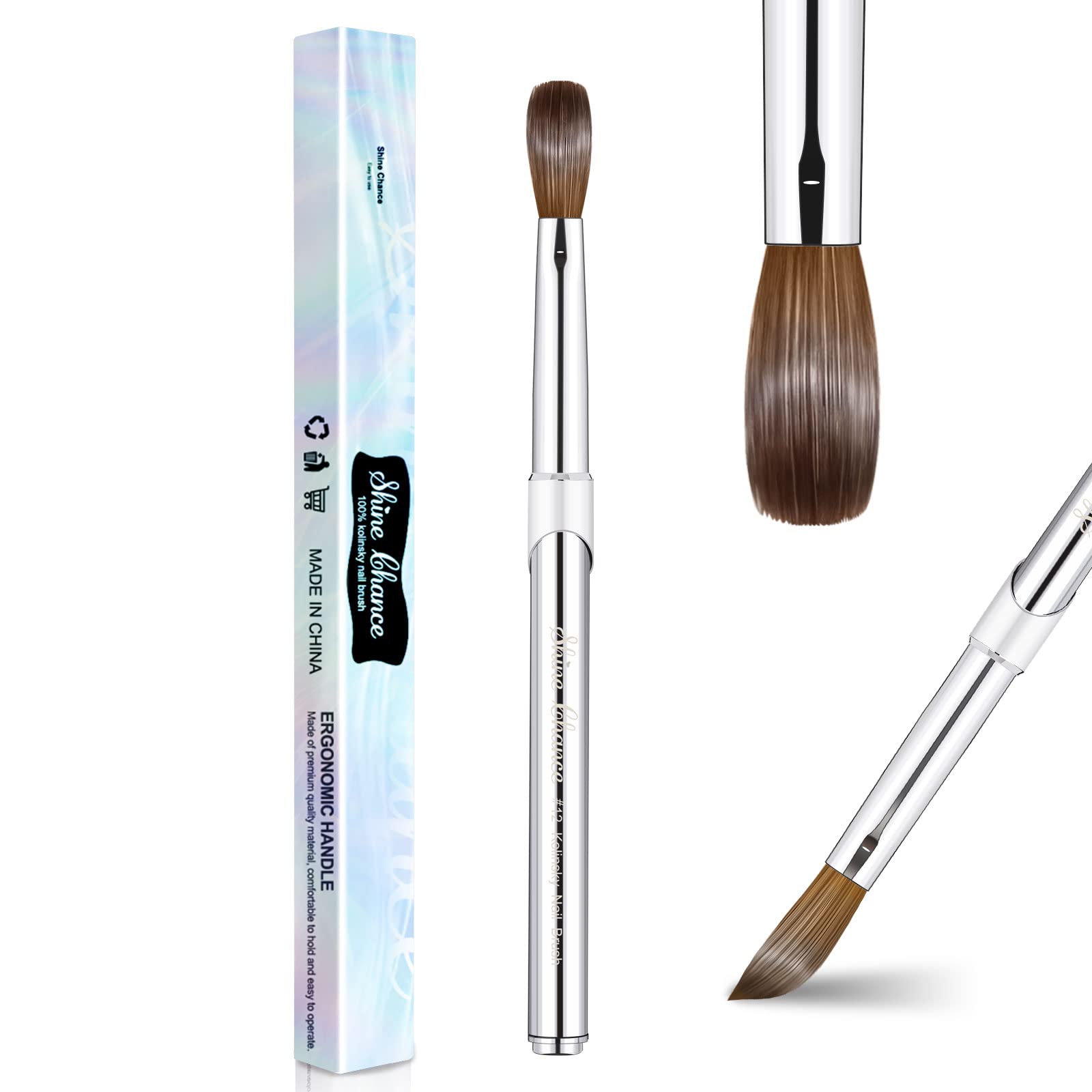
The Shine Chance Size 12 acrylic nail brush sits in an odd but useful spot in the market. It is sold as a professional nail extension and striping tool, yet its price and availability suggest it is aimed at people doing their own acrylics at home rather than at working nail technicians. Whether that positioning holds up depends a lot on what you expect from a kolinsky brush at this price point.
The core specification is straightforward: a size 12 oval brush made from kolinsky hair, which is the material many technicians still consider the benchmark for acrylic application. Kolinsky refers to a type of weasel tail hair known for fine, tapered tips and good liquid retention. In practice, that translates to a brush that holds monomer and polymer without constantly needing to be reloaded, and that forms a reasonably sharp point for detail work. Size 12 is a mid-to-large brush, generally suited to building the main body of a nail extension rather than fine line work, though the oval shape and pointed tip make it more versatile than a flat brush of the same size.
In real-world use, a brush like this is loaded by dipping into liquid monomer and then touching into acrylic powder, forming a bead on the bristles. The bead is then placed on the nail and worked into shape. A size 12 brush is large enough to cover a full nail in one or two beads, which speeds up the extension process but demands some control. Beginners often find that a smaller brush, in the size 8 to 10 range, is easier to manage while learning bead placement, because a large brush carries more liquid and mistakes spread further before you can correct them. That is a genuine trade-off here, not a flaw in the product itself.
The kolinsky hair is the main functional selling point, and it behaves as expected in most respects. The bristles taper to a point that holds up for drawing stripes and simple nail art, so the brush can pull double duty between full acrylic builds and decorative line work. The oval shape is forgiving for pressing product into the cuticle area and for smoothing the surface before it sets. The handle is a standard acrylic-handle design, lightweight and comfortable for the pinch grip most technicians use, though the balance will feel slightly top-heavy to anyone used to a shorter, stubbier brush.
There are limitations worth flagging. First, kolinsky hair is a natural material, and quality varies between individual brushes even within the same product line. Some units arrive with a well-formed tip; others need a few sessions of conditioning in monomer before the hairs stop splaying. Second, natural hair requires more careful cleaning than synthetic bristles. Leaving acrylic to harden in the bristles will ruin the brush quickly, and kolinsky should be cleaned in monomer rather than harsh solvents. Third, a size 12 is not a one-brush solution. Anyone doing detailed nail art, French tips, or small fill work will still want a smaller brush alongside it.
Compared with a synthetic acrylic brush, the kolinsky option generally holds its shape longer and releases product more smoothly, but it costs more and needs more maintenance. Synthetic brushes are more forgiving for casual users, resist damage from improper cleaning better, and are cheaper to replace. For someone doing acrylics once a month at home, a mid-range synthetic brush may be the more sensible first purchase. The kolinsky brush starts to justify itself when you are applying acrylic regularly and want the smoother bead control that natural hair provides.
This brush suits people who already have some experience with acrylic application and want a larger, better-performing tool for building extensions, or hobbyists who are comfortable with the cleaning routine natural hair demands. It is less suitable for complete beginners still learning bead ratios, for anyone who wants a single do-everything brush, or for users who prefer low-maintenance tools they can clean quickly without worrying about the bristles. It is also not a substitute for a proper detail brush when fine art work is the goal.
Realistic expectations matter here. This is a competent mid-tier kolinsky brush, not a professional-grade tool that will outperform brushes costing several times more. It will do the job for home acrylics and light nail art, provided it is cleaned properly and stored with a protective cap. Buyers should inspect the tip on arrival and be prepared to condition it before first use. Treated well, it should hold up for a reasonable period of regular use; treated carelessly, it will degrade faster than a synthetic alternative would.