
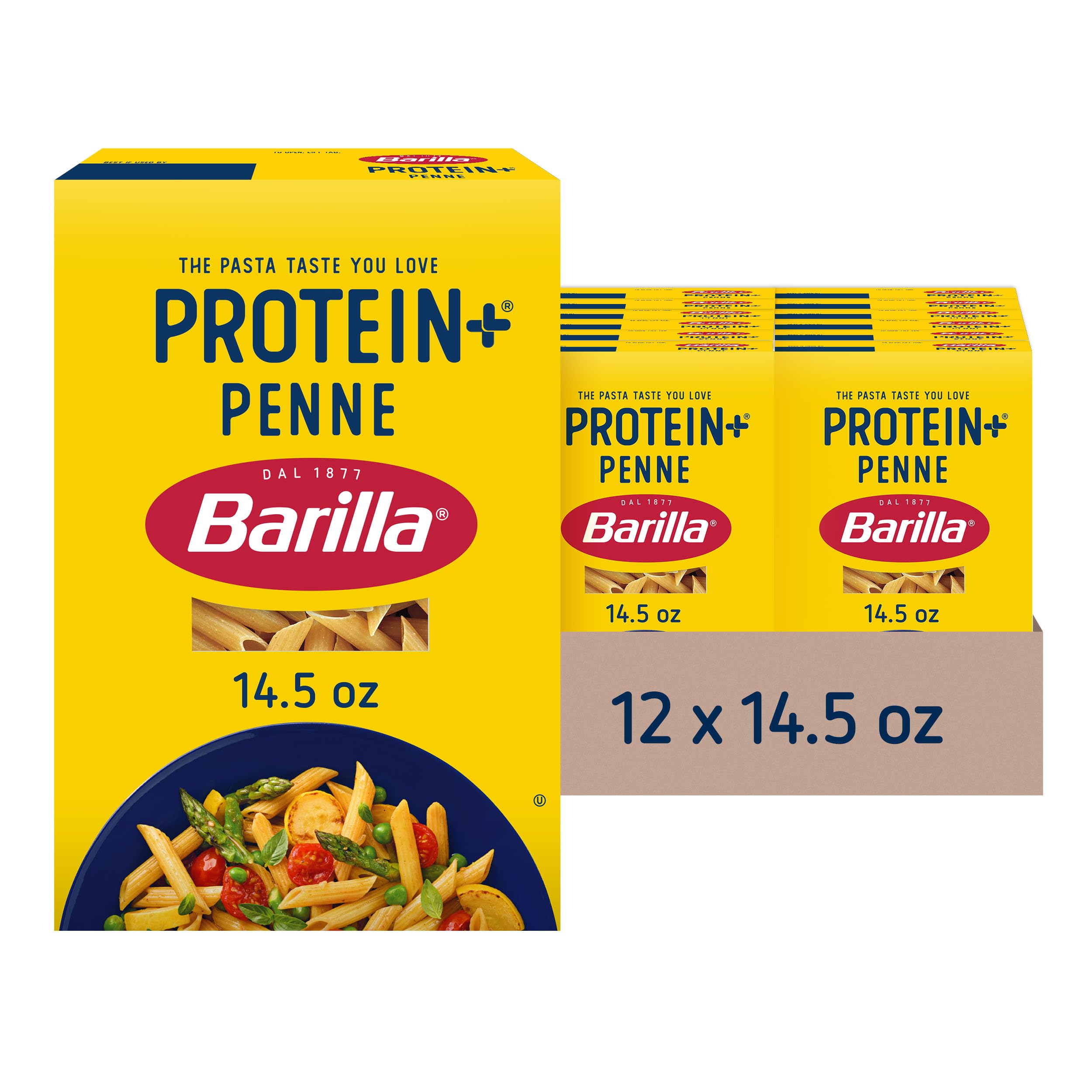
Barilla Protein+ Penne sits in a category that has grown quickly over the past several years: pasta that promises more protein without asking you to give up the texture and behavior of regular semolina pasta. The pitch is straightforward. Each 14.5-ounce box blends traditional durum wheat semolina with plant-based protein sources—lentils, chickpeas, and egg whites—and the brand claims a noticeably higher protein count per serving than standard penne. This 12-pack is clearly aimed at households that eat pasta regularly and would rather buy in bulk than restock every week.
The most useful way to think about this product is as a compromise rather than an upgrade. It is not a high-protein food in the way that, say, a chicken breast or a bowl of lentils is. It is regular pasta with a modest protein boost, and whether that matters depends entirely on how you eat.
How it actually gets used
In practice, Protein+ behaves like a slightly heartier version of standard penne. It holds up in baked dishes, works in cold pasta salads, and takes sauce about as well as the conventional product. The penne shape is ridged and tubular, which is the right call for chunky sauces and for casseroles where the pasta needs to stay distinct rather than collapse into mush. Cook times run close to standard penne—roughly 11 to 12 minutes for al dente—though the window between al dente and overcooked feels a bit narrower than with plain semolina, so it rewards paying attention rather than walking away.
The 12-pack format makes sense for families, meal-preppers, or anyone who keeps a stocked pantry. Twelve boxes is a meaningful commitment, though, and pasta does eventually go stale or attract pantry pests, so it is worth being honest about whether you will actually move through that much before the best-by date.
What the protein claim really means
The protein content is higher than standard penne, but it is not dramatic. A serving delivers more protein than regular pasta, yet it remains a carbohydrate-forward food. Someone trying to hit a serious protein target will still need to pair it with a real protein source—meat, beans, cheese, tofu—rather than treating the pasta itself as the answer. That is not a flaw so much as a mismatch between marketing framing and real-world nutrition. The plant-based angle is accurate in the sense that the added protein comes from plant sources, but egg whites are also part of the blend, so it is not a vegan product. That detail matters and is easy to miss.
Texture and taste
The flavor is close to regular pasta, with a faint earthiness from the legume flours that most people will not notice under a robust sauce but might pick up in a plain butter-and-cheese preparation. Texture is where these blends usually stumble, and Protein+ is better than most. It is slightly firmer and a touch less silky than conventional penne, and it can turn grainy if boiled too long or held in water. Cooked correctly, the difference is minor.
Where it falls short
- It is not a low-carb or keto product; the carbohydrate load remains substantial.
- The protein boost is moderate, not transformative, and should not replace a dedicated protein source.
- It contains egg whites, so it is not suitable for vegans or those avoiding egg.
- The 12-pack is a large commitment for a single person or a household that eats pasta occasionally.
- It costs more per box than standard Barilla penne, and the premium buys a modest nutritional gain.
How it compares
Against ordinary semolina penne, Protein+ is a reasonable swap if you want a bit more protein without changing how you cook. Against legume-only pastas—chickpea or lentil penne—it is a different trade-off: those deliver more protein and fiber but often have a distinctly beany flavor and a softer, less pasta-like texture. Protein+ sits in the middle, closer to real pasta in taste and closer to a modest nutritional upgrade in function. Against whole-wheat pasta, it is less fiber-forward but generally more crowd-pleasing in texture.
Who it suits, and who it does not
This is a sensible buy for families who eat pasta several times a week and want a small nutritional nudge without complaints from picky eaters. It is also fine for people building meals around pasta who want to add a little protein alongside their sauce. It is a poor fit for anyone expecting a high-protein staple, for vegans, for low-carb eaters, or for single cooks who will not get through twelve boxes. The honest summary: a decent, slightly better-for-you penne that does not pretend to be something it is not—provided you read the label and set expectations accordingly.