
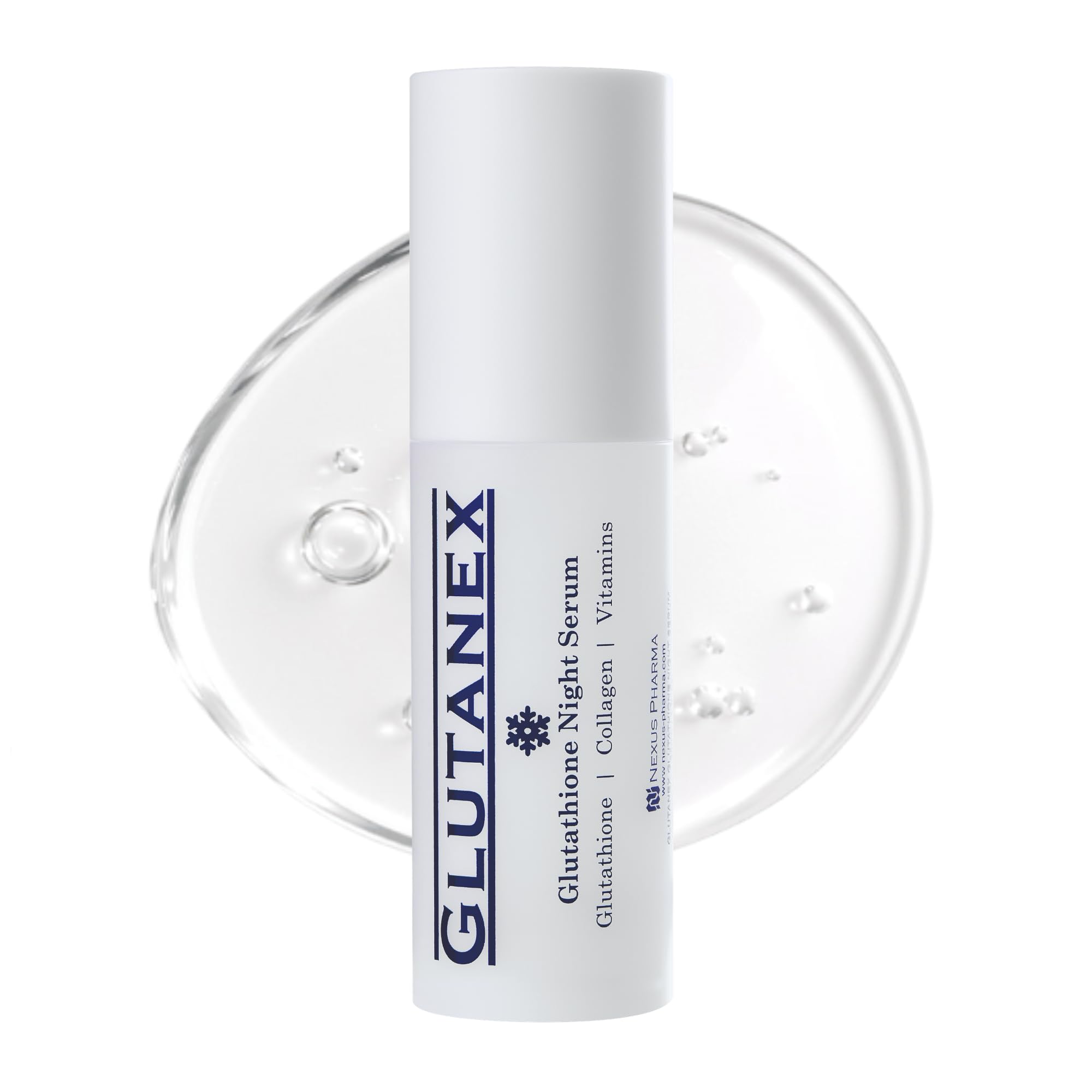
Glutathione has become one of the more talked-about ingredients in skincare over the past few years, largely on the strength of its reputation as an antioxidant that may help even out skin tone. The Glutanex Glutathione Night Serum, a 1 fl oz formula, positions itself in that space as an overnight treatment aimed at dullness and early signs of aging. It is a reasonable thing to examine closely, because glutathione serums vary widely in how they are formulated and what they realistically deliver.
The product is designed to be used at night, which makes sense given how many antioxidant and brightening ingredients degrade in sunlight. A typical routine would involve cleansing, toning if you use a toner, applying a few drops of the serum across the face and neck, and then following with a moisturizer to seal it in. Some users may prefer to layer it under a heavier night cream during colder months. Because it is a serum rather than a cream, it absorbs relatively quickly, and the 1 fl oz size is standard for this category—roughly two to three months of use with once-daily application, depending on how generously you apply it.
Functionally, the serum leans on glutathione as its headline ingredient, supported by the usual humectants and emollients that give a serum its slip and spreadability. Glutathione is an antioxidant that occurs naturally in the body, and in topical form it is most often associated with brightening and tone-evening claims rather than dramatic wrinkle reduction. That distinction matters. If you are shopping for a serum specifically to soften deep lines, this is not the most direct route—retinoids and peptides tend to have more evidence behind them for that purpose. Where glutathione serums tend to earn their place is in routines focused on dullness, uneven pigmentation, and the general tired look that accumulates from sun exposure and stress.
In real-world use, the most common pattern is to apply it consistently for several weeks before judging results. Brightening ingredients rarely produce visible change in a few days, and anyone expecting overnight transformation will be disappointed. A more realistic expectation is a gradual improvement in skin clarity over four to eight weeks, with the caveat that individual results vary considerably and are difficult to attribute to a single product when other habits—sunscreen use, sleep, diet—are also in play. The serum is lightweight enough to suit most skin types, though very dry skin may find it needs a richer moisturizer on top, and sensitive skin should patch-test first given that glutathione formulas sometimes include fragrance or preservatives that can irritate.
There are trade-offs worth naming. The first is cost-per-ounce: glutathione serums tend to sit at a higher price point than basic hydrating serums, and the ingredient’s stability in topical formulations is not always guaranteed, meaning the efficacy of any given bottle depends heavily on packaging and how long it sits after opening. A dark bottle and pump dispenser help, but once air exposure begins, potency can decline. The second is that glutathione’s brightening effects are generally modest compared with ingredients like vitamin C or tranexamic acid, which have more robust clinical backing for pigmentation. Someone with significant melasma or post-acne dark marks may get more noticeable results from a dedicated pigment-correction serum.
Compared with a standard vitamin C serum, which is the more common morning brightening choice, this product occupies a different slot in a routine. Vitamin C is typically used in the morning for antioxidant protection against daylight, while a glutathione night serum is applied in the evening. The two can coexist, but if you are choosing only one, vitamin C has the longer track record. Compared with a plain hyaluronic acid serum, the Glutanex offers more in the way of tone-focused ingredients but less in pure hydration, so it is not a direct substitute for a dedicated hydrating layer.
Who is this for? It suits someone who already has a stable routine and wants to add a gentle, antioxidant-leaning step at night, particularly if dullness or uneven tone is a concern and their skin tolerates new products without much drama. It is also a reasonable option for people who find vitamin C serums too irritating or unstable and want an alternative brightening approach. Who is it not for? Anyone expecting firming or wrinkle-smoothing results should look elsewhere. Those with very reactive skin, or with pronounced pigmentation that has not responded to gentler ingredients, would likely be better served by a dermatologist-guided approach. And if budget is tight, a basic moisturizer plus daily sunscreen will do more for tone over time than most serums, this one included.
Overall, the Glutanex Glutathione Night Serum is a credible entry in the brightening category, provided it is bought with calibrated expectations. It is not a miracle in a bottle, and the marketing around glutathione often outpaces the evidence. But as one step in a consistent evening routine, it has a defensible place—just not an essential one.