
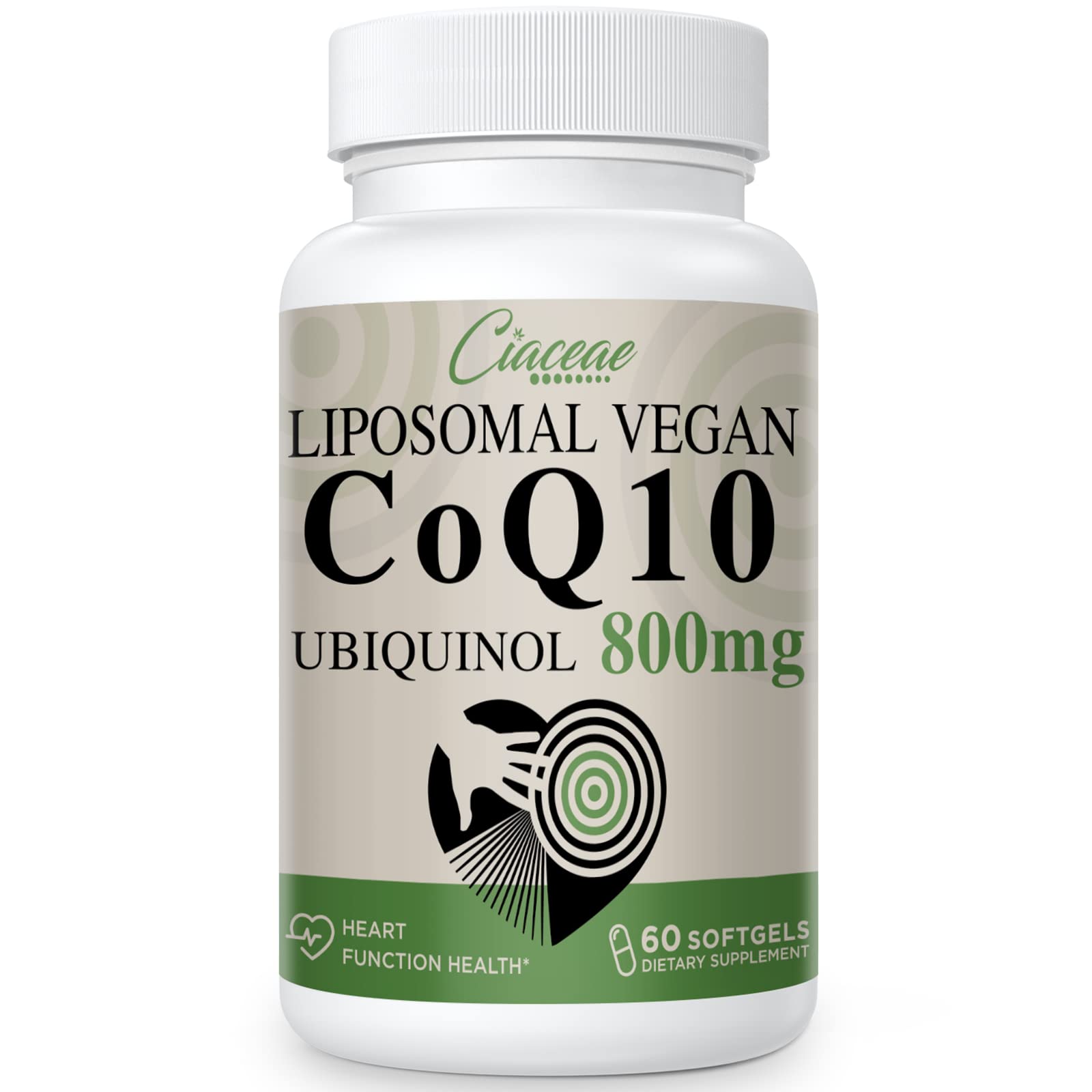
When looking into CoQ10 supplements, you’ll quickly notice two main forms: ubiquinone and ubiquinol. This product uses ubiquinol, which is the reduced, active form that some research suggests may be more readily used by the body, especially for older adults or those with certain health conditions. The 800mg dose is notably high, and the liposomal delivery system is intended to improve absorption, which is a common concern with standard CoQ10 supplements.
In real-world use, this supplement is typically taken once daily with a meal containing some fat, as CoQ10 is fat-soluble. Users often report taking it for cardiovascular health, energy levels, or as an antioxidant. The softgels are vegan, which is a positive for those avoiding gelatin, though the capsule size is fairly large and may be difficult for some people to swallow.
Key features include:
- Ubiquinol form: This is the active antioxidant form, potentially more bioavailable than ubiquinone for some individuals.
- High dosage: 800mg per serving is significantly higher than many standard CoQ10 supplements (which often range from 100-300mg).
- Liposomal delivery: Designed to protect the compound and enhance absorption, which can be a limiting factor with standard CoQ10.
- Vegan softgels: Made without animal-derived ingredients, suitable for plant-based diets.
A clear trade-off here is the cost. High-dose ubiquinol supplements, especially with liposomal technology, tend to be significantly more expensive than standard ubiquinone options. For someone just starting with CoQ10, or for those on a budget, a lower dose of standard ubiquinone might be a more practical first step. Additionally, while the liposomal form aims to improve absorption, individual results can vary, and not everyone may notice a dramatic difference compared to a well-absorbed ubiquinone product.
Compared to a standard ubiquinone CoQ10 supplement (like those from brands such as Nature Made or Doctor’s Best), this product is in a different tier. Standard ubiquinone is generally cheaper and well-studied, but requires conversion in the body to ubiquinol. For a healthy younger person, that conversion is usually efficient, making standard ubiquinone a cost-effective choice. This ubiquinol version may be more suitable for older adults (over 40-50), those with certain genetic variations affecting conversion, or individuals with conditions like heart failure where higher bioavailability is desired.
This supplement is likely a good fit for someone who has already tried standard CoQ10 without noticeable results, or for those specifically advised by a healthcare provider to take ubiquinol at a high dose. It is not ideal for someone new to CoQ10 supplementation who wants to start with a lower, more affordable option, or for anyone with difficulty swallowing large capsules. As with any high-dose supplement, it’s wise to consult a doctor before starting, especially if you are on blood thinners or other medications.