
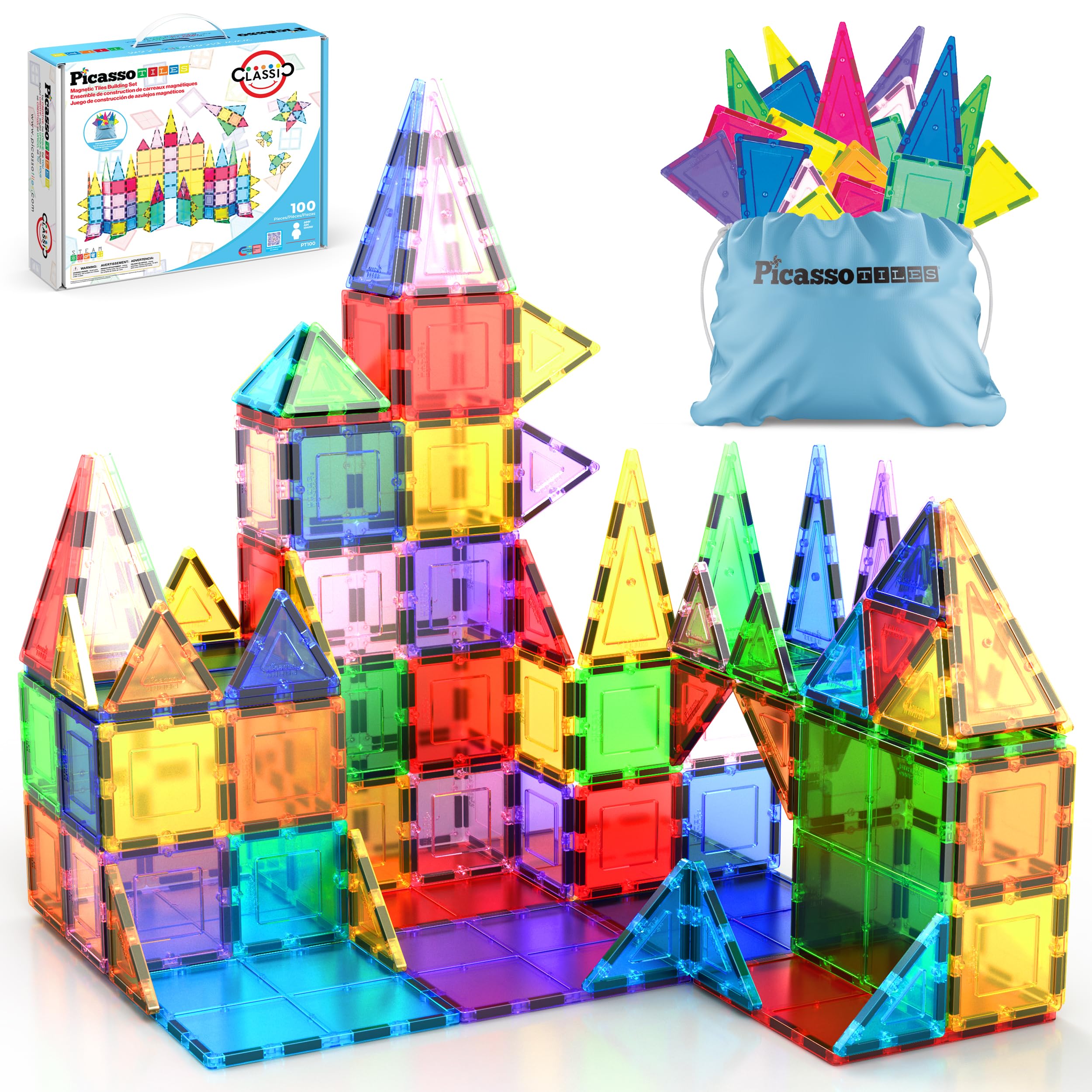
The PicassoTiles 100 Piece Magnetic Tiles set is a straightforward entry into the world of magnetic building blocks, designed for children aged three and up. As an editorial reviewer, I’ve spent time observing how these tiles perform in real play scenarios, and the results are mixed but generally solid for their intended purpose.
In practice, these tiles are used for constructing basic 3D structures like houses, towers, and simple geometric shapes. The clear plastic panels with embedded magnets snap together easily, allowing young children to build without frustration. The set includes squares and triangles in various translucent colors, which catch light nicely and create a visually engaging effect. This makes them suitable for both solo play and group activities, as multiple kids can collaborate on larger builds.
Key functional features include the strong magnets that hold pieces together securely, even for moderately tall structures. The tiles are made of durable plastic that withstands drops and rough handling, a plus for active toddlers. The pieces are also easy to clean with a damp cloth, which is practical for everyday use. The set comes in a reusable storage box, helping with organization—though the box itself isn’t particularly sturdy and may wear out over time.
However, there are limitations to consider. One trade-off is that the magnets, while strong, can sometimes make it difficult for very young children to separate the tiles, especially if they’re pressed together tightly. This might lead to frustration for kids at the lower end of the age range. Additionally, the tiles are hollow, which means they can feel a bit lightweight and less premium compared to solid magnetic blocks. Over time, the plastic may scratch or fog slightly, reducing the clarity of the panels.
Compared to similar products like wooden building blocks or interlocking plastic bricks, magnetic tiles offer a different experience. Wooden blocks rely on stacking and balance, teaching different spatial skills, while magnetic tiles snap together, making it easier to create 3D shapes without the risk of collapse. But magnetic tiles are less versatile for free-form construction—you’re limited to the shapes in the set, whereas wooden blocks can be arranged in countless ways. For kids who enjoy more open-ended building, magnetic tiles might feel restrictive.
Who is this set suitable for? It works well for children aged three to six who are just starting to explore construction play. It’s also a good choice for parents looking for a toy that encourages creativity without small parts that pose choking hazards. The set is not ideal for older kids (seven and up) who might find the limited shapes boring quickly. It’s also less suitable for children who need a more tactile, heavy building experience, as the tiles lack the weight of solid blocks.
In terms of performance, expect the tiles to last through moderate use, but they may not hold up to years of heavy play without showing wear. The magnetic strength is adequate for small structures but may not support complex, towering builds without additional support. Some users have noted that the magnets can become misaligned over time, though this is rare. Overall, the PicassoTiles set is a functional toy that delivers on its basic promise, but it doesn’t exceed expectations in any remarkable way.
For parents considering this purchase, it’s worth noting that there are cheaper generic alternatives available, which may offer similar performance at a lower cost. However, PicassoTiles has a reputation for consistent quality in the magnetic tile market, which might justify the price for some. Ultimately, this set is a decent choice for introducing magnetic building to young children, but it’s not a must-have for every family.