
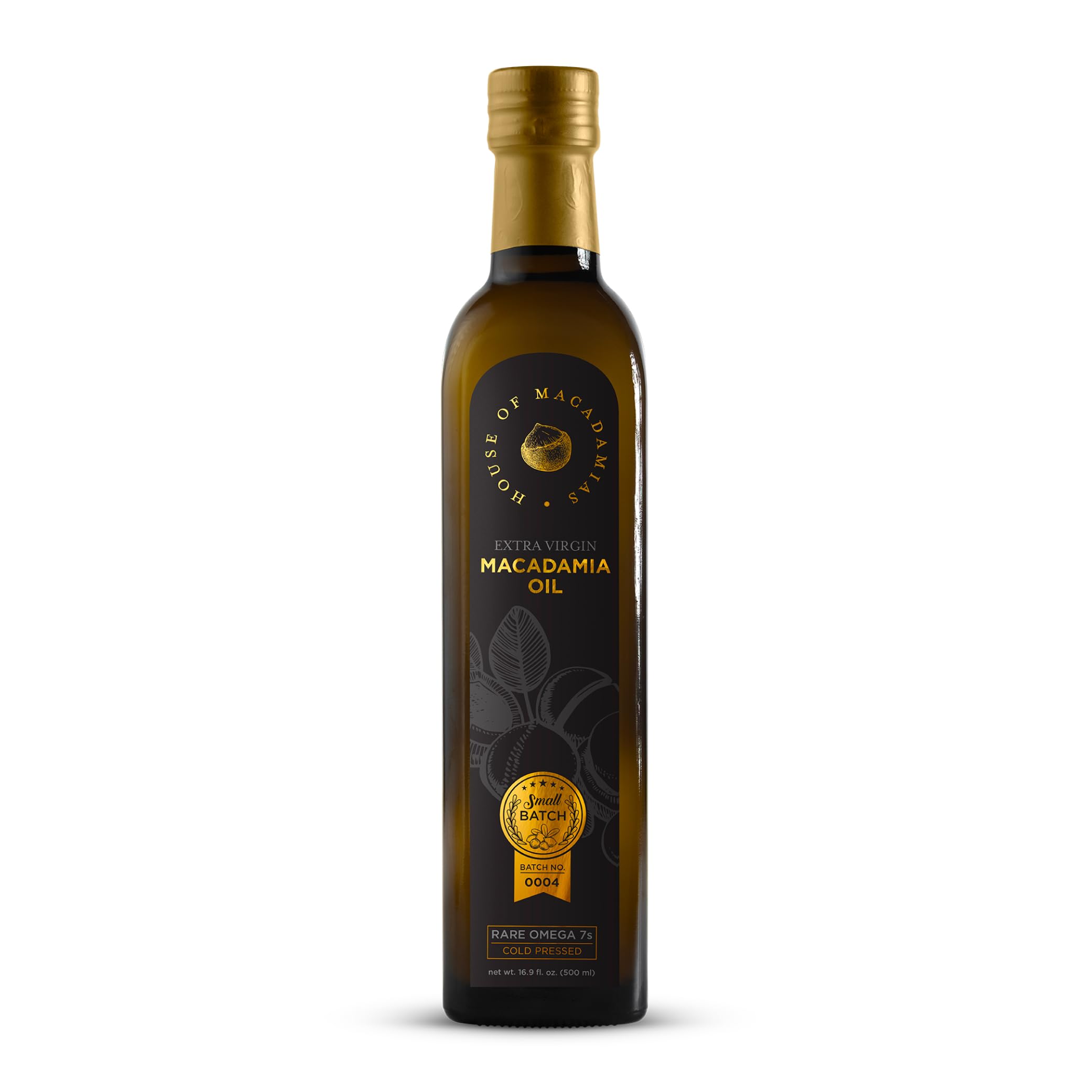
Macadamia oil is often marketed as a premium alternative to olive and avocado oils, but its real-world performance is what matters. House of Macadamias sources its extra virgin oil from cold-pressed macadamia nuts, packages it in dark glass, and claims a high smoke point. After spending time with a 16.9-ounce bottle, here’s a grounded look at where it fits in a kitchen and where it doesn’t.
The first thing you notice is the bottle. Dark glass helps protect the oil from light, which can accelerate rancidity. That’s a practical touch, though it also means you can’t easily see how much is left without lifting the bottle to a light source. The oil itself is a pale golden color with a mild, buttery aroma. Taste-wise, it’s subtle—less grassy than extra virgin olive oil, with a faint nuttiness that doesn’t overpower. That neutrality makes it versatile, but if you’re looking for a bold flavor boost, this isn’t it.
In practice, macadamia oil’s high smoke point (around 410°F for extra virgin, though refined versions go higher) makes it a candidate for sautéing, stir-frying, and even light frying. I tested it with pan-seared chicken and roasted vegetables. It handled medium-high heat without smoking or developing off-flavors, and the buttery note carried through gently. For baking, it works as a neutral substitute for butter or coconut oil in recipes where you don’t want a strong coconut taste. It’s also fine for salad dressings, though the flavor is so mild that you might want to pair it with something sharper.
One trade-off is cost. Macadamia oil is typically more expensive than olive, canola, or avocado oil. House of Macadamias doesn’t disclose its exact price here, but in general, you’re paying a premium for the cold-pressed process and the macadamia base. If you’re on a tight budget, this isn’t an everyday oil for deep frying or bulk cooking. Another limitation is the bottle size: 16.9 ounces is standard, but if you use oil frequently, it may go rancid before you finish it. Macadamia oil has a relatively short shelf life compared to some refined oils—typically 6 to 12 months after opening if stored properly. The dark glass helps, but you’ll still want to keep it in a cool, dark cupboard.
Compared to avocado oil, another high-smoke-point option, macadamia oil has a similar heat tolerance but a richer, buttery flavor. Avocado oil is often more neutral and sometimes cheaper. Olive oil, especially extra virgin, has a lower smoke point and a more pronounced taste, so it’s better for finishing than high-heat cooking. If you already cook with avocado oil and are happy with it, switching to macadamia oil is more of a flavor preference than a functional upgrade. However, for those who find avocado oil slightly bitter or olive oil too strong, macadamia oil offers a middle ground.
The company states the oil is 100% pure and third-party lab tested. That’s a meaningful claim in a category where adulteration can be an issue, though we couldn’t independently verify the results. The extra virgin designation means it’s unrefined, so it retains more of the nut’s natural compounds—but it also means a lower smoke point than refined macadamia oil. If you need an oil for very high-heat searing (above 450°F), a refined oil like rice bran or refined avocado might be a better fit.
Who is this for? It suits home cooks who want a mild, buttery oil for sautéing and baking, and who are willing to pay more for a cold-pressed, nut-based product. It’s also a good option for those who avoid seed oils and prefer something less common than olive or coconut. Who is it not for? Anyone on a strict budget, those who need a neutral oil for deep frying in large quantities, or people who prefer a strong, distinctive flavor in their cooking oil. If you’re looking for an everyday workhorse oil, a cheaper alternative like canola or regular olive oil will do the job for less.
In summary, House of Macadamias Macadamia Oil is a well-packaged, mild-flavored oil with a respectable smoke point. It performs well in moderate-heat cooking and adds a subtle richness to dishes. The main drawbacks are its cost and shorter shelf life compared to some refined oils. It’s not a revolutionary product, but for a specific niche—cold-pressed, nut-based, buttery—it delivers what it promises.