
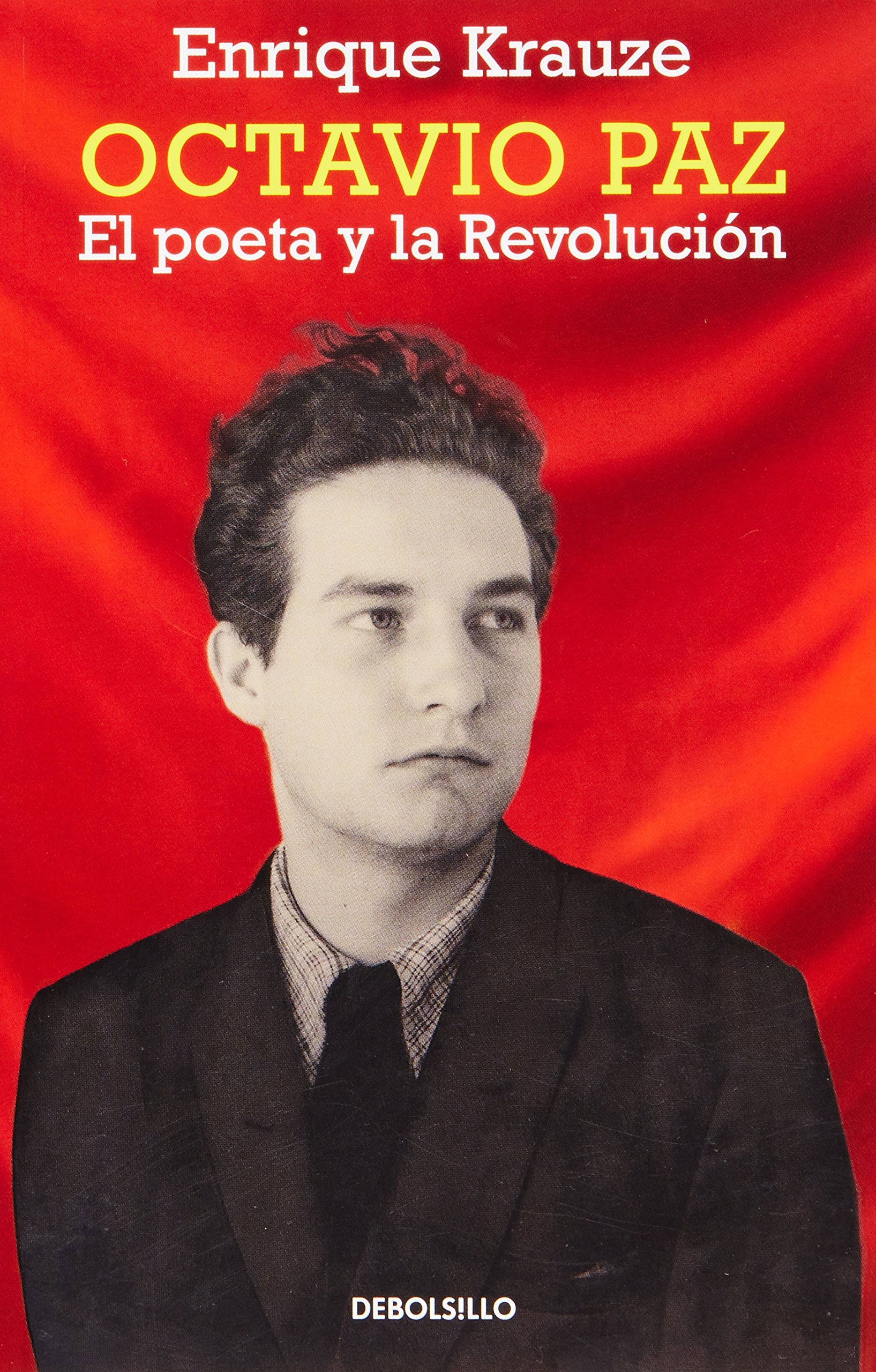
Octavio Paz. El poeta y la Revolucion is a dense academic work that examines the interplay between Paz’s poetry and his political thought, particularly his evolving views on revolution, democracy, and modernity. This Spanish-language edition is aimed at readers who already have a solid grounding in Paz’s work and are looking for a deeper, more critical analysis of how his literary output and political essays intersect.
The book is structured around key periods in Paz’s life—from his early affiliations with leftist movements, through his disillusionment with Stalinism, to his later critiques of authoritarianism and his embrace of liberal democracy. It draws heavily on his essays, poems, and correspondence, offering a chronological narrative that shows how his political positions shifted in response to global events like the Spanish Civil War, the Cuban Revolution, and the Mexican student movement of 1968.
In real-world usage, this is not a casual read. It is best suited for graduate students, literature scholars, or serious Paz enthusiasts who are comfortable with academic prose and frequent references to Marxist theory, surrealism, and Mexican history. The book assumes familiarity with Paz’s major works, such as El laberinto de la soledad and Libertad bajo palabra, and does not spend much time summarizing them.
One of its key functional features is the detailed contextualization of Paz’s political writings, linking them directly to his poetic themes of solitude, love, and language. The author provides close readings of several poems, showing how political disillusionment manifests in imagery and structure. For example, the analysis of ‘Piedra de sol’ in relation to cyclical time and historical trauma is particularly insightful.
However, there is a notable limitation: the book tends to overstate the coherence of Paz’s political trajectory. It sometimes glosses over contradictions in his views, such as his early support for the Soviet Union versus his later anti-communism, in favor of a neat narrative of intellectual maturation. A more critical approach would have acknowledged these tensions more frankly.
Compared to a more general biography like Octavio Paz: A Biography by Enrico Mario Santí, this book is narrower in scope but deeper in its focus on politics. Santí’s work offers a broader life story, while this volume is better for readers who want to understand the ideological underpinnings of Paz’s poetry without getting bogged down in personal details. If you are looking for a balanced introduction to Paz’s entire oeuvre, the biography might be more appropriate.
- Strengths: Strong textual analysis, clear chronological structure, good use of primary sources.
- Weaknesses: Dense academic language, assumes prior knowledge, occasionally too tidy in its conclusions.
Who is it for? Scholars of Latin American literature, students of political poetry, and readers interested in the intellectual history of the 20th century. Who is it not for? Casual readers looking for an introduction to Paz, or those who prefer a more biographical or purely literary approach without political theory.
Overall, Octavio Paz. El poeta y la Revolucion is a solid contribution to Paz studies, but it demands patience and background knowledge. It earns its place on the shelf of any serious Latin Americanist, but it is not a book you pick up for light reading.