
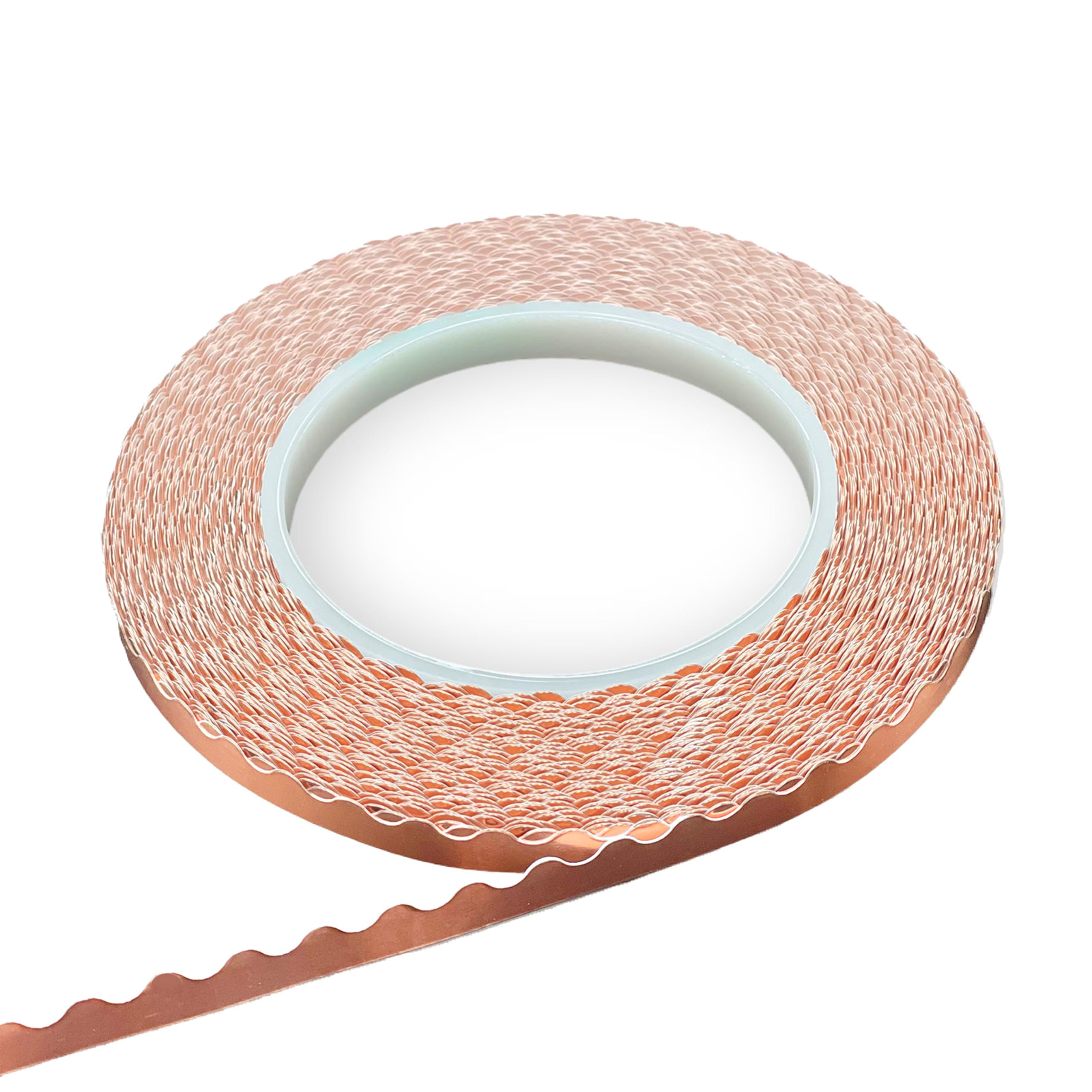
Copper foil tape is one of those materials that seems simple until you actually try to use it. For anyone doing stained glass work or detailed copper tooling, the tape’s width, adhesive, and backing can make or break a project. The ARTIMUSES Black Backed 1/4 Inch Scalloped Copper Foil Tape is designed specifically for these tasks, and it brings a few interesting features to the table—along with a couple of trade-offs worth considering.
The first thing you notice is the scalloped edge. Unlike standard straight-edge foil, the scalloped pattern creates a wavy border when applied. This isn’t just decorative; it’s actually functional. In stained glass, the scalloped edge helps the foil adhere more securely to the glass edges, especially on curved or irregular pieces. The increased surface area from the waves can reduce the chance of the foil lifting during soldering. For crafters who make suncatchers, small panels, or jewelry with glass components, this can be a real advantage. But it does require a bit of practice to apply evenly—if you rush, the scallops can bunch up or overlap, which creates bumps under the solder.
The black backing is another notable feature. It’s not just a color choice; it changes how the tape handles. The black coating seems to make the copper less prone to tarnishing before you use it, which is helpful if you buy in bulk or don’t go through rolls quickly. It also gives a slightly different look to the final piece if you leave any foil exposed—some artists like that contrast. However, the black backing isn’t invisible. On clear glass, you might see a faint dark line under the solder if you don’t burnish the foil down completely. It’s a subtle aesthetic difference, but if you’re used to bright silver-backed foil, it might take some getting used to.
In terms of practical use, the 1/4-inch width is a standard choice for most stained glass projects. It works well for glass pieces that are 1/8-inch thick, which covers a lot of hobbyist work. The adhesive is pressure-sensitive, so you need to press firmly as you go. I found that it sticks well to clean glass, but like any copper foil, it won’t forgive dirty or oily surfaces. A quick wipe with isopropyl alcohol before applying makes a big difference. The tape comes on a roll with a paper liner that’s easy to peel, and the copper is flexible enough to wrap around tight curves without tearing—provided you’re not pulling too hard.
One limitation that stands out is the roll length. ARTIMUSES sells this in a 36-yard roll, which sounds generous, but if you’re doing a larger window or multiple panels, you’ll go through it faster than you think. Also, the scalloped edge means you use slightly more tape per joint because the waves take up more surface area. For a beginner, that can be a bit wasteful until you learn to cut and place efficiently. And while the adhesive is decent, it’s not the strongest I’ve tested—it’s fine for standard projects, but if you’re working with very heavy glass or doing a lot of handling before soldering, you might need to burnish aggressively to keep it from lifting.
Compared to regular straight-edge copper foil, the scalloped version is a niche choice. Straight foil is easier to apply and gives a cleaner, more uniform line under solder. Scalloped foil, on the other hand, offers better grip and a slightly textured look that some artists prefer for rustic or natural designs. If you’re doing precise geometric work, straight foil might be more predictable. But for organic shapes or pieces with lots of curves, the scalloped edge can be a real help. It’s also worth noting that there are other brands with similar scalloped foil, but ARTIMUSES tends to be priced competitively, which makes it a reasonable option for testing whether you like the style.
Who is this tape for? It’s a solid choice for hobbyist stained glass artists who want to try scalloped foil without committing to a premium brand. It’s also suitable for crafters doing copper tooling, embossing, or even jewelry making where a decorative edge is desirable. However, it’s not ideal for beginners who are still learning to apply foil consistently—the scallops can be frustrating if you don’t have a steady hand. Professionals who need absolute consistency in high-volume work might prefer a straight-edge foil from a specialized supplier, as the black backing and scalloped pattern can introduce variables that aren’t always welcome in production.
In practice, this tape performs well for small to medium projects. I used it on a 10-inch suncatcher with several curved pieces, and it held up through soldering without any lifting. The black backing didn’t cause any issues with adhesion, and the scalloped edge gave a nice organic feel to the finished piece. The main thing to watch is application technique—take your time, burnish firmly, and don’t stretch the tape too much. If you do that, you’ll get good results.
Overall, the ARTIMUSES Black Backed 1/4 Inch Scalloped Copper Foil Tape is a functional, reasonably priced option for crafters who want to experiment with scalloped edges. It’s not a miracle product, and it has a learning curve, but for the price, it delivers what it promises. Just be aware of the trade-offs: the black backing might not suit every aesthetic, and the scalloped pattern requires a bit more care during application. If you’re curious about this style of foil, it’s worth a try—just don’t expect it to replace your standard straight-edge tape entirely.