
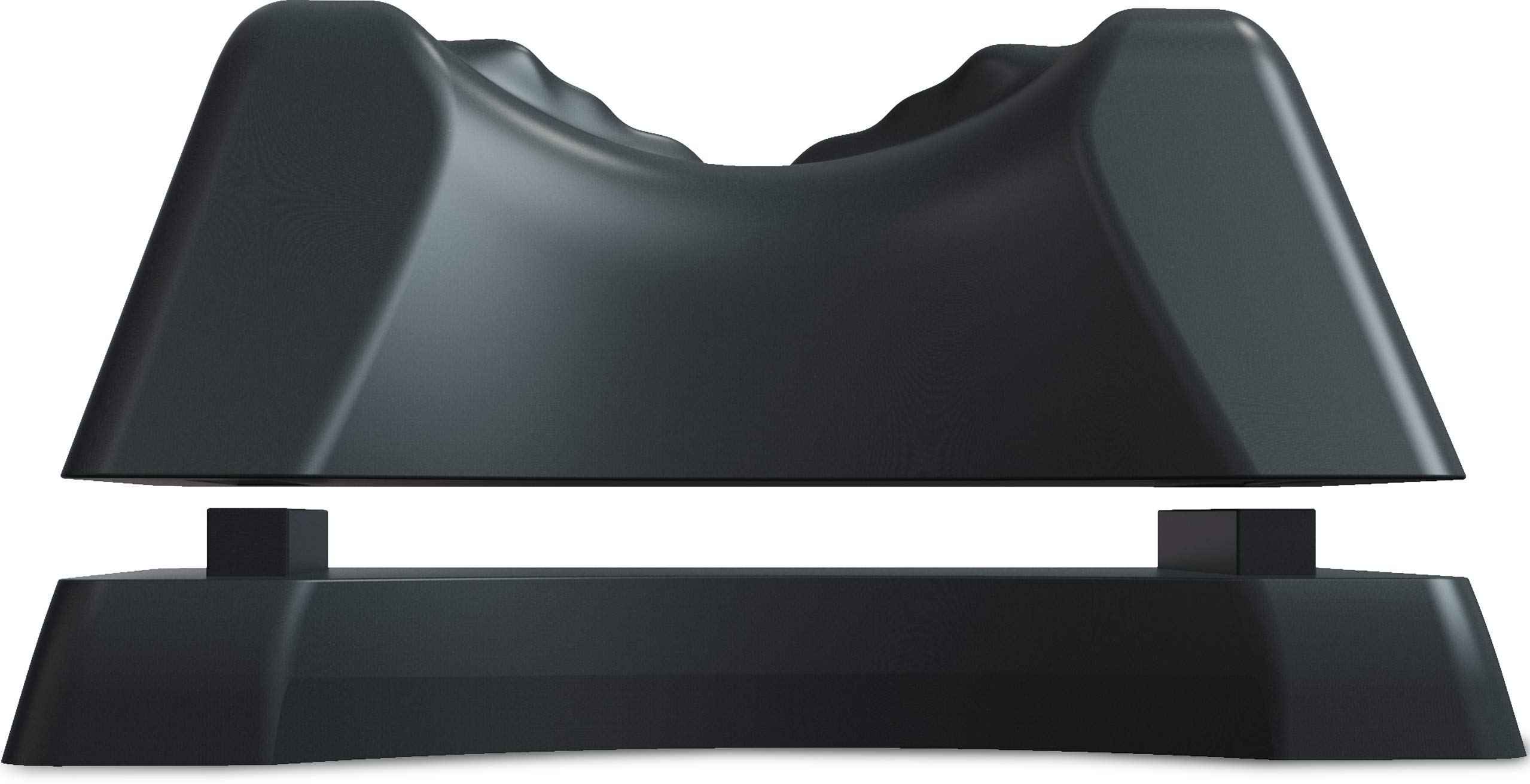
Neck and shoulder tension is one of those things that creeps up on you. You don’t notice it until you’re turning your head and feel that familiar crunch, or you wake up with a headache that seems to radiate from the base of your skull. The BONSAI WELLNESS Occipital Release Tool is designed to address exactly that area — the suboccipital muscles and the upper cervical spine — using a combination of pressure and traction. It’s a small, curved plastic device that you place behind your neck, usually while lying down, and it works by applying targeted pressure to the occipital region while allowing the head to gently pull back, creating a stretch.
In practice, the tool is straightforward to use. You lie on your back, position the curved part of the device at the base of your skull, and let the weight of your head do the work. The instructions suggest starting with short sessions of two to three minutes, which feels about right. The first time I tried it, I was struck by how intense the pressure felt — not painful, but definitely noticeable. Over a few sessions, I learned to adjust the angle and placement to find the sweet spot. Some users may prefer to use it on a padded surface or with a thin towel, as the hard plastic can feel a bit unforgiving on bony areas. The device is compact and portable, which makes it easy to toss in a bag for travel or use at a desk, though you really need a flat, comfortable surface to get the most out of it.
The key functional feature here is the dual-action approach. The tool has a central groove that fits over the spinous processes (the bony bumps on your vertebrae), while the two lateral wings press into the muscles on either side. This is meant to mimic the kind of pressure a chiropractor or physical therapist might apply, but it’s self-administered. The traction component comes from the natural pull of your head as it relaxes against the device. It’s a simple concept, but it can be surprisingly effective for releasing tension that builds up from prolonged sitting, screen use, or stress. Many users report a sense of relief and even a reduction in tension-type headaches after regular use, though it’s not a cure-all and results vary.
One of the main limitations is the learning curve. It’s not immediately obvious how to position the device for optimal effect, and if you place it too high or too low, you might not feel much benefit — or worse, you might feel discomfort. The instructions are minimal, so some trial and error is involved. Additionally, the hard plastic construction means it’s not ideal for people with very sensitive skin or those who are prone to bruising. You have to be careful not to overdo it; using it for too long or with too much force can leave you feeling sore the next day. It’s also not suitable for anyone with serious cervical spine conditions, such as herniated discs, osteoporosis, or recent injuries, without professional guidance. If you have any doubt, it’s worth checking with a healthcare provider before using this kind of device.
Compared to other options in the market, the BONSAI tool sits somewhere between a simple foam roller and a more elaborate traction device. Foam rollers are cheaper and offer broader muscle release, but they don’t provide the same targeted pressure on the suboccipital area. On the other end, there are inflatable cervical traction devices that strap around your neck and use air pressure to stretch the spine. Those tend to be bulkier and more complicated, and they can be harder to use without assistance. The BONSAI tool is more portable and self-contained, but it requires you to be an active participant in positioning and adjusting. It’s not a passive experience like some motorized or inflatable options. For someone who wants a quick, simple, and affordable way to work on neck tension, this is a reasonable middle ground.
Who is this for? It’s likely most useful for people who spend long hours at a computer, have chronic neck and shoulder tightness, or experience frequent tension headaches. It’s also a good fit for those who are already familiar with self-myofascial release and want to target a specific area. However, it’s not for everyone. If you have acute neck pain, a recent whiplash injury, or any condition that makes you wary of applying pressure to your spine, you should probably skip it. Also, if you’re looking for a tool that requires zero thought and just works, this might frustrate you. It takes patience and a bit of body awareness to get the positioning right. And while it can provide temporary relief, it’s not a substitute for addressing the root causes of neck pain, like poor posture, ergonomics, or stress management.
In my observation, the BONSAI WELLNESS Occipital Release Tool is a decent addition to a self-care routine, but it’s not a miracle device. It does what it claims — applying targeted pressure and mild traction to the occipital region — but the experience is highly dependent on how well you adapt to it. The build quality feels sturdy, and the price is reasonable compared to similar tools. If you’re curious about cervical traction and want a low-cost way to experiment, this could be worth a try. Just go in with realistic expectations and a willingness to learn how to use it properly. It’s a tool, not a treatment.