
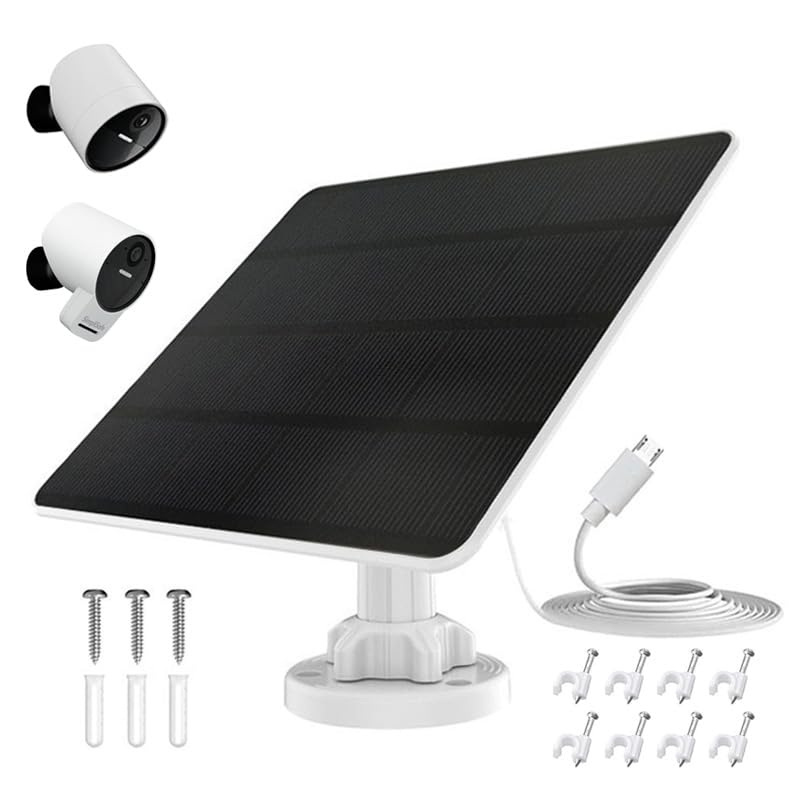
The promise of a solar panel for a security camera is hard to resist: set it up, forget about it, and never worry about climbing a ladder to swap batteries again. For owners of SimpliSafe’s outdoor camera line, this third-party accessory aims to deliver exactly that. After spending a few weeks with it attached to a Wireless Outdoor Camera, I have a clear picture of what works, what doesn’t, and who should consider it.
The panel itself is compact—roughly the size of a small tablet—and feels reasonably sturdy. The mounting bracket allows for tilting and swiveling, which is essential for catching the sun at the right angle. The 16-foot cable is a welcome length, giving you flexibility to place the panel away from the camera if your eave or wall doesn’t get direct sunlight. Installation is straightforward: you screw the bracket into place, snap the panel on, and plug the proprietary connector into the camera’s port. No tools beyond a drill and a screwdriver are required, and the whole process took me about fifteen minutes.
In terms of actual performance, the panel delivers a steady trickle of power. On a sunny day, it easily keeps the camera’s battery topped off. Over two weeks of mixed weather—some full sun, some overcast—the battery never dropped below 80%, which is a solid result. The camera’s built-in solar management feature (which SimpliSafe added in a firmware update) works well with this panel, showing a small sun icon in the app when charging is active. It’s not a fast charger, and it won’t revive a dead battery quickly, but it’s designed for maintenance, not emergency top-ups.
One thing I noticed is that the panel is not weather-sealed as well as I’d like. The connector that plugs into the camera has a rubber gasket, but the seam between the panel’s plastic casing and the solar cells can collect water after a heavy rain. It hasn’t caused any issues yet, but it’s a minor design flaw that might concern you if you live in a particularly wet climate. Also, the included mounting hardware is basic—plastic anchors and screws—which feel a bit flimsy for a product meant to endure wind and storms. I’d recommend using your own stainless steel screws for a more secure fit.
Compared to a dedicated solar panel from a brand like Ring or Arlo, this one is a bit more utilitarian. Ring’s solar panel, for instance, has a sleeker design and a more robust weatherproofing, but it’s also more expensive. SimpliSafe’s own official accessory (if it ever becomes available) would likely be more integrated, but as of now, this third-party option is one of the few that actually works with the proprietary port. That’s a significant advantage—many generic panels either don’t fit or require a separate adapter that can fail.
However, there are some trade-offs to consider. The panel only works with SimpliSafe’s outdoor cameras, so if you have a mix of brands, you’ll need separate solutions. It also doesn’t include a battery, so it relies entirely on the camera’s internal battery. If you have a camera in a spot that gets less than four hours of direct sunlight a day, you may still find yourself occasionally pulling the camera down for a charge. The cable, while long, is not detachable from the panel, which makes routing it through tight spaces a bit awkward. And because it’s a third-party product, you won’t get any official support from SimpliSafe if something goes wrong.
Who is this for? It’s ideal for homeowners who have a camera mounted in a spot that’s difficult to reach—like a high eave or a second-story wall—and who get decent sun exposure. If you’re tired of buying and replacing batteries every few months, this panel will pay for itself in convenience within a year. It’s also great for renters who don’t want to permanently wire anything, since the panel is easy to remove and take with you.
On the other hand, it’s not suitable for those with cameras in shaded areas, such as a north-facing porch or under a dense tree canopy. In those conditions, the panel will barely trickle-charge, and you’d be better off sticking with a battery or running a wired power cable (if your camera supports it). It’s also not for anyone looking for a rugged, industrial-grade accessory—this is a consumer product that works best in moderate climates.
In the end, this solar panel is a practical, affordable solution that does what it claims, with a few minor compromises. It won’t eliminate the need for occasional battery changes, but it will stretch them out to once a year or less in most cases. If you’re a SimpliSafe user with a sunny spot for your camera, it’s a reasonable investment. Just don’t expect it to be a set-and-forget miracle—check the connector after a storm, and you’ll be fine.