
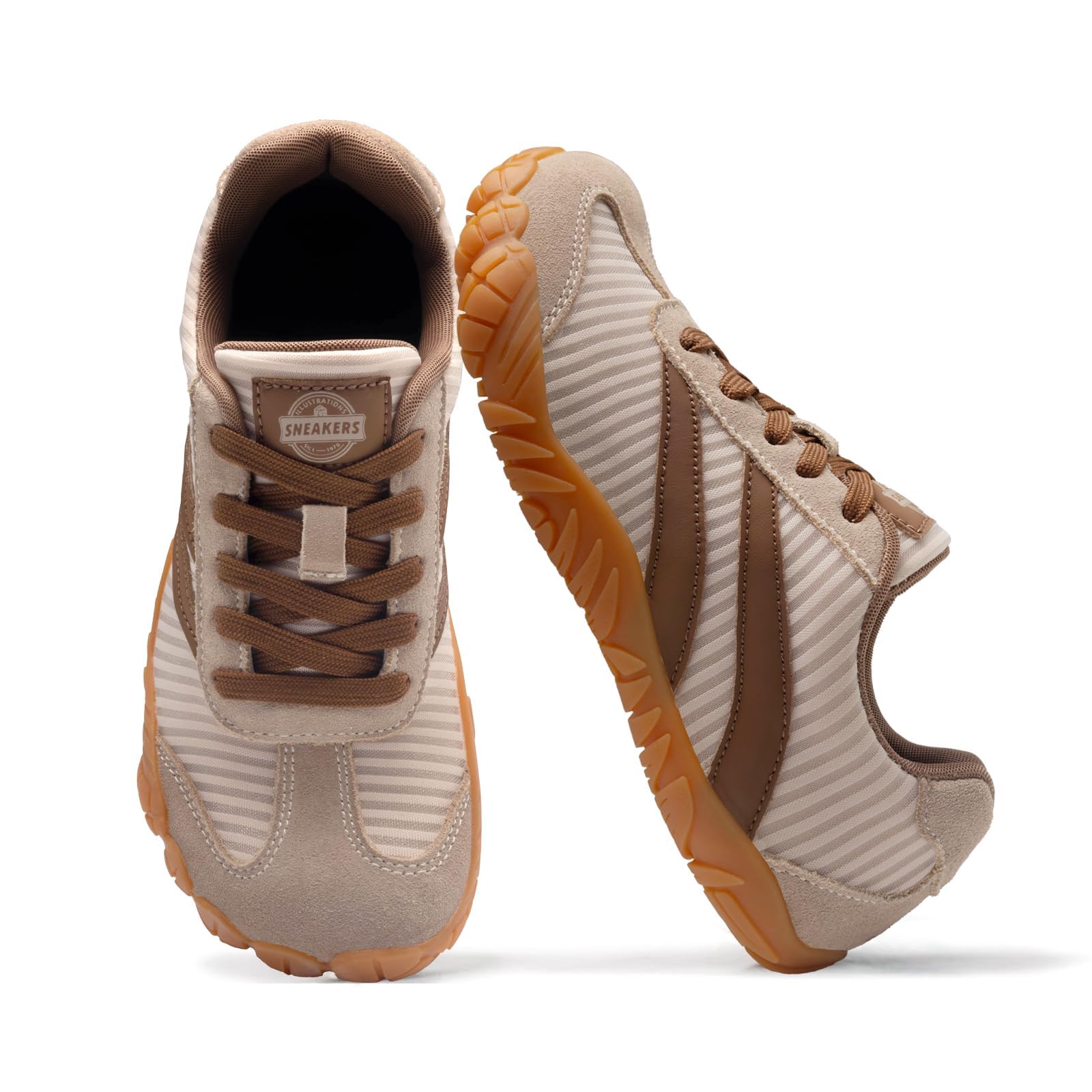
There’s a growing crowd of people who want their footwear to feel less like a constraint and more like an extension of their feet. These barefoot-style sneakers for women are part of that movement, offering a wide toe box, zero drop, and a flexible sole. They’re designed to let your feet move naturally, but as with any minimalist shoe, they come with a learning curve and some trade-offs.
I’ve been wearing these casually for a few weeks now—running errands, walking the dog, and even a couple of light hikes. The first thing you notice is the toe box. It’s genuinely roomy, allowing your toes to splay out without feeling cramped. That’s a welcome change if you’re used to narrow, pointed shoes. The zero drop means your heel and forefoot sit at the same level, which encourages a more natural posture. Combined with a thin, flexible sole, you get decent ground feel—you can sense the texture of the pavement or trail beneath you.
The upper is a soft knit material that breathes well, which is great for warmer days. They’re also quite light, so you almost forget you’re wearing them. For everyday walking, they’re comfortable once you adjust. But—and this is important—if you’ve been wearing conventional shoes with arch support and cushioned heels, your feet and calves will need time to adapt. The lack of cushioning can be jarring at first, and some people may experience soreness if they jump in too quickly. I’d recommend easing into them, starting with short wears and gradually increasing.
One limitation is the traction. The sole is flat and smooth, with minimal tread pattern. On dry surfaces, it’s fine, but on wet grass or slick pavement, you’ll want to be careful. These are not trail shoes. They’re best for urban walking, light indoor use, or casual outings. If you’re planning to do serious hiking or running on uneven terrain, you’d be better off with a more rugged minimalist shoe like the Xero Trail or Vibram FiveFingers.
Compared to typical athletic sneakers—say, a standard running shoe with a 10mm drop and thick foam—these are a polar opposite. The lack of arch support might be a dealbreaker for people with flat feet or those who need orthopedic support. However, if you’re looking to strengthen your feet and improve your gait over time, this style of shoe has its merits. It’s a different philosophy: instead of cradling your feet, it lets them work.
Who is this for? If you’re already into barefoot or minimalist footwear, these are a solid, budget-friendly option for daily wear. They’re also good for someone who wants to transition to barefoot shoes but doesn’t want to spend a fortune. On the other hand, if you have pre-existing foot conditions, or you’re not willing to put in the adjustment period, these might not be the right fit. They require a certain mindset—you have to be okay with feeling the ground and letting your feet do the work.
Another thing to consider is the sizing. I found they run slightly small, so ordering a half size up is wise if you have wider feet. The knit upper does stretch a bit, but it’s not going to accommodate a significantly wider foot. Also, the lack of a stiff heel counter means your heel isn’t locked in place—that’s intentional for barefoot feel, but some might find it less secure.
In terms of durability, they’ve held up fine so far. The stitching is neat, and the outsole shows minimal wear after a few weeks. But I can’t attest to long-term resilience. Some users have reported that the knit material can wear through at the toes if you drag your feet, so it’s something to watch.
On the whole, these barefoot sneakers are a decent entry point into minimalist footwear. They’re not perfect—the traction and lack of cushioning are clear compromises—but they deliver on the core promise of a wide toe box and zero drop. If you’re curious about barefoot shoes and want to try without a huge investment, these are worth considering. Just go in with realistic expectations and a willingness to adapt.