
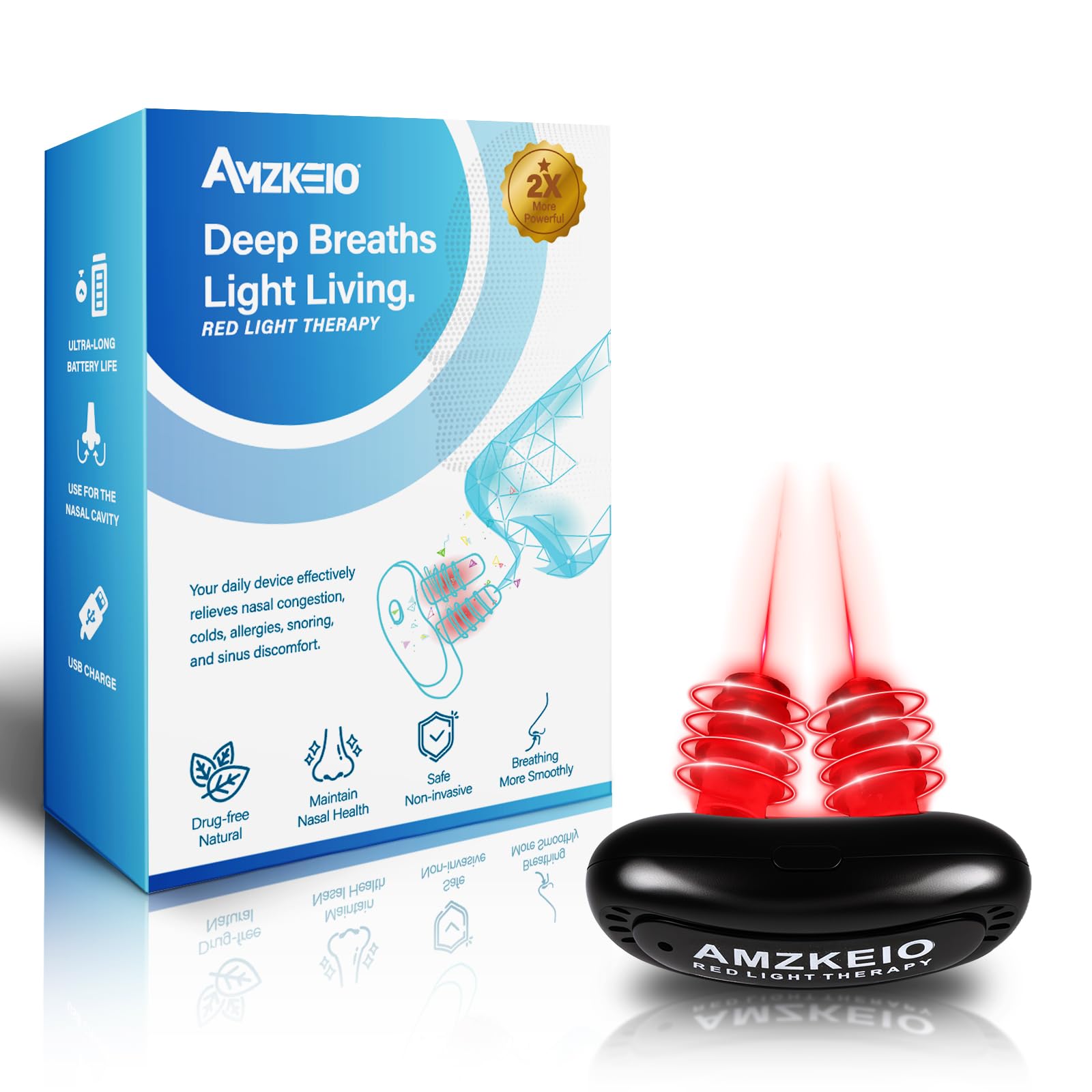
Red light therapy has carved out a niche in the wellness space, and the idea of applying it directly inside the nostrils is an interesting twist. The Red Light Therapy for Nose device is a small, USB-rechargeable gadget designed to deliver targeted LED light to the nasal passages. It’s marketed for sinus discomfort and dry nose issues, and while it’s not a medical cure-all, it does offer a hands-on approach for those curious about light-based remedies.
In practice, the device is straightforward. You gently insert the two prongs into your nostrils, power it on, and sit with it for the recommended session—usually around 10 to 15 minutes. The prongs are slim and made of a smooth plastic, so they’re not uncomfortable, though it takes a couple of tries to get the angle right. The light is visible from the outside, giving off a soft red glow, which is a bit odd if someone walks in on you, but it’s not disruptive. You can use it while reading or watching TV, though moving around too much can shift the fit.
The core feature is the dual-wavelength LED array (typically in the 630–660 nm range) that penetrates the superficial tissues of the nasal lining. The theory is that this stimulates cellular activity, which might help with local inflammation or dryness. The device is rechargeable via USB, and a full charge lasts for several sessions, making it easy to keep by your bedside or at your desk. The portability is a genuine plus—it’s small enough to toss into a travel bag without thinking twice.
That said, there are limitations. The most obvious is that the scientific evidence for red light therapy on sinus issues is still thin. While some studies suggest benefits for wound healing or joint pain, nasal-specific research is sparse. You’re essentially relying on anecdotal reports and the general principles of photobiomodulation. Also, the device only treats the nasal opening—it doesn’t reach deeper sinus cavities, so if your congestion is caused by a cold or allergy, it may not do much. Some users report a mild warming sensation, but that’s about it; don’t expect a dramatic decongestant effect.
Compared to a nasal saline rinse or a humidifier, this is a different tool altogether. A saline rinse physically flushes out irritants and moistens the passages, which is a more direct solution for dryness. A humidifier addresses the ambient air. The LED device is more of a passive, light-based approach—it’s not going to clear out mucus or add moisture. For someone who’s already using a rinse and wants to add another layer of care, it might be worth trying, but it shouldn’t replace those basics.
Who is this for? It suits people who are comfortable with alternative therapies and have realistic expectations—those who are curious about light therapy and want a low-risk, low-commitment option. It’s also convenient for travelers who want a compact wellness tool. On the flip side, it’s not for anyone with acute sinus infections, persistent pain, or chronic conditions like severe allergies without first consulting a doctor. If you’re looking for immediate relief from a stuffy nose, this isn’t it. And if you’re skeptical about light therapy in general, this won’t change your mind.
One practical drawback is the cleaning aspect. The prongs get exposed to nasal mucus, and while they’re easy to wipe down with alcohol, there’s a slight awkwardness in keeping them hygienic between uses. The device also lacks a timer, so you have to set your own alarm—a minor annoyance if you dose off during a session. The build quality feels acceptable for the price, though it’s not premium; the plastic housing is functional but not luxurious.
In terms of real-world performance, I’d say it’s a mixed bag. Some users report a subtle soothing effect on dry nasal linings after a few weeks of consistent use, but it’s not a night-and-day difference. It’s more of a ritual that might support overall nasal comfort. If you approach it as a supplemental practice rather than a solution, you won’t be disappointed. But if you’re expecting it to replace your saline spray or allergy medication, you’ll likely be underwhelmed.
To sum up, the Red Light Therapy for Nose is a niche gadget with a clean design and a legitimate concept, but its effectiveness is far from guaranteed. It’s a reasonable experiment for someone interested in light therapy, but it’s not a medical device. Try it if you’re curious, but keep your expectations in check.